Bacteria in Well Water: Detection, Risks, and Treatment
A positive bacteria test result means your well water is contaminated and needs treatment before you drink it. Full stop. The question is which bacteria you have, where it’s coming from, and how to get rid of it.
This guide walks through what your test result actually means, how bacteria gets into a private well, the health risks involved, and the treatment process from first step to confirmed clear retest. For broader context on water quality testing and treatment options, start with our well water quality guide.
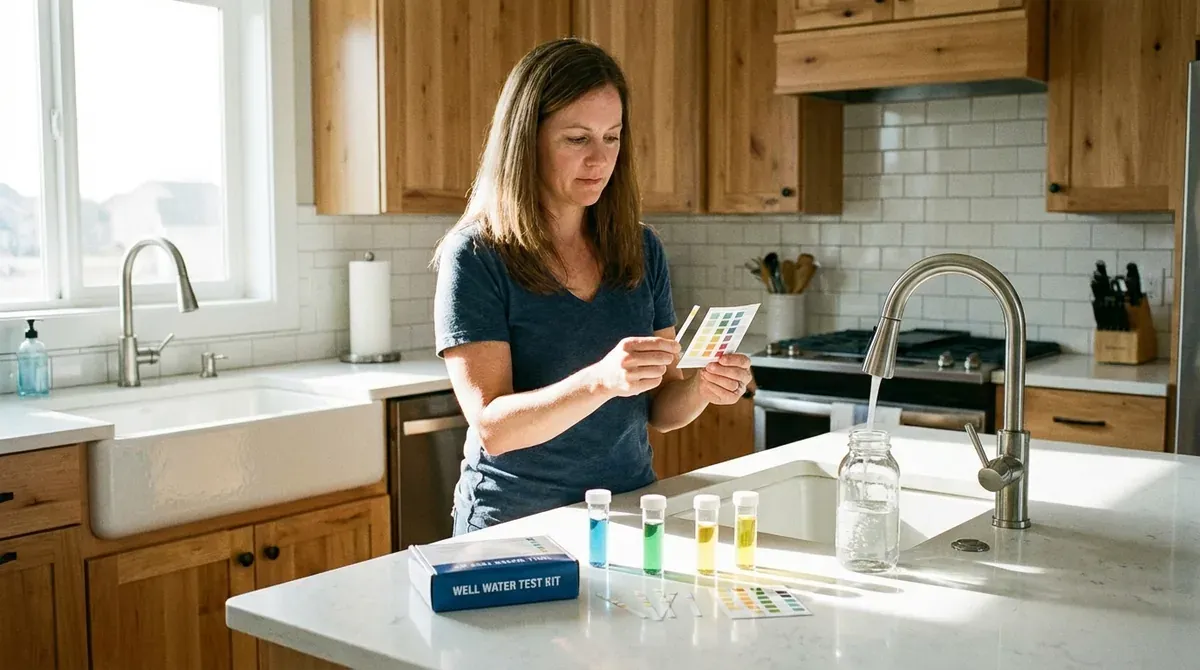
What your positive bacteria test means
Not all positive bacteria results are equal. The distinction between total coliform and E. coli matters; it tells you the severity of the problem and the urgency of your response.
Total coliform bacteria are a broad group of bacteria that include many types, most of which are not directly harmful. However, a positive total coliform result indicates that contamination pathways exist: surface water, animal waste, or some other external source is finding its way into your water supply. DrillerDB’s well testing guide describes it precisely: “Total coliform bacteria indicate potential contamination pathways.” A pathway problem needs to be addressed whether or not the specific bacteria detected are themselves dangerous.
E. coli is a specific subset of coliform bacteria, and its presence signals something more serious: fecal contamination. As DrillerDB puts it, “E. coli specifically signals fecal contamination and immediate health risk.” A positive E. coli result means waste from humans, livestock, or wildlife is entering your water supply. This requires immediate action.
The CDC adds an important nuance: standard well water tests “won’t identify dangerous E. coli strains.” A positive E. coli result is therefore treated as a health emergency regardless of the specific strain, because the test cannot rule out the most dangerous variants.
The safe level for all bacteria in drinking water is zero. There is no acceptable threshold. Any detectable coliform, whether total or E. coli, requires treatment and a clear retest before you resume drinking tap water.
Use bottled water from the moment you receive a positive result until you receive a zero-bacteria retest result from a certified lab.
How bacteria gets into a private well
Understanding the entry pathway helps you fix the root cause, not just the symptom. We’ve seen bacterial contamination traced to several common sources:
Flooding and surface water intrusion: heavy rainfall can overwhelm the seal between the ground surface and the well casing, allowing surface water carrying bacteria to flow directly into the well. The EPA recommends that after flooding, well owners get assistance from a contractor to “clean and disinfect your well before turning on the pump.” This is the most common cause of post-flood positive tests.
A damaged or missing well cap: the well cap sits at ground level and seals the top of the casing. Cracks, gaps, or an improperly seated cap allow insects, small animals, and rainwater to enter the well directly. The EPA notes that a well cap “prevents unauthorized access,” and it also prevents biological contamination. Inspect your cap annually.
Cracked or deteriorated well casing: the casing is the pipe that lines the well bore from the surface to the aquifer. Older steel casings corrode over time. PVC casings can be damaged by freezing, settling, or equipment contact. A cracked casing creates an opening for surface water and soil bacteria to bypass the protected aquifer and enter the well.
Proximity to septic systems: modern setback requirements keep wells at least 50–100 feet from septic systems, but older rural properties may have wells closer than that. A failing septic system or a leaching drain field near your well can introduce fecal bacteria into the groundwater.
Post-repair contamination: any work done inside a well (pump replacement, casing repair, inspection) introduces bacteria from tools, equipment, and the workers’ hands. A positive test 2–4 weeks after well work is almost always related to that work. Shock chlorination resolves it in most cases.
Agricultural runoff: wells in farming areas are vulnerable to bacteria from fertilizer containing manure and from livestock operations. Surface water carrying bacteria from fields can reach shallow wells through sandy or fractured geology.
Health risks of bacteria in well water
Bacteria in well water causes real illness. The severity depends on which bacteria are present and the health of the people exposed.
The most common result of drinking coliform-contaminated water is gastroenteritis: nausea, vomiting, diarrhea, and stomach cramps. Symptoms typically appear 12–72 hours after exposure. Most healthy adults recover within a week without medical intervention, though staying hydrated is important.
E. coli O157:H7 can cause bloody diarrhea, severe abdominal cramping, and in serious cases, kidney failure. The CDC notes that high coliform counts indicate harmful germs (including certain viruses and parasites) are likely also present. Children under 5 and the elderly are at greatest risk of complications.
The most vulnerable household members are those the EPA specifically flags for more frequent testing: small children, elderly residents, and pregnant or nursing individuals. Immunocompromised people (those undergoing chemotherapy, organ transplant recipients, and people with HIV) can develop serious illness from bacterial levels that cause only mild symptoms in healthy adults.
We recommend stopping tap water use immediately when you receive a positive test result. The health risks of well water contamination are real and treatable, but only if you act.
How to remove bacteria from your well
The standard treatment for bacterial contamination in private wells is shock chlorination. This is a manageable DIY procedure for most homeowners. Here is the process:
-
Stop drinking tap water. Switch to bottled water for all consumption (drinking, cooking, brushing teeth, and baby formula) until you receive a clear retest result.
-
Identify the likely entry pathway if possible. Check your well cap for cracks or gaps. Look for evidence of flooding or standing water near the wellhead. If you recently had well work done, the contamination is almost certainly from that work.
-
Perform shock chlorination. Mix unscented bleach (5.25–8.25% sodium hypochlorite) with water and introduce it to the well. Circulate through the system, hold for 12–24 hours, then flush thoroughly. See our complete step-by-step shock chlorination guide for exact bleach amounts by well depth and casing diameter.
-
Flush the system. Run outdoor faucets until the chlorine smell is gone. Route flush water away from your lawn and drain field; chlorine at disinfection concentrations kills grass and damages septic system bacteria. Then flush indoor faucets until the chlorine smell clears.
-
Retest with a certified state laboratory. Wait 7–10 days after flushing to let sediment settle. Submit a water sample to a certified lab. DIY strips are not reliable enough to confirm a clear result. The passing result is zero bacteria detected.
Certified laboratory testing costs $20–$300+ depending on the lab and test panel. DIY test kits run $10–$30 and are useful for quick initial screening, but not for post-treatment confirmation. Your local health department maintains a list of certified labs and may offer free or subsidized testing.
If bacteria persist after two rounds of shock chlorination, the problem is almost certainly structural. Stop attempting chemical treatment and call a licensed well contractor to physically inspect the casing, cap, and well structure.
After any significant well pump repair or casing work, you may also want to check your pressure switch. Pump replacement sometimes disturbs the well interior enough to introduce bacteria that wouldn’t be present otherwise.
Long-term treatment options
For wells with recurring bacterial contamination, continuous treatment systems provide ongoing protection while you investigate and address the root cause.
UV disinfection uses ultraviolet light to kill bacteria as water passes through the treatment unit. It’s effective, chemical-free, and doesn’t affect water taste or chemistry. Installed cost typically runs $300–$800. UV systems require annual lamp replacement and regular maintenance, and they don’t address the contamination source, they treat the symptom.
Continuous chlorination uses a chemical feed pump to inject small amounts of chlorine into the water supply continuously. Effective for bacterial contamination but adds chlorine to the water, which some homeowners find undesirable. A carbon filter downstream removes the chlorine taste before the water reaches the tap.
Both systems are stop-gap measures. If your well has a structural defect allowing repeated bacterial intrusion, fix the structure. A UV system treats contaminated water; it doesn’t prevent contamination.
Preventing bacteria from returning
After resolving a bacterial contamination event, these steps reduce the risk of recurrence:
Test annually at minimum. The EPA and CDC both recommend annual testing for coliform bacteria. We recommend testing every spring after snowmelt season, and again after any heavy flooding events. The CDC specifically advises checking “your well every spring to make sure there are no mechanical problems.”
Inspect your well cap every year. Look for cracks, gaps, rust, or insect intrusion. The cap should fit snugly with no openings. Replacement caps cost $20–$50 and are a simple DIY swap.
Slope drainage away from the wellhead. The EPA recommends ensuring the area around the well “drains surface runoff away from the well.” Grading or landscaping that channels water toward the well is a direct bacteria risk.
Keep chemicals away from the well. Pesticides, fertilizers, fuel, and solvents near the wellhead contaminate groundwater. Maintain a chemical-free zone of at least 50 feet around the wellhead.
Test after any well work. Pump replacement, casing repair, pressure tank work: any work done on the well system should be followed by a bacterial test 2–4 weeks after completion.
Keep records. Maintain a file of your well test results. Trends over time (bacteria appearing every spring, for example) point to a seasonal contamination pathway that you can address directly.
External resources
- CDC Well Water Testing Guidelines{:target=“_blank”}: testing frequency and certified lab requirements
- EPA Private Well Protection{:target=“_blank”}: contamination prevention and annual testing guidance
- DrillerDB Well Testing Guide{:target=“_blank”}: contaminant safe levels and testing options overview
FAQ
How do I know if my well has bacteria?
The only reliable way to detect bacteria in well water is through laboratory testing. Bacteria have no taste, smell, or color. You cannot detect them by looking at or tasting your water. Order a test from a state-certified laboratory for total coliform bacteria and E. coli. Annual testing is the minimum recommended by the EPA and CDC.
What is the difference between coliform and E. coli in well water?
Total coliform is a broad group of bacteria that indicate contamination pathways exist. E. coli is a specific subset that signals fecal contamination, a more serious finding requiring immediate action. Both results demand treatment; E. coli results carry greater urgency because they confirm fecal matter is entering the water supply. The safe level for both is zero.
Can I still shower if my well has bacteria?
For healthy adults, brief skin contact with coliform-contaminated water is generally lower risk than consuming it. However, we recommend against showering with contaminated water for infants, young children, the elderly, and immunocompromised individuals. Avoid swallowing any water and don’t let children bathe until the well is treated and retested. Switch to bottled water for all drinking, cooking, and brushing teeth.
How long does it take to clear bacteria from a well?
The shock chlorination process takes 24–48 hours. After flushing, wait 7–10 days before retesting to let sediment settle and get an accurate reading. If the retest is clear, you can resume normal water use. If bacteria persist, a second round of chlorination and another retest adds another 2–3 weeks. Plan for the possibility that you’ll need bottled water for 3–4 weeks total.
How much does it cost to test for bacteria in well water?
DIY test kits for basic bacteria screening cost $10–$30 and provide results within 24–48 hours. Certified laboratory testing (what you need for official diagnosis and post-treatment confirmation) costs $20–$300+ depending on the lab and whether you test for bacteria alone or a full panel. Your local health department may offer free or reduced-cost certified testing for private well owners.