Can Well Water Make You Sick? Health Risks Explained
Yes, well water can make you sick. The risk comes from what’s in the water, not from the fact that it comes from a well. Properly tested and maintained private wells provide clean, safe drinking water. The problem is that 43 million Americans rely on private wells with no federal regulation, no mandatory testing schedule, and no utility-side monitoring. That responsibility falls entirely on the homeowner.
Our complete well water quality guide covers the full testing and treatment picture. This article focuses specifically on the health risks: which contaminants cause illness, who is most vulnerable, what symptoms to watch for, and what to do if you suspect your water is the problem.
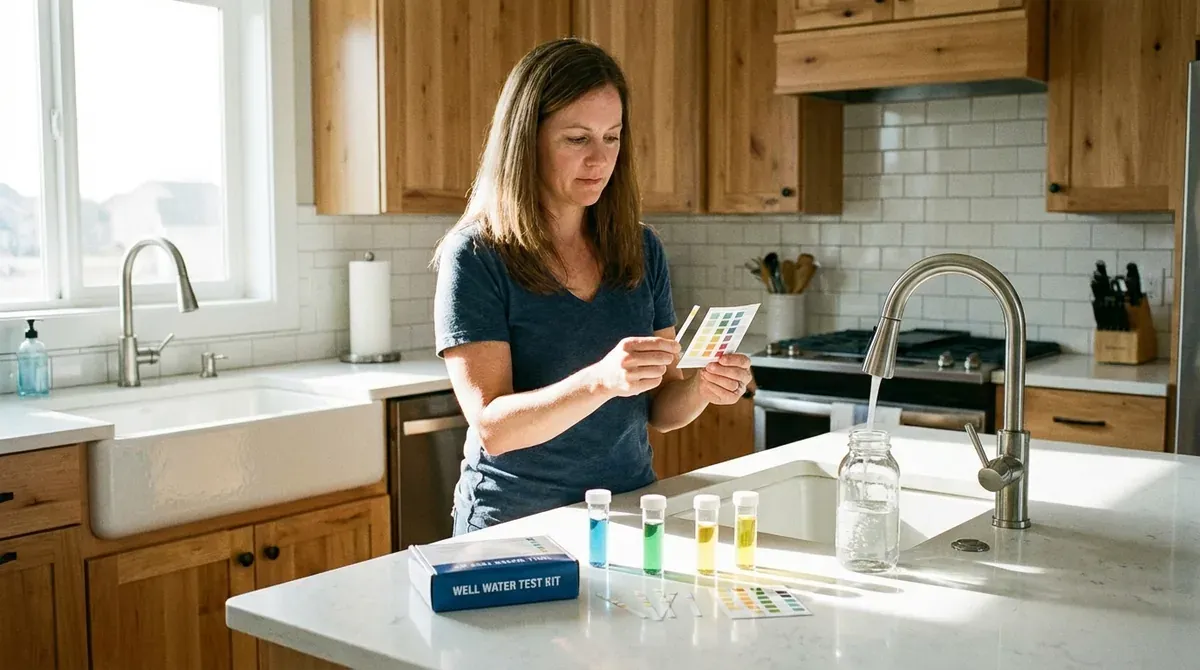
The short answer: yes, but only if untested
Well water can contain coliform bacteria, E. coli, nitrates, arsenic, lead, and other contaminants that cause illness ranging from acute gastrointestinal symptoms to long-term developmental and cardiovascular effects. The EPA recommends testing all private wells annually at minimum.
The reassuring counterpoint: most well water is safe. We’ve found that homeowners who test annually and respond quickly to positive results rarely experience water-related illness. The problem is concentrated among homeowners who inherited a well and never tested it, or who tested it once years ago and assumed it was fine.
According to the EPA, every private well owner should test for at minimum: total coliform bacteria, nitrates, total dissolved solids, and pH level. These four tests cover the most common and most dangerous contamination pathways.
The CDC puts it plainly: high coliform counts indicate that harmful germs, including certain viruses, bacteria, and parasites, are likely also in your water. A positive test is not just an abstract number; it indicates a contamination pathway that likely carries multiple biological threats.
Contaminants that can make you sick
Different contaminants cause different health effects, and some of the most dangerous ones are completely undetectable by taste, smell, or appearance.
Coliform bacteria and E. coli
Coliform bacteria are the most commonly detected contaminant in private wells. They indicate that contamination pathways exist; surface water, animal waste, or septic system leakage is finding its way into your water supply.
E. coli is a subset of coliform bacteria, and its presence specifically signals fecal contamination. The CDC notes that standard tests “won’t identify dangerous E. coli strains,” so a positive E. coli result is treated as a health emergency regardless of the specific strain detected.
Symptoms: nausea, vomiting, diarrhea, and stomach cramps, typically appearing 12–72 hours after exposure. Most healthy adults recover within a week, but infants, the elderly, and immunocompromised individuals face more serious risks.
The safe level for bacteria in drinking water is zero, there is no acceptable threshold.
For a full breakdown of bacterial contamination and treatment options, see our guide on well water contamination.
Nitrates
Nitrates come from fertilizer runoff, septic systems, and naturally occurring nitrogen in soil. They’re particularly common in agricultural areas and in older wells with shallow depths.
Nitrates are dangerous primarily to infants under 6 months old. At levels above 10 mg/L, nitrates can cause methemoglobinemia (sometimes called blue baby syndrome), a condition that reduces the blood’s ability to carry oxygen. The condition can be fatal in infants. Adults and older children typically show no symptoms at levels that are dangerous to infants, which makes testing the only way to know you have a problem.
Safe level: below 10 mg/L (the EPA maximum contaminant level for nitrates).
Arsenic
Arsenic is a naturally occurring element in groundwater throughout much of the United States, particularly in the western states and parts of New England. It is completely undetectable by taste or smell. The water looks, smells, and tastes clean while containing dangerous levels.
Long-term arsenic exposure is linked to bladder, lung, and skin cancers, plus cardiovascular disease and skin problems. Short-term exposure at typical well concentrations rarely causes acute symptoms, which means most people have no idea they’re exposed until a test reveals it.
Safe level: below 10 micrograms per liter (µg/L), per EPA standards. Arsenic testing is recommended every 3–5 years.
Lead
Lead in well water typically comes not from the groundwater itself, but from your home’s plumbing: older pipes, solder, and fittings that leach lead as water sits in contact with them. An improperly adjusted water pH accelerates this leaching. The CDC notes that improper pH “causes heavy metals like lead to leach into drinking water.”
Lead causes developmental delays in children, affecting brain development, learning, and behavior. In adults, lead exposure is linked to cardiovascular disease and kidney problems. There is no safe level of lead in drinking water for children.
Volatile organic compounds (VOCs) and pesticides
If your well is located near farms, industrial sites, or older underground fuel storage tanks, chemical contamination is a real possibility. VOCs from industrial solvents and pesticides from agricultural runoff can enter groundwater.
These require specific testing beyond the standard annual panel. Contact your local health department about whether additional testing is appropriate given your location.
Who is most at risk
Not everyone is equally vulnerable to contaminated well water. We recommend more frequent testing and extra caution if your household includes:
Infants under 6 months: nitrates pose an acute, potentially fatal risk to infants who cannot metabolize them the way older children and adults can. The EPA specifically recommends more frequent testing for “households with small children.” If you have a newborn or are pregnant, test your well before the birth and again a few months after.
Pregnant individuals: nitrates, bacteria, and some chemical contaminants pose elevated risks during pregnancy. Test at the start of pregnancy if you haven’t tested within the past year.
Elderly individuals: older adults are more susceptible to waterborne illness and more likely to experience serious complications from bacterial contamination.
Immunocompromised individuals: people undergoing chemotherapy, organ transplant recipients, or anyone with a compromised immune system can develop serious illness from bacteria levels that cause only mild symptoms in healthy adults.
Pets and livestock: animals are also vulnerable to bacterial and nitrate contamination. If livestock is drinking from a well-connected system, test accordingly.
Warning signs your well water may be contaminated
Some contamination is visible or detectable without a test. Watch for:
- Cloudy, yellow, brown, or reddish water: sediment, iron, or tannins
- Sulfur or rotten egg smell: hydrogen sulfide, common in certain geological areas
- Metallic taste: often lead or iron; worth testing immediately
- White or gray staining on sinks, fixtures, or laundry: hardness minerals
- Chemical smell: VOCs or pesticide contamination
Here’s the critical caveat: arsenic, nitrates, and many bacteria have no taste, smell, or color. Your water can look and taste perfectly clean while containing dangerous levels of these contaminants. Visible and sensory signs of contamination are useful, but their absence does not mean your water is safe.
Events that require testing regardless of how the water looks or tastes:
- Flooding near your well
- Any repair work done on the well, pump, or casing
- New purchase of a property with a private well
- Notification that neighboring wells have contamination issues
- Nearby construction, new agricultural activity, or fuel spill
The CDC recommends testing when you notice “changes in water taste, color, or smell” and also when any of the above events occur, regardless of apparent water quality.
What to do if you suspect contamination
If you have reason to believe your well water is contaminated, here is the sequence we recommend:
-
Switch to bottled water immediately if you suspect bacterial contamination. For chemical contamination concerns (arsenic, nitrates), bottled water is also the safe choice while you arrange testing.
-
Order a certified lab test, not a DIY strip for initial diagnosis. DIY kits costing $10–$30 are useful for quick screening, but the gold standard for diagnosis is a state-certified laboratory running a full panel at $20–$300+. Your local health department maintains a list of certified labs and may offer free or subsidized testing.
-
Interpret the results carefully. A total coliform positive and an E. coli positive require different responses. Read our guide on how to test your well water for guidance on interpreting lab results.
-
Take action based on the specific contaminant:
- Bacteria: shock chlorination, followed by retest. See our disinfection guide for the step-by-step process.
- Nitrates: a water treatment system (reverse osmosis or distillation) removes nitrates. Boiling water does not; it concentrates nitrates.
- Arsenic: reverse osmosis or activated alumina filtration. A licensed water treatment specialist can size the right system.
- Lead: address the plumbing source; point-of-use reverse osmosis or NSF-certified lead filters at the tap.
- Retest after any treatment to confirm the issue is resolved.
If you’re dealing with recurring well issues that could affect water quality (including pump problems or casing concerns), our guide on well pump repair covers the mechanical side of private well maintenance. Discolored water or pressure fluctuations alongside a positive bacteria test may also indicate a pressure switch or pump issue worth investigating at the same time.
External resources
- EPA Private Well Protection Guidelines{:target=“_blank”}: annual testing requirements and protection measures
- CDC Well Water Testing Guidelines{:target=“_blank”}: testing frequency and certified lab requirements
- CDC Nitrate Health Effects{:target=“_blank”}: detailed information on nitrate risks, especially for infants
FAQ
Can well water make you sick even if it looks and tastes clean?
Yes. Arsenic, nitrates, and many bacteria have no detectable taste, smell, or color. Water can appear perfectly clear and taste normal while containing dangerous levels of these contaminants. The only way to know your well water is safe is to test it with a certified laboratory. Sensory evaluation is not a reliable safety indicator.
What are the symptoms of drinking contaminated well water?
Bacterial contamination typically causes nausea, vomiting, diarrhea, and stomach cramps appearing 12–72 hours after exposure. Nitrate poisoning in infants causes bluish skin and labored breathing. Long-term exposure to arsenic or lead often has no acute symptoms; effects appear gradually over months or years. If you or a family member has symptoms you believe are linked to your water, contact your doctor and your local health department.
How long does it take to get sick from contaminated well water?
For bacterial contamination, gastrointestinal symptoms typically appear within 12–72 hours of exposure. For chemical contaminants like arsenic or lead, illness develops over months to years of chronic exposure. There are usually no acute symptoms from a single exposure at typical groundwater concentration levels.
Should I test my well water every year?
Yes. The EPA and CDC both recommend testing private wells at least once per year for total coliform bacteria, nitrates, total dissolved solids, and pH level. Test more frequently if your household includes infants, pregnant individuals, elderly members, or immunocompromised people. Also test immediately after flooding, well repairs, or any noticed changes in water quality.
Is well water safe to drink during pregnancy?
Tested well water that meets EPA standards is generally safe during pregnancy. However, we recommend testing at the start of pregnancy if you haven’t tested within the past year. Nitrates and bacteria are the primary concerns for pregnant individuals. If your test results are within EPA limits, your water is safe. If you have any doubt, switch to bottled water until results come back. The risk of untested water is not worth taking during pregnancy.