Common Septic Tank Problems and How to Fix Them
When something goes wrong with a septic system, most homeowners face the same puzzle: weird smells, slow drains, soggy patches in the yard, but no clear idea what’s actually broken or how serious it is. Common septic tank problems range from a simple pump-out (under $500) to full drain field replacement that can run $15,000 or more. Knowing which one you’re dealing with changes everything.
Our septic system pumping guide covers the maintenance side in depth. This article focuses on diagnosis: matching symptoms to specific problems so you can decide whether to grab the phone and call a pro, or handle it yourself.
Quick diagnosis table
Use this table to match what you’re seeing to the most likely cause:
| Problem | Symptoms | Likely Cause | DIY or Pro? |
|---|---|---|---|
| Tank needs pumping | Slow drains throughout house, odors near tank | Sludge/scum buildup | Pro (pump every 3–5 years) |
| Clogged inlet/pipes | Single fixture backing up, gurgling sounds | Non-biodegradable blockage | Maybe DIY (assess first) |
| Drain field failure | Soggy yard, lush grass patches, persistent odors | Saturated or damaged soil | Pro (expensive repair) |
| Tree root intrusion | Recurring clogs, slow drains over time | Root infiltration | Pro |
| Bacterial die-off | Strong odors, slow drains after chemical use | Beneficial bacteria killed | DIY (bacteria additives) |
| Cracked tank | Groundwater contamination, wet spots over tank | Structural damage | Pro |
| Pump failure | Alarm going off, sewage backup | Mechanical failure | Pro |
Video guide
Video: “Your Septic System: Worst Mistakes” by Sachs Realty
Problem 1: tank needs pumping
This is the most common septic problem we see, and it’s entirely preventable with a regular schedule.
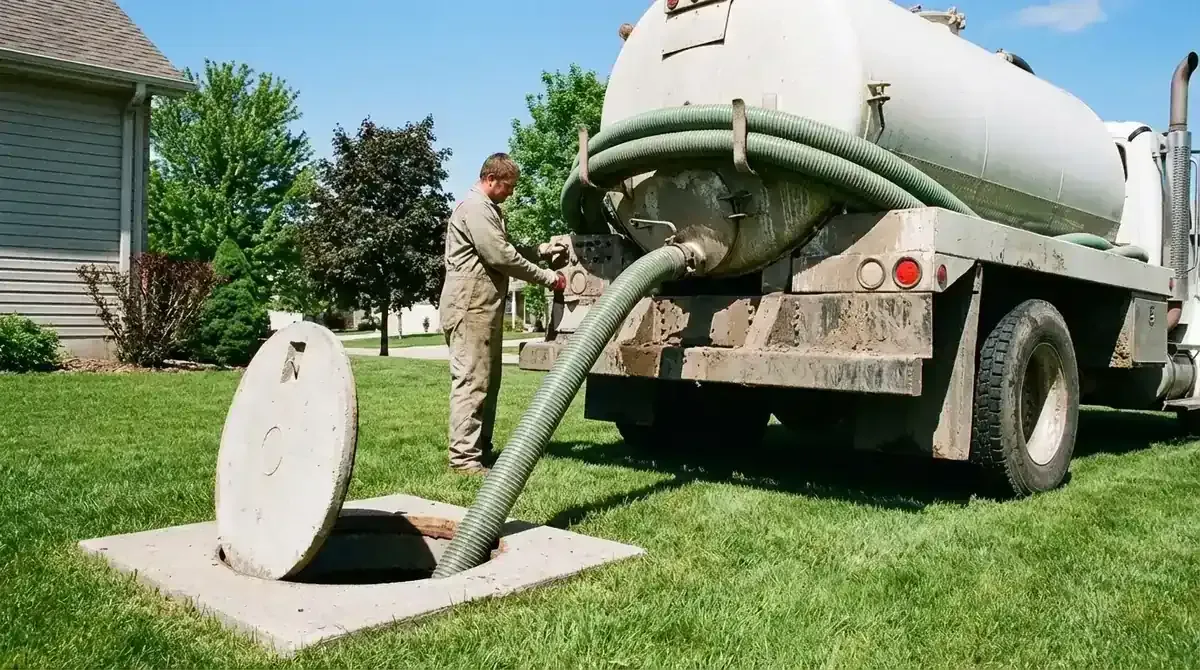
Septic tanks separate waste into three layers: sludge (heavy solids at the bottom), effluent (the liquid middle layer that drains to the field), and scum (oils and grease floating at the top). When sludge builds up to within 6 inches of the outlet pipe, or scum reaches within 12 inches, solids start escaping into the drain field. That’s when a straightforward $300–$425 pump-out turns into a drain field repair costing $2,000–$15,000 or more.
The EPA recommends pumping every 3–5 years for typical households. A family of four using 70 gallons per person per day generates enough waste to fill a tank faster than most people expect. If you don’t know the last time your tank was pumped, assume it’s overdue.
Signs the tank is the problem: multiple drains throughout the house run slowly at the same time, gurgling sounds from toilets or drains, odors near the tank area, or sewage backup after heavy water use.
A septic tank backup can look identical to a clog initially. The difference: a full tank backs up at every fixture while a clog usually hits one or two.
Problem 2: clogged pipes or baffles
A clogged septic system usually starts at the inlet baffle, the T-shaped pipe that directs incoming wastewater into the tank. When non-biodegradable materials build up at the inlet, individual fixtures back up rather than the whole house.
The EPA is direct about what should never go down a drain connected to a septic system:
- Wipes (including “flushable” brands)
- Cooking grease and oils
- Feminine hygiene products
- Dental floss
- Paper towels
- Diapers and cat litter
- Pharmaceuticals
- Household chemicals and paint solvents
Garbage disposals are a major contributor too. Ground food solids add significantly to sludge accumulation and can shorten the pumping interval.
A simple inlet baffle clog sometimes clears with a plumber’s snake inserted at the cleanout. If you’re comfortable with basic plumbing, it’s a reasonable first attempt. If snaking doesn’t clear it, or the clog is at the outlet baffle or further into the distribution pipes, stop. Further DIY work risks pushing debris into the drain field and turning a $200 repair into a $10,000 one.
Problem 3: drain field failure
Drain field failure is the most expensive septic problem you can face. Repair or replacement costs typically run $3,000–$15,000 depending on system size and soil conditions.
The drain field works by distributing clarified effluent through perforated pipes into the surrounding soil, where bacteria and natural filtration treat it. When soil becomes saturated from system overload, compaction, or biomat buildup, it stops accepting liquid. At that point the effluent has nowhere to go.
Classic warning signs: soft, wet, or unusually lush patches of grass over the drain field; sewage odors near the field (not just the tank); gurgling that doesn’t resolve after pumping.
Check out the signs of septic system failure for a more detailed breakdown of what early and advanced failure looks like.
What causes drain field failure:
- Overloading. Too much water entering the system. Laundry-heavy days, leaking toilets, or a failed pressure relief valve can flood a field faster than it can drain.
- Root intrusion. Tree and shrub roots grow toward moisture and can infiltrate distribution pipes.
- Driving or parking on the field. Vehicle weight compacts the soil and crushes pipes. The EPA is unambiguous: never drive on a drain field, not even once.
- Age and biomat buildup. Over time, a layer of anaerobic bacteria forms at the soil surface, reducing absorption. Properly maintained fields last 20–30 years; neglected ones can fail in 10.
According to EPA septic system types{:target=“_blank”}, some soil conditions that cause conventional field failure can be addressed with alternative systems. That’s a contractor conversation, not a DIY fix.
Problem 4: bacterial imbalance
A septic tank is an active biological treatment system, not just a holding container. The beneficial bacteria living in your tank break down solid waste into liquid and gases. Kill those bacteria, and the tank fills with unprocessed solids much faster than normal.
Harsh chemicals are the most common culprit. Bleach-based cleaners, antibacterial soaps, drain cleaners (including enzyme-based ones in high concentrations), and antibiotic medications all reduce bacterial populations. A single heavy cleaning session with several bleach cycles can noticeably affect system performance within days.
This is the one common septic tank problem that’s genuinely DIY-fixable. Products like septic tank treatments (RID-X, Roebic K-37, and similar) introduce concentrated bacterial cultures and enzymes to reestablish the microbial balance. Follow the dosing instructions on the label; more is not better.
Switch to septic-safe cleaning products going forward. Avoid pouring any of the following down drains:
- Bleach in large quantities
- Drain cleaners (chemical or enzyme-based)
- Oil-based paints or solvents
- Cooking oils
We’d also add: don’t take the advice to “flush a yeast packet down the toilet to restore bacteria.” That’s folk wisdom with no meaningful effect on a tank of several hundred gallons.
Problem 5: tree root intrusion
Tree roots grow aggressively toward water, and septic pipes (especially older clay or concrete lines) are exactly the kind of moisture source they seek out. Once roots enter a pipe joint or small crack, they expand over time until the pipe is partially or fully blocked.
Signs of root intrusion: clogs that recur every few months even after professional snaking, very slow drains that worsen gradually over years (not sudden), or a camera inspection showing root tendrils inside pipes.
The EPA’s guidance on planting near drain fields applies here: keep trees at appropriate distances. As a practical rule, plant trees no closer than their expected mature height to any septic component. A tree that grows 30 feet tall belongs at least 30 feet from the tank, distribution box, and drain field lines.
Native grasses and shallow-rooted ground cover are the right plants for the area over and around a drain field. No vegetables (health risk from effluent), no trees, no shrubs with aggressive root systems.
Root intrusion that has reached the point of causing backups requires a pro. They’ll jet-clear the lines to remove existing roots, then recommend either pipe lining or replacement depending on the damage. Cutting roots back buys time, but it doesn’t solve the problem if the pipe is already cracked. Roots will return.
Problem 6: structural damage (cracked tank)
Septic tanks (concrete, fiberglass, or plastic) can crack due to age, shifting soil pressure, freeze-thaw cycles, or vehicles driving over them. Cracks cause two problems: solids exit where they shouldn’t, and groundwater infiltrates the tank and dilutes the treatment process or floods the system.
Signs your tank may be cracked: wet areas directly over the buried tank (not the drain field), a tank that fills unusually fast between pumpings, a professional noting water above the inlet during inspection, or structural damage visible during a routine pump-out.
Cracked tanks need professional repair or replacement. The fix depends on where the crack is, tank material, and local regulations. In some states, a repaired concrete tank is acceptable; in others, replacement is required. This is not a DIY project. Repairs that don’t meet code create liability if the system fails and contaminates a neighbor’s property or well.
When to call a professional vs. DIY
Here’s the practical breakdown:
| Situation | Approach |
|---|---|
| Tank overdue for pumping | Call pro (scheduled maintenance) |
| Bacterial die-off from chemicals | DIY (bacteria additives) |
| Single-fixture clog, attempted snaking | Try DIY first, then call if it doesn’t clear |
| Drain field showing wet spots | Call pro immediately, do not delay |
| Root intrusion confirmed | Call pro (jetting + pipe assessment) |
| Cracked or structurally damaged tank | Call pro (permit-required repair) |
| Pump alarm going off | Call pro (mechanical failure) |
Knowing septic repair costs before you call helps you ask the right questions and avoid being upsold on repairs that aren’t necessary.
The EPA septic maintenance guidelines{:target=“_blank”} cover the full list of maintenance requirements, which is worth reviewing if your system hasn’t been serviced recently.
FAQ
How do I know if my septic tank is failing?
The most reliable signs of septic failure are sewage odors near the tank or drain field, wet or spongy grass over the drain field area, and multiple drains backing up simultaneously throughout the house. A single slow drain is often a pipe clog; whole-house slowdown points to the tank or field. For a detailed symptom checklist, see our guide to signs of septic system failure.
Can a septic tank last forever?
No. Concrete septic tanks typically last 40 years with proper maintenance; fiberglass and plastic tanks can last 30–40 years as well. What fails first is usually the drain field (15–30 years depending on soil and usage) rather than the tank itself. Regular pumping every 3–5 years, avoiding non-biodegradable flushables, and keeping vehicles off the field are the main factors that determine how long a system lasts.
What chemicals damage a septic system?
Bleach-based cleaners, antibacterial soaps, drain cleaners, oil-based paints, solvents, and large doses of antibiotic medications all kill the beneficial bacteria that make a septic tank function. Even “natural” products like lemon juice in large quantities can lower the tank’s pH enough to harm bacterial populations. Use septic-safe cleaning products and limit bleach use to small quantities.
How much do septic repairs cost?
Costs vary significantly by problem type. Standard pumping runs $300–$425 for most residential tanks. Baffle replacement costs $150–$500. Drain field repair starts around $1,500 and can exceed $15,000 for full replacement. Tree root clearing and jetting runs $300–$600 depending on pipe length. Tank replacement in most markets costs $3,000–$8,000 for the tank alone, plus labor and permitting. Get multiple quotes, and ask specifically whether the repair requires a permit; unpermitted septic work can cause legal problems during a home sale.