Deep Well Pump Guide: Selection, Sizing, and Installation
When a homeowner’s private well is drilled deeper than 25 feet, a standard shallow well pump won’t do the job. The physics of suction-lift cap out at roughly 25 feet at sea level, which means anyone pulling water from a drilled well (typically 100 to 400 feet deep) needs a pump engineered for the task. This guide covers the types of well pumps available for deep wells, how to size them correctly, what the top brands offer, and what to expect when installation day arrives.
What makes a well “deep” (and why it matters for your pump)
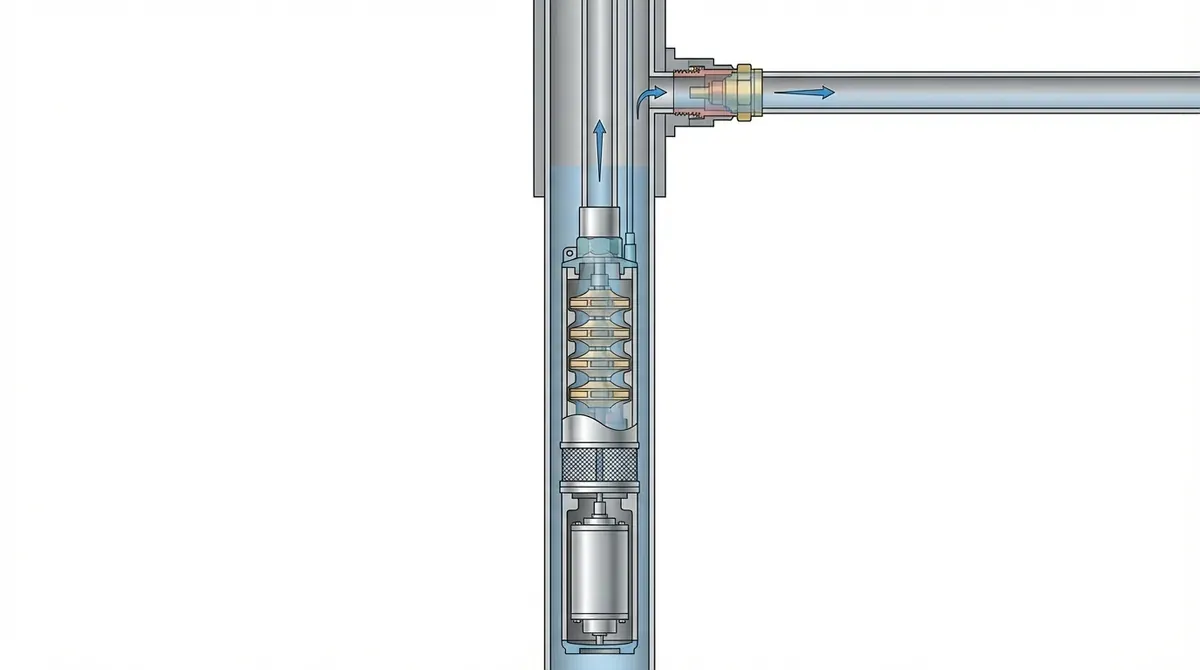
A deep well pump is a submersible or two-pipe jet pump designed to lift water from wells drilled deeper than 25 feet, which is the maximum suction-lift limit of shallow well and single-pipe jet pumps. Most residential deep wells range from 100 to 400 feet, requiring a pump with sufficient horsepower to overcome that static head and deliver adequate flow to the house.
The 25-foot threshold is not arbitrary. At sea level, atmospheric pressure is roughly 14.7 PSI. A perfect vacuum can only lift water about 33 feet against that pressure, and real pumps are never perfect, so practical limits fall closer to 20–25 feet. Anything deeper requires either pushing water up from below (submersible) or using a two-pipe jet system that places the jet assembly down in the well.
If your well is deeper than 25 feet, look at a shallow well pump only if you’re misidentifying your system. For any drilled well at depth, read on.
Submersible vs. two-pipe jet: which works best for deep wells?
Most homeowners shopping for a deep well pump are choosing between two technologies:
Two-pipe (convertible) jet pumps can reach 80–125 feet. The motor stays above ground, which makes service straightforward. You don’t need to pull the pump to replace the motor or check valve. The trade-off is lower energy efficiency, more vulnerability to freezing if the pump house is unheated, and a practical depth limit of around 125 feet.
Submersible pumps go deeper, routinely to 400 feet, with specialized models reaching 1,000 feet. The motor and pump assembly live downhole in the water, where they run cooler and more efficiently. Every major metric favors the submersible for drilled wells: higher efficiency, longer service life, quieter operation, and better pressure consistency. The downside is that any motor or pump failure means pulling the pump, which requires a well-pulling rig.
We recommend submersible pumps for any well deeper than 80 feet. The energy savings over 10–15 years of operation outweigh the one-time cost of pulling the pump for service, and the reliability record of modern submersible motors is significantly better than above-ground jet pump motors in demanding conditions.
How to size a deep well pump (depth + GPM + horsepower)
Three factors determine the right pump for a deep well: depth, flow demand, and pipe constraints.
Step 1: confirm your well depth. Pull out the driller’s completion report (required by most states and kept by the original installer). If you don’t have it, your county health department or state well database may have a copy. Never guess on depth. Buying a ½ HP pump for a 250-foot well is a fast path to motor burnout.
Step 2: calculate your GPM demand. Use these household rules of thumb:
- 1-bedroom household: 3 GPM minimum
- 3-bedroom household: 5–8 GPM
- 4+ bedrooms or adding irrigation: 10–15 GPM
For sizing your well pump by GPM, the full flow rate guide walks through demand calculations for irrigation and livestock, which can triple a typical household’s peak draw.
Step 3: match horsepower to depth and demand. General guidelines:
- ½ HP: wells to 150 feet, moderate household demand
- ¾ HP: wells 150–250 feet, or high-demand household at shallower depth
- 1 HP: wells 250–350 feet
- 1.5 HP+: wells over 350 feet or high-demand/irrigation applications
Always cross-reference these estimates with the pump’s performance curve (available on the manufacturer spec sheet), which shows GPM output at various depths.
Pipe diameter matters too. Most residential submersibles fit inside a 4-inch casing on a 1.25-inch drop pipe. Higher-output pumps may require a 5- or 6-inch casing and 1.5-inch drop pipe. Confirm your casing diameter before ordering.
Brands like Grundfos, Franklin, Goulds, and CountyLine all publish clear depth rating and GPM specifications, which are the same criteria worldwaterreserve.com’s pump evaluation uses, making it straightforward to match pump to well.
Best deep well pump brands (what we found)
We looked at the four brands that dominate the residential deep well pump market. Each has a clear strength and a trade-off.
Grundfos: German-engineered submersibles with stainless steel construction. Residential models run $400–$900. We found Grundfos the strongest choice for corrosive water conditions or situations where a motor failure means no running water for an extended period. Parts are available but may require a Grundfos dealer.
Franklin Electric: the dominant US manufacturer of submersible pump motors and the OEM motor supplier for many other brands. Franklin’s 3-wire motor design separates the starting capacitor and relay into the above-ground control box (typically $75 to replace), which makes electrical troubleshooting far more DIY-accessible than competing designs. Wide dealer and parts network.
Goulds Water Technology (ITT brand): the go-to mid-range pump for irrigation and pump supply houses across the Northeast and Midwest. Reliable, widely stocked, and priced between Franklin and Grundfos. We found Goulds easiest to source quickly in rural areas.
CountyLine (Tractor Supply brand): budget-friendly submersibles for lower-demand rural applications. Depth ratings are typically more limited and HP options are narrower. Best for light-duty residential use where cost is the primary constraint.
For most homeowners, we recommend Franklin Electric or Goulds: parts availability is excellent, and a pump controller at $75 is far cheaper to swap than waiting for a specialty part.
Deep well pump installation overview (what to expect)
Installing a submersible pump in a deep well is not a standard DIY project. Pulling a pump from 200 feet of drop pipe requires either a well-pulling rig (specialized equipment that contractors own) or a pump-pulling crane adapted for the job. Attempting it with a garden hose reel or jury-rigged pulley system risks dropping the pump. Losing a pump at depth is costly and sometimes unrecoverable.
What the installation process involves:
- Pull the existing pump and drop pipe from the well casing
- Inspect the well casing, torque arrestors, and safety rope
- Lower the new pump on new drop pipe with the safety rope tied off at the well head
- Connect the electrical wiring in the well head junction box
- Pressure-test the system before closing the well cap
Cost expectations: replacing a deep well submersible typically runs $600–$1,200 for the full job, with the pump itself costing $200–$600 depending on depth rating and brand, and professional labor adding $300–$600. Deeper wells with longer drop pipe runs cost more.
What is DIY-territory above ground:
- Pressure switch replacement (~$25, 30-minute job)
- Pump controller/control box swap (~$75, if motor uses a separate control box)
- Pressure tank replacement ($200+ for the tank; labor is above-ground work)
Always shut off the circuit breaker before touching any pump wiring or pressure switch. A repeatedly tripping breaker (one that won’t reset or trips again immediately) signals a serious motor fault requiring professional evaluation, not a DIY fix.
Signs your deep well pump is failing
Submersible pumps don’t give much warning before they fail, but these signals should trigger investigation:
- Low or fluctuating pressure at fixtures (could be pump wear, a failing pressure tank, or a partially blocked intake)
- Short cycling where the pump kicks on and off rapidly (most often a waterlogged pressure tank, but also a sign of pump impeller wear)
- Sputtering air from taps (air in the line suggests the pump is drawing near the water table during a drought or heavy-use period)
- Discolored or gritty water (sand or sediment in the discharge indicates pump intake erosion or possible well-wall collapse)
- Pump runs continuously without building pressure (broken water line, failed check valve, or damaged casing connector; this one almost always requires professional investigation)
When a well pump runs but delivers no water, the problem is usually underground or downhole. At that point, pulling the pump is the only way to know what broke.
If you’re seeing any of these symptoms, start with our well pump not working diagnosis guide before scheduling a service call.
For authoritative well maintenance guidance, the EPA private well program and Energy.gov’s well pump overview cover what inspections and tests to request from a licensed pump contractor.
FAQ
How deep can a deep well pump reach?
A submersible well pump can reach 400 feet or more in residential applications, with agricultural and commercial submersibles going to 1,000 feet. Two-pipe jet pumps top out at about 80–125 feet. The limiting factor is horsepower. Each additional foot of depth requires the pump to work against greater static head. For wells over 350 feet, plan for at least a 1.5 HP pump and consult your installer on wire sizing to prevent voltage drop.
Can I install a deep well pump myself?
Above-ground components (pressure switch, control box, pressure tank) are DIY-friendly. Pulling and reinstalling the submersible pump itself requires a well-pulling rig that most homeowners don’t own. Attempting to pull 200 feet of drop pipe by hand risks dropping the pump downhole, which is an expensive recovery job. Most homeowners DIY the wiring and pressure components and hire a pump contractor for the pull.
How long does a submersible deep well pump last?
A quality submersible pump (Franklin, Grundfos, Goulds) typically lasts 8–15 years under normal residential use. Pumps in sandy wells, high-cycling situations, or with power quality issues may fail sooner. The pressure tank and pressure switch usually need replacement before the pump itself. A waterlogged pressure tank causes rapid cycling that shortens pump life.
What’s the difference between a 2-wire and 3-wire submersible pump?
A 2-wire pump has its starting capacitor built into the motor body, meaning the only component above ground is the pressure switch. A 3-wire pump has its capacitor and starting relay in a separate control box above ground. We find 3-wire pumps much easier to service. The $75 control box can be replaced without pulling the pump. Franklin Electric popularized the 3-wire design and it remains the standard for residential submersibles.
How much does it cost to replace a deep well pump?
Replacing a submersible pump in a deep well typically costs $600–$1,200 all-in, including the pump ($200–$600), drop pipe if replaced, and professional labor ($300–$600). The well depth and local labor rates drive the range. If only the pressure switch or control box has failed, those repairs run $25–$150 and are entirely above ground.
For the complete guide to submersible pump selection, see our submersible well pump guide.