Hair Clog Bathroom Drain: How to Remove It Fast
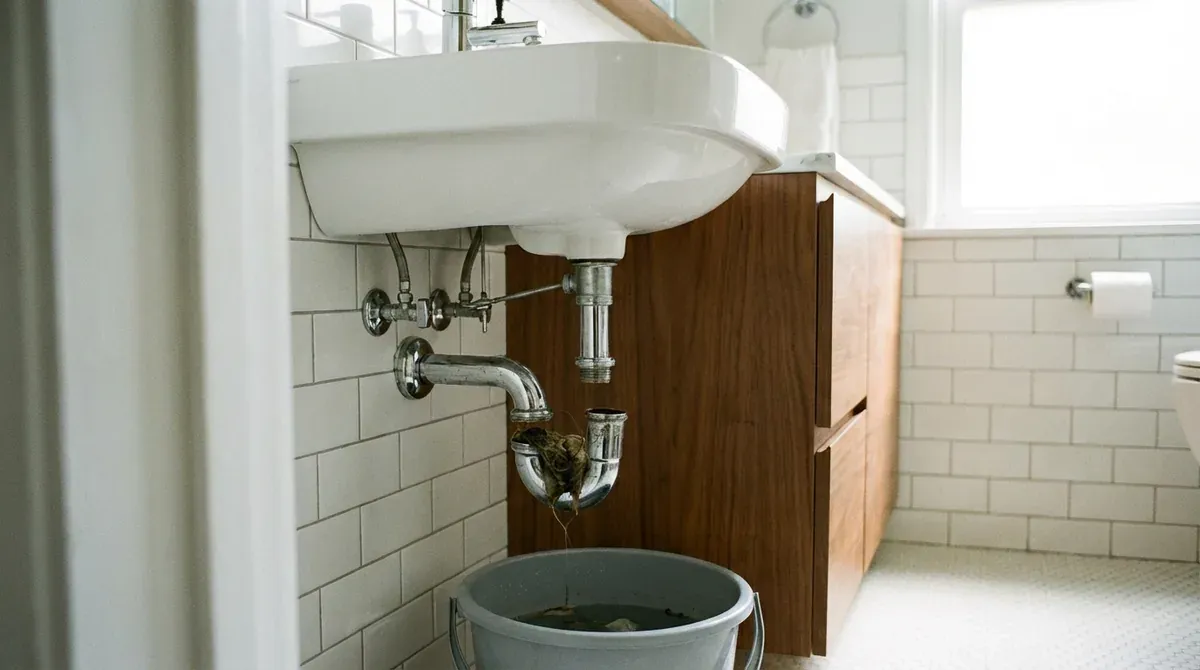
A hair clog is the most common reason a bathroom sink drains slowly. It forms around the stopper mechanism, builds up over weeks, and resists every remedy you pour down the drain, because you have to physically remove it, not dissolve it. We find that pulling the stopper and clearing the accumulated hair resolves most bathroom sink slowdowns completely. When it doesn’t, a wire coat hanger or a $5 drain claw finishes the job in under ten minutes total.
For context on other clog types beyond hair, see our clogged bathroom sink drain guide, which maps out all three main causes and when each fix applies.
What you’ll need
No special tools are required for most hair clogs:
- Rubber gloves (highly recommended)
- Paper towels or old rags
- A wire coat hanger straightened out, or a plastic drain claw tool (~$5, often called a “Zip-It” or hair removal tool)
- Optional: needle-nose pliers or slip-joint pliers to unscrew a stuck stopper retaining nut
- Optional: a flashlight to see into the drain opening
If the stopper pull doesn’t fully clear it, the wire hanger or drain claw handles the rest.
Why hair clogs bathroom drains (but not kitchen sinks)
Bathroom drains collect hair constantly, from washing your face, shaving, and any grooming done over the sink. Kitchen drains deal primarily with grease and food debris; hair is rarely the issue there.
The accumulation point is the stopper mechanism. Bathroom sink stoppers have a pivot rod, a horizontal rod that connects to the lift rod (the knob behind the faucet) and passes through the drain body. Hair wraps around this pivot rod and around the stopper itself, and soap scum binds those strands together into a dense, grey clump over time.
Clearing the stopper area is the correct first step for any slow bathroom sink, not pouring anything down the drain. Pouring baking soda, vinegar, or any other product over a hair clog pushes the liquid around the blockage rather than through it. As the Rodgers Plumbing guide notes, you should “remove any external hair or gunk from the drain” before any chemical or liquid treatment.
Step-by-step: remove the hair clog
Step 1: put on gloves and clear under the sink
You may need access to the area under the sink if the stopper has a pivot rod. Clear cleaning supplies out of the way and have paper towels ready.
Step 2: remove the stopper
There are three stopper types:
Lift-and-turn stopper: Lift straight up while turning counterclockwise. These unscrew out.
Push-and-pull stopper: Lift up and look for a set screw on the side of the stopper body. Unscrew the set screw with a small flathead screwdriver, then lift the stopper out.
Popup stopper (most common): These are connected to the pivot rod under the sink. Lift the stopper; it may come straight out. If it doesn’t, look under the sink for the pivot rod: it enters the drain body horizontally about 4–6 inches below the basin. Unscrew the retaining nut (hand-tight usually), slide the pivot rod out of the drain body, and the stopper lifts free from above.
Step 3: clear hair from the stopper
Pull off accumulated hair from the stopper body and the pivot rod end. This is the unpleasant part. The clump is often dense and may have been building for months. Put the material in a paper towel and discard.
Step 4: reach into the drain opening
Even after clearing the stopper, there may be additional hair 2–6 inches down the drain pipe. Take your straightened wire coat hanger (or drain claw tool) and insert it into the drain opening. Move it in a slow circular motion and pull upward; the claw or bent tip grabs hair and pulls it out.
We recommend the wire hanger method for immediate household use. The ATCO Energy guide confirms wire coat hangers are “effective for reaching nearby clogs,” as effective as a purchased drain claw for the shallow hair clogs that form in bathroom sinks.
Step 5: flush with hot tap water
Run hot tap water for 60 seconds. Do not use boiling water: it’s safe for metal traps but can soften PVC pipe joints over repeated use. Hot tap water is sufficient.
Step 6: reinstall the stopper
Reverse your removal steps. For popup stoppers: reinsert the pivot rod through the drain body and retaining nut before lowering the stopper back in, or thread the stopper back onto the pivot rod from above (depending on your stopper design). Hand-tighten the retaining nut.
Step 7: test
Run water and watch the drain speed. A cleared drain should empty as fast as the faucet runs.
Video: “How To Unclog A Bathroom Sink Drain” by Everyday Home Repairs
If pulling the hair didn’t fully fix it
If the drain is still slow after clearing the stopper and the drain opening, try this sequence:
Baking soda and vinegar flush: Pour 1 cup of baking soda down the drain, follow with 1 cup of vinegar. Cover the drain opening with a stopper or damp rag. Wait 5–10 minutes for the CO2 reaction to loosen remaining soap scum deposits. Flush with hot tap water. The LiquidPlumr guide documents this method in detail: the reaction between sodium bicarbonate and acetic acid produces carbon dioxide that loosens debris inside the pipe.
Plunger: Fill the sink with 2–3 inches of water. Press the cup plunger firmly over the drain. If there’s an overflow hole (the small opening near the top of the basin), block it with a damp rag; otherwise the suction you create escapes through that hole. Plunge 10–15 strokes, then pull off sharply. Repeat 2–3 times. For detailed plunger technique, see our guide on plunger technique for drains.
If still slow after both: The remaining restriction is in the P-trap or the drain pipe behind the wall, not at the stopper level. That requires a different fix.
Prevent future hair clogs
The best prevention takes less than a minute and costs almost nothing:
Drain strainer or hair catcher: A mesh strainer placed over the drain opening catches hair before it reaches the stopper mechanism. These cost $3–$8 and dramatically reduce clog frequency. Look for one with fine mesh that fits snugly in the drain opening.
Monthly stopper cleaning: Pull the stopper every 4–6 weeks and clear accumulated hair before it builds into a blockage. Takes 60 seconds when done regularly.
Weekly hot water flush: Run the hottest tap water for 30 seconds after your shower or shaving routine. This keeps soap scum from hardening around the pivot rod.
If you prefer the natural approach for ongoing maintenance, our home remedy approach for slow drains covers the baking soda and salt overnight soak, which is effective for keeping soap scum from accumulating.
FAQ
How do I remove a popup stopper from a bathroom sink?
Most popup stoppers can be lifted straight up. If they don’t come free, there’s a pivot rod underneath. Look under the sink for a horizontal rod entering the drain body about 4–6 inches below the basin floor. Unscrew the retaining nut (usually plastic, hand-tight), slide the pivot rod back out of the drain body, and the stopper will lift free from above. Reinsert the pivot rod through the stopper’s pivot hole when reinstalling.
Can I use Drano on a hair clog?
Drano and chemical drain openers work on hair by dissolving organic material, but they work slowly on dense hair clogs compared to physical removal. More importantly: if your home has a septic system, do not use Drano. The chemicals kill the beneficial bacteria that process waste in the septic tank, leading to tank failure. All the methods in this guide (wire hanger, baking soda, vinegar) are septic-safe. According to the EPA septic care guidelines, chemical drain cleaners are among the products that harm septic systems.
How deep can a hair clog be in a bathroom sink drain?
Most bathroom sink hair clogs form within the first 6 inches of the drain opening, at the stopper itself and around the pivot rod. Hair rarely travels further because the stopper catches it. If you’ve cleared the stopper and the drain is still slow, the restriction is soap scum in the drain pipe or a debris blockage in the P-trap, which is further down. Use a wire hanger or drain claw to reach the first 6 inches, then move to drain snake techniques if the issue is deeper.
Why does my bathroom sink keep getting clogged with hair?
Recurring hair clogs mean the stopper is functioning as designed (it’s catching hair) but isn’t being cleared often enough. We recommend monthly stopper cleaning as a baseline. If you have multiple people using the bathroom or longer hair in the household, every 2–3 weeks is more appropriate. A drain strainer placed over the stopper reduces the amount of hair that reaches the mechanism and further extends the interval between cleanings.
Will baking soda and vinegar dissolve hair in a drain?
No. Baking soda and vinegar do not dissolve hair. The reaction produces carbon dioxide, which loosens soap scum and helps flush minor deposits, but the fizzing action has no effect on the hair strands themselves. You must remove hair mechanically (with the stopper pull or a drain claw) before any liquid remedy will work effectively. After physical removal, a baking soda and vinegar flush is useful for clearing residual soap scum from the pipe walls.
For a full comparison of all five home remedies ranked by effectiveness, see our clogged bathroom sink home remedy guide. And if you’re still dealing with a slow drain after everything above, the next article you need is our how to use a drain snake guide, which covers pipe-level blockages beyond what stopper cleaning can reach.