Hair Clog Shower Drain: Removal Methods That Work
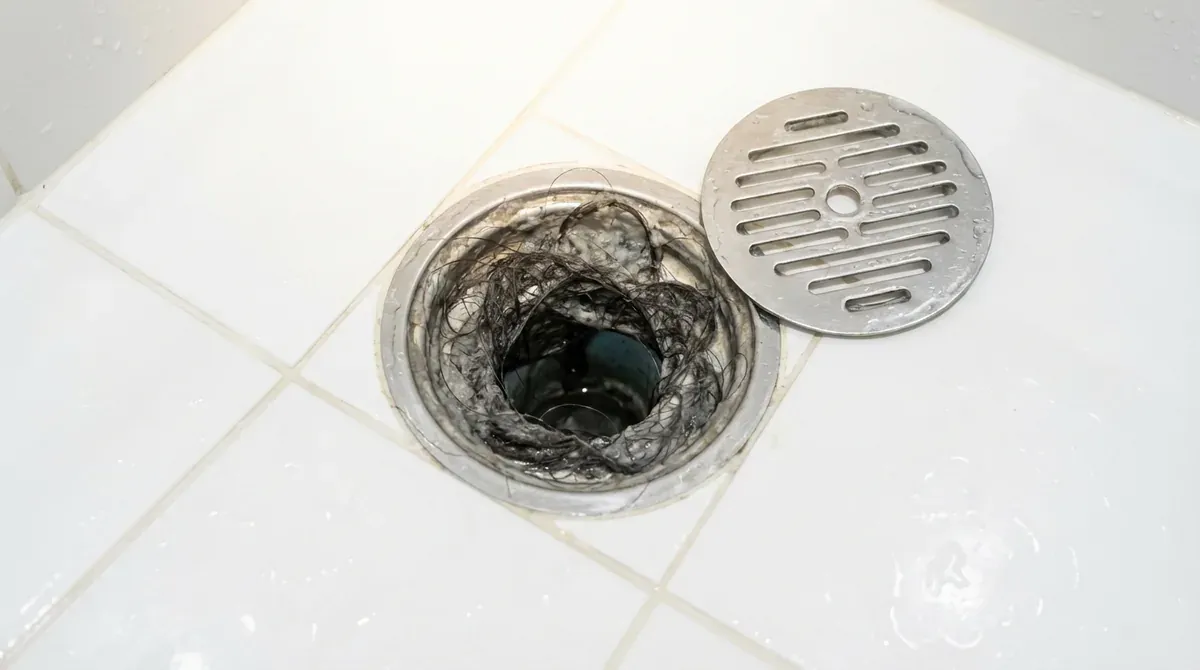
Hair clogs in shower drains almost always sit within 6 inches of the drain cover. A zip-it tool or bent wire hanger can clear most blockages in under 5 minutes without any disassembly. People reach for baking soda and vinegar first when the faster fix is just pulling the hair mat out directly.
Video: “How To Easily Remove Bathtub Drain Plug Stopper & UNCLOG” by Jonny DIY
Quick answer: how to remove hair from a shower drain
For most shower hair clogs:
- Remove the drain cover (snap off or unscrew the center screw)
- Reach in with rubber gloves or a bent wire hanger to hook the hair mat
- Pull it out in one piece and drop it in the trash
- Rinse with hot water
Total time: 3–5 minutes. Cost: $0. If the hair doesn’t budge with a hanger, a zip-it tool ($4–$7) handles it without requiring any further disassembly. If the clog is deeper or the drain is still slow after removal, use the baking soda flush in Method 3 below.
For our full shower drain clog guide, which covers all drain types and clog causes, see the hub page. If your problem is in a bathtub rather than a shower stall, our clogged bathtub drain article covers the bathtub-specific stopper and overflow plate setup.
Why hair clogs form so fast
The average adult sheds 50–100 hairs during a shower. That’s not much individually, but soap scum coats the inside of drain pipes and acts as a binding agent. Loose hair sticks to it, then catches more hair, then binds with more soap residue, until the mat is large enough to block the pipe.
People with long hair see blockages faster, but the mechanism is the same regardless of hair length. The mat builds up at the first bend or grate the hair can’t pass, which in most shower drains is right at the drain cover or the top of the P-trap, within arm’s reach.
Monthly cleaning eliminates the buildup before it reaches blockage size. We’ve found that a quick pull of the drain cover once a month catches most hair mats before they cause any slowdown at all. A 2-minute rinse with hot water and baking soda after that catches what manual removal misses.
Method 1: fingers and a bent wire hanger
Cost: $0 Time: 3–5 minutes Best for: Clogs within 6 inches of drain opening (the most common case)
Remove the drain cover first. Most shower drain covers snap off when you press a flat-head screwdriver into the gap and pry gently, no screws. Some have a visible center screw; remove it before lifting. A few designs twist counterclockwise to unlock.
Shine a flashlight into the drain. You should see the hair mat within a few inches. Wearing rubber gloves, reach in and grab the mat. It often comes out in one piece. If it’s slippery or you can’t get a grip, straighten a wire coat hanger, bend a small hook at one end, and insert the hook end down into the drain. Push 4–5 inches in, rotate slightly to catch hair fibers, then pull straight up slowly.
Dispose of the hair mat in the trash; flushing it down the toilet or drain just moves the problem.
Method 2: zip-it tool or drain snake
Cost: $4–$35 depending on tool Time: 5–15 minutes Best for: Clogs deeper than 6 inches, or hair that won’t come out with a hanger
A zip-it tool (also sold as a “drain snake stick” or “hair clog remover”) is a thin flexible plastic strip with barbs along both sides. Insert it straight into the drain, push to desired depth, twist a quarter turn, and pull slowly. The barbs snag hair fibers and pull them out.
It’s faster and cleaner than a wire hanger for most people. You don’t need to hook anything; the barbs do it passively as you withdraw the tool. At $4–$7 at any hardware store or online, it’s worth keeping under the sink.
For clogs deeper than 12 inches, past the P-trap and into the drain line, a 15–25 ft hand auger reaches further. Insert the cable into the drain opening, rotate the handle clockwise while pushing forward. When you feel resistance, you’ve found the clog. Hook it and pull back.
Method 3: baking soda and vinegar (follow-up flush)
Cost: Under $2 Time: 15–20 minutes including wait Best for: Clearing soap scum after manual hair removal; monthly maintenance
Baking soda and vinegar do not dissolve hair. The reaction loosens soap scum that binds the hair mat. Manual removal first, chemical flush second. If you skip the hair removal and go straight to the flush, the baking soda and vinegar will clean the pipe walls but leave the hair mat intact.
After pulling out the hair:
- Pour 1 cup of baking soda into the drain
- Follow with 1 cup of white vinegar; the mixture will bubble immediately
- Cover the drain with a stopper or wet cloth and keep the CO2 pressure inside the pipe
- Wait 10–15 minutes (ATCO Energy recommends 15 minutes for maximum effectiveness)
- Flush with boiling water. The heat adds pressure that pushes dissolved debris through.
The boiling water step matters. A tepid water flush after baking soda treatment leaves behind more residue than a proper boiling water flush, which uses both heat and gravity.
Use this sequence monthly to prevent soap scum from accumulating between hair-removal sessions.
For septic system owners: This method is septic-safe. The EPA advises against chemical drain cleaners in septic-connected homes. They kill the bacteria that break down waste in your tank. Baking soda and vinegar produce CO2 and water, neither of which harms septic function.
Prevention: keep hair out of the drain
A drain hair catcher sits on top of or inside the drain opening and catches hair before it enters the pipe. They run $5–$15 and clean in seconds; just lift and dump weekly.
Other habits that reduce buildup:
- Brush hair before showering to remove loose strands before they shed in the water
- Run hot water for 30 seconds after every shower to flush soap residue before it solidifies
- Monthly baking soda maintenance flush even when the drain seems clear
Prevention costs nothing and eliminates most hair clog problems before they start. A $5 drain catcher is significantly cheaper than a plumber visit at $100–$300.
FAQ
How do I remove a shower drain cover to get to the clog?
Most shower drain covers either snap off with a flat-head screwdriver (pry gently at the gap between cover and floor) or have a single center screw. A few designs require twisting counterclockwise to unlock before lifting. If none of these work, search the drain model number or manufacturer for the specific removal method. Forcing it can crack the cover or damage the surrounding tile.
Does baking soda and vinegar dissolve hair in drains?
No. Baking soda and vinegar produce a CO2 reaction that loosens soap scum and grease, but hair is made of keratin, a protein that doesn’t dissolve in a mild acid-base reaction. The mixture is effective for cleaning pipe walls and removing soap buildup, but it won’t clear a hair mat on its own. Remove the hair manually first, then use the flush as a follow-up.
How deep can a hair clog go in a shower drain?
Most hair clogs stop at the first obstruction: the drain cover grate, the drain body, or the top of the P-trap. This puts the clog within 2–6 inches of the drain opening in the majority of cases. Hair that passes the P-trap tends to keep moving into the main drain line rather than lodging, so very deep hair clogs in shower drains are uncommon. If a zip-it tool at 6–8 inches depth doesn’t find resistance, the issue may be soap scum buildup on the pipe walls rather than a discrete hair mat. In that case, a clogged bathroom sink drain guide can help you understand whether a similar soap scum issue is developing in your sink lines too.
What is the best drain hair catcher?
We recommend a stainless steel mesh dome-style catcher that sits on top of the drain rather than inside it. It’s easier to clean and doesn’t restrict flow as much as push-in filters. These run $8–$15. For a shower with an existing drain grate that’s flush with the tile, a silicone cup-style catcher that sits over the top works well and costs $5–$8. Both options outperform the basic plastic strainer inserts for long-term hair capture. Our how to clear a clogged drain guide covers drain maintenance across all fixture types, including which catcher styles work best per drain design.