Monthly drain care routine for clog-free drains
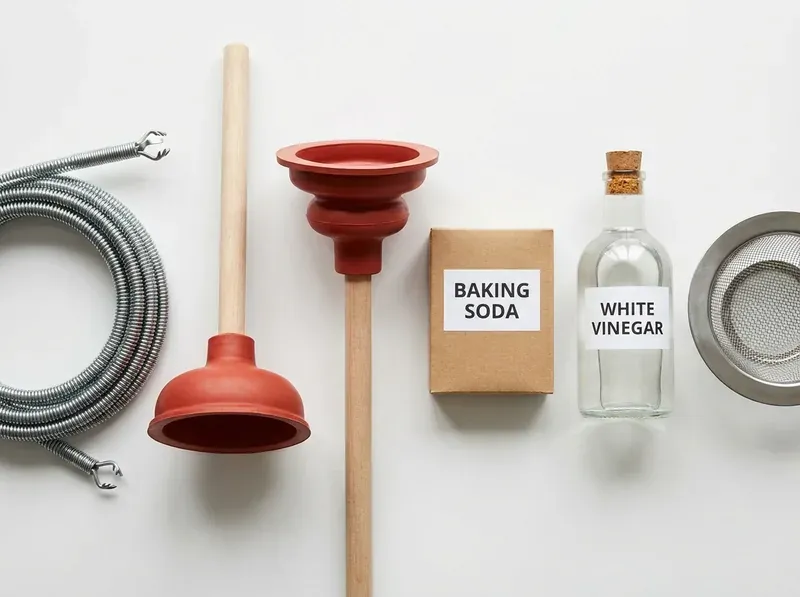
Our monthly drain care routine covers all fixtures in a single 20 to 30-minute session: remove strainer hair, flush with 1 cup of baking soda and 1 cup of vinegar, wait 5 to 15 minutes for the reaction to loosen buildup, then flush with boiling water. Repeat for kitchen, bathroom sink, shower, and tub drains. The entire routine costs less than $2 in baking soda and vinegar per month.
This is the clogged drain prevention routine we recommend for homeowners who want one organized monthly session rather than scattered habits. It works for both municipal sewer and private septic systems. The EPA WaterSense water-saving tips{:target=“_blank”} emphasize exactly this approach: routine, low-impact maintenance beats emergency repair every time.
Before starting, check your drain maintenance tips page if you want the full daily and weekly habit checklist that supplements this monthly routine.
Before you start: check these warning signs first
Do a 60-second assessment before running the routine. This tells you whether you have minor buildup (preventable with this routine) or an active clog (needs a different page first).
Signs you have minor buildup (this routine will help):
- The drain runs slow but does not back up
- You notice a faint smell near the drain
- Water pools briefly in the shower before draining but does clear
Signs you already have a real clog (fix that first):
- Water backs up completely and does not drain at all
- You hear gurgling in the toilet when a sink drains
- Multiple drains in the house are slow at the same time
What you need for the monthly routine
Gather these before you start so the session runs without interruption:
- Baking soda (1 cup per drain; 4 to 5 cups for a full home)
- White vinegar (1 cup per drain; 4 to 5 cups for a full home)
- Electric kettle or pot for boiling water
- Drain strainer or hair catcher (if not already installed on every fixture)
- Rubber gloves
- Old toothbrush (for scrubbing strainers)
- Drain snake (optional; useful if the shower drain ran slow last month)
- Bucket (if you plan to do P-trap cleaning)
Time estimate: Plan 20 to 30 minutes for a full home walkthrough (4 to 5 fixtures at 4 to 6 minutes each). The first session takes a few minutes longer as you get the routine down.
The baking soda and vinegar method uses 1 cup baking soda and 1 cup vinegar per drain, the standard ratio documented by Liquid-Plumr’s drain care guide.
The monthly routine: room by room
Work through fixtures in this order: kitchen sink, bathroom sink, shower, bathtub, and any floor drains. Start boiling water for the first drain while you prep the next one.
Kitchen sink
- Remove the strainer and scrub it with the old toothbrush under hot water
- Pour one full kettle of boiling water down the drain to soften any grease
- Pour 1 cup of baking soda directly down the drain and let it sit for 5 minutes
- Pour 1 cup of white vinegar and plug the drain immediately
- Wait 5 to 15 minutes. You will hear a fizzing reaction. That is correct.
- Flush with another full kettle of boiling water
- Run the hot tap for 30 seconds to clear any remaining loosened debris
The kitchen drain is the highest-risk fixture for grease buildup, so the double boiling water flush (before and after) matters here.
Bathroom sink
- Remove the stopper or strainer and clear any hair
- Run the same baking soda and vinegar flush (1 cup each, plug, wait 5 to 15 minutes, boiling water)
- While waiting, check under the sink: look for any condensation or dripping from the P-trap, which can signal a slow leak developing
Shower drain
- Remove the strainer and pull out any accumulated hair (gloves are strongly recommended)
- Rinse the strainer under hot water and scrub with the toothbrush
- Run the baking soda and vinegar flush, same method as kitchen
- If the shower drain ran slow last month, run a drain snake down the drain before flushing. ATCO Energy confirms that a plumber’s snake breaks up clogs without scratching pipe interiors.
For persistent shower drain clogs that do not respond to this routine after two months, a deeper obstruction is likely.
Bathtub
- Same as the shower: hair removal first, then the baking soda and vinegar flush
- Also check the drain stopper mechanism for hair buildup around the linkage rod
ATCO Energy’s method specifies: add 1 cup of baking soda, then equal vinegar, “the solution will bubble, that’s good,” place a stopper, wait 15 minutes, then flush with hot water.
Floor drains (if present)
Floor drains see minimal daily use and rarely accumulate significant buildup. They do need occasional attention to keep the P-trap wet:
- Monthly: confirm no standing water or visible debris in the grate
- Every 3 months: pour a kettle of hot water down the drain to refill the P-trap and prevent sewer gas from entering through a dry trap
After 3 months: what to expect
Consistency matters more than perfection here. Here is what we typically see with new routines:
Month 1: Drains may not change noticeably. You are removing existing buildup, which can take more than one flush to clear.
Month 2: Drainage speed typically improves. Pooling in the shower reduces. Faint odors around drains should diminish.
Month 3 and beyond: Drains should run freely. Odors should be gone. Under-sink checks during the bathroom routine also help you spot slow leaks before they cause water damage.
After three months of consistent monthly maintenance, most homeowners report free-flowing drains and no odors. The routine costs less than $2 per month and takes 20 to 30 minutes.
One honest caveat: older pipes or homes with heavy hard water deposits may need more time or a more aggressive approach. If you see white, chalky buildup in your drain openings, that is mineral scale from hard water, not grease, and it responds better to a vinegar soak than to the standard flush.
If the routine doesn’t fix a slow drain
The monthly routine handles the vast majority of household drain issues. When it does not, here is the escalation path:
One drain stays slow after 2 to 3 months: The obstruction is past the P-trap. Try a drain snake before calling a plumber. Snake tools are available at any hardware store for $20 to $35 and are effective for hair and grease past the curve.
Multiple drains slow at the same time: This is a main sewer line issue, not an individual drain problem. Monthly baking soda flushes will not fix it. Call a plumber. The Family Handyman drain repair guide{:target=“_blank”} covers what to expect from a professional drain inspection.
Private septic system with all drains slow: The tank may be due for pumping. Septic tanks for a household of three to four people typically need pumping every 3 to 5 years. This is a different problem than a drain clog. Contact a septic service company, not a plumber.
Check your drain cleaning schedule to confirm you are cleaning each fixture at the right frequency before assuming you need professional service.
FAQ
How often should I do this drain routine?
Once a month is the right frequency for most households. Shower drains with heavy use benefit from cleaning every 2 to 4 weeks. We recommend picking a consistent day each month (the first Saturday works well) so the routine becomes automatic. Consistent monthly maintenance prevents the buildup that causes most emergency clogs.
Is the baking soda and vinegar method safe for all pipes?
Yes. The chemical reaction produces carbon dioxide and water. Neither product damages PVC, copper, or cast iron pipes in the concentrations used for drain maintenance. This is also the reason we recommend it as the standard method: it is safe for all common residential pipe materials. See the This Old House plumbing maintenance{:target=“_blank”} guide for additional context on pipe-safe cleaning methods.
Can I do this routine if I have a septic system?
Yes. Baking soda and vinegar are the only drain cleaning method we recommend for septic-system homeowners. Chemical drain cleaners kill the beneficial bacteria that break down waste in the septic tank. This routine uses nothing that harms the septic system. Septic users should increase monthly frequency for high-use fixtures and skip any product labeled as a drain “dissolvent” or chemical cleaner.
How long does the monthly drain routine take?
Plan 20 to 30 minutes for a full home walkthrough covering 4 to 5 fixtures. Individual drains take 4 to 6 minutes each: 1 to 2 minutes for strainer cleaning, then the flush takes the rest of the time (most of it is passive waiting during the 5 to 15-minute reaction period).
What if my drain smells bad even after flushing?
A persistent smell after the baking soda and vinegar flush usually points to one of three things: hair buildup past the P-trap that the flush did not reach; a dry P-trap in a rarely used drain (pour water down to refill it); or a vent pipe blockage causing sewer gas to enter the home. If the smell continues after two monthly flushes, try a drain snake next.