Mound Septic System: How It Works, Pros, and Cost
A mound septic system costs $8,000-$20,000 installed, roughly two to three times more than a conventional system. It’s required (not optional) when your soil is too shallow, too dense, or your water table sits within 2–3 feet of grade, making a buried drainfield impossible. The EPA classifies mound systems as a proven alternative for exactly these site conditions, and they work well when maintained.
For an overview of all types of septic systems including conventional, aerobic, and drip distribution options, that guide compares them side by side.
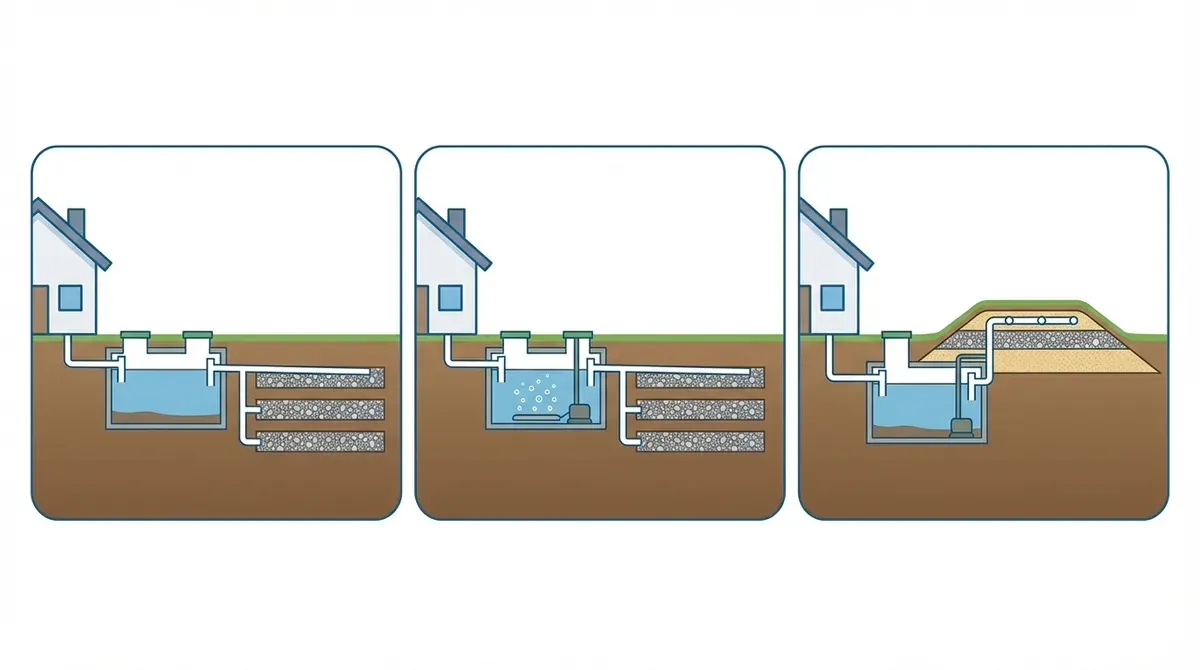
What is a mound septic system?
A mound septic system places a constructed sand bed above the native soil surface, where effluent is pumped and filtered before reaching the ground below. Because the drainfield sits above grade rather than below it, the system can function on lots where a conventional buried drainfield is prohibited by code or impossible due to soil conditions.
Per the EPA’s description of mound systems{:target=“_blank”}: “A constructed sand mound contains the drainfield, with effluent pumped in prescribed doses. They work well for shallow soil or high groundwater but need a substantial amount of space and periodic maintenance.”
The mound itself is a raised earth structure, typically 2-3 feet above natural grade, filled with sand, topped with distribution pipes, and covered with topsoil and grass. From the street, it looks like a low hill in the backyard. Most homeowners adjust to the appearance within a season; the grass coverage and natural contour blend in reasonably well.
When do you need a mound system?
A mound system is required when your site fails the soil and setback requirements for a conventional buried drainfield. The specific triggers:
- Shallow depth to groundwater: less than 2-3 feet between the surface and the water table (varies by state)
- Shallow depth to bedrock: less than 2-3 feet to rock, leaving no room for buried distribution pipes
- Slow percolation rate: clay-heavy soil that doesn’t absorb effluent fast enough
- Small lot: not enough space to meet conventional drainfield setback requirements from the property line, wells, or surface water
A soil engineer or county sanitarian performs the site evaluation and makes the determination. If you’re buying land and want to understand what system you’ll need before purchasing, that assessment is worth the $300-$600 cost. It directly affects your construction budget. We recommend scheduling this evaluation before signing any purchase agreement on rural land with unknown soil conditions.
For a comparison of how mound systems stack up against aerobic units, see aerobic vs conventional septic systems.
How a mound septic system works
The process follows conventional septic logic for the first stage, then diverges at the drainfield:
- Wastewater from the home flows into a standard buried septic tank
- Solids settle to the bottom; grease floats to the top; clarified liquid effluent exits through the outlet baffle
- Effluent enters a separate dose tank (pump chamber) equipped with a submersible pump and float controls
- The pump sends timed doses of effluent through pressurized distribution pipes laid horizontally inside the sand mound
- Effluent percolates down through the sand layer (the treatment zone), which removes pathogens and nutrients
- Treated water reaches the native soil below the mound and disperses naturally
The dosing mechanism is what sets a mound system apart mechanically from a conventional system. The pump and float controls are the components most likely to need replacement. Budget for pump replacement every 10-15 years.
Mound septic system cost
The cost breakdown for a mound system:
| Component | Typical Cost |
|---|---|
| Site evaluation and permits | $500–$1,500 |
| Excavation and site prep | $1,000–$3,000 |
| Sand fill material | $1,500–$4,000 (varies by mound volume) |
| Septic tank | $800–$2,500 |
| Dose tank and pump | $1,000–$2,500 |
| Distribution pipes and fittings | $500–$1,500 |
| Installation labor | $2,000–$5,000 |
| Total installed | $8,000–$20,000 |
Compare that to $3,000–$7,000 for a conventional gravity system. The additional cost goes toward the sand fill volume, the pump and dose tank, and the more complex installation that a raised system requires.
Ongoing costs run higher than conventional, too. Mound systems have a mechanical component (the pump) that conventional gravity systems don’t, which means annual inspections are required in most states. Per the EPA’s maintenance guidelines{:target=“_blank”}, “alternative systems with mechanical components need annual inspections and service contracts.”
| Ongoing Cost Item | Frequency | Typical Cost |
|---|---|---|
| Annual inspection | Every year | $200–$400 |
| Tank pumping | Every 3–5 years | $300–$600 |
| Pump replacement | Every 10–15 years | $500–$1,500 |
For a broader look at installation costs by system type, our guide to septic system installation costs covers all the variables.
How long does a mound septic system last?
Lifespan varies by component:
- Sand mound (drainfield component): 20–30 years with proper maintenance
- Concrete septic tank: 40–50 years (same as any conventional system)
- Dose tank pump: 10–15 years per pump; can be replaced in place
The biggest variable is maintenance. A neglected mound (overloaded, driven on, or never inspected) can fail in 10-15 years. Based on what we found reviewing inspection records and installer data, a properly maintained mound with regular pump-outs and annual inspections reaches 25–30 years without drainfield replacement.
The same maintenance logic applies to the dose tank pump. Pumps that are inspected annually and replaced at the first sign of wear last longer and fail on a predictable schedule. Budget for pump replacement every 10-15 years as a planned maintenance expense. Pumps that are ignored fail unexpectedly, often after hours or on weekends, and emergency service calls cost 1.5-2x normal labor rates.
Mound system maintenance requirements
The EPA’s guidance is clear: alternative systems with mechanical components need annual inspections. For mound systems, that means:
Annual tasks:
- Licensed inspector checks the pump, float controls, and distribution pipe pressure
- Check mound surface for erosion, ponding, or unusual odors
Every 3–5 years:
- Pump out the septic tank (same schedule as conventional)
- Have the pump chamber inspected for sludge accumulation
Ongoing:
- Keep vehicles and heavy equipment off the mound. Compaction damages distribution pipes.
- Maintain grass cover on the mound surface. Bare soil erodes and exposes pipes.
- Direct roof drains and surface water away from the mound (additional water load reduces treatment capacity)
- Plant only grass on and around the mound. Tree roots damage the distribution system. Keep trees at least 10 feet away.
For the drainfield component specifically, drain field maintenance covers what to watch for and how to extend the life of your system’s most expensive-to-replace component.
FAQ
How much does a mound septic system cost?
A mound septic system costs $8,000–$20,000 installed, compared to $3,000–$7,000 for a conventional gravity system. The higher cost covers the sand fill material, the dose tank and pump, and more complex installation. Ongoing costs also run higher: annual inspections ($200-$400), tank pumping every 3-5 years ($300-$600), and pump replacement every 10-15 years ($500-$1,500).
How long does a mound septic system last?
The sand mound drainfield lasts 20–30 years with proper maintenance. The concrete septic tank lasts 40–50 years. The dose tank pump lasts 10–15 years per unit and can be replaced in place without disturbing the mound. Neglected systems fail in 10–15 years; well-maintained systems reach 25–30 years for the drainfield before replacement.
Can I convert a mound system to conventional?
Only if your site can now pass a perc test and meet depth-to-groundwater requirements. If your original site failed the perc test (which is why you got a mound system), the soil hasn’t changed and you can’t simply swap in a conventional drainfield. If the mound was installed voluntarily, a soil engineer can re-evaluate the site. Either way, expect a new permit and $3,000–$7,000 in installation costs for the conventional drainfield.
Do mound septic systems smell?
A properly functioning mound system doesn’t produce noticeable odors at the surface under normal conditions. Odors near the mound, particularly an earthy or sewage smell, usually indicate one of three problems: the mound is hydraulically overloaded, the grass cover has thinned or eroded (exposing the sand), or the pump has failed and effluent is pooling. Any persistent odor warrants an inspection.
What is the difference between a mound system and a sand mound?
The terms are often used interchangeably, but “sand mound” typically refers to a system using washed sand as the primary treatment medium in the mound, while “mound system” is the broader category that can use various fill materials. In practice, most residential mound systems installed in the United States use sand as the treatment medium. Your county’s code will specify the required fill type for your site.