RID-X Septic Treatment Review: Worth the Price?
RID-X is the most widely sold rid x septic system treatment in North America. You can buy it at the grocery store, Home Depot, or Walmart. But is it actually worth using, and does it work? We reviewed the full product lineup, tested the competing claims, and compared it head-to-head against Roebic to give you a straight answer.
Read this as part of our septic tank treatment guide.
Quick specs. RID-X product forms
| Form | Active Ingredients | How to Use | Approx. Price |
|---|---|---|---|
| Liquid (32 oz) | Cellulase, lipase, protease enzymes + bacteria | Pour monthly down toilet | $10–$12 |
| Powder | Same enzyme + bacteria formula | Mix with water, pour monthly | $8–$10 |
| Septi-Pacs (pods) | Pre-measured doses | Drop one pod down toilet monthly | $14–$18 (3-pack) |
RID-X combines enzymes and bacteria in a single formula: enzymes break down fats, proteins, and starches immediately, while the bacterial component colonizes the tank and continues the process. This hybrid approach makes RID-X more effective than enzyme-only products, though Roebic’s higher-concentration bacterial treatments outperform it in recovery situations.
For most homeowners, RID-X is the default septic treatment: it’s sold at every grocery store and hardware chain, comes in liquid, powder, or pod form, and a single monthly dose takes under 10 seconds. At $10–$18 per month, it’s the lowest-friction preventive maintenance option available.
You can verify product certifications through NSF International{:target=“_blank”} if you want independent validation of any treatment product’s claims.
What we found, does RID-X work?
For monthly maintenance in a normally functioning system, RID-X works as advertised.
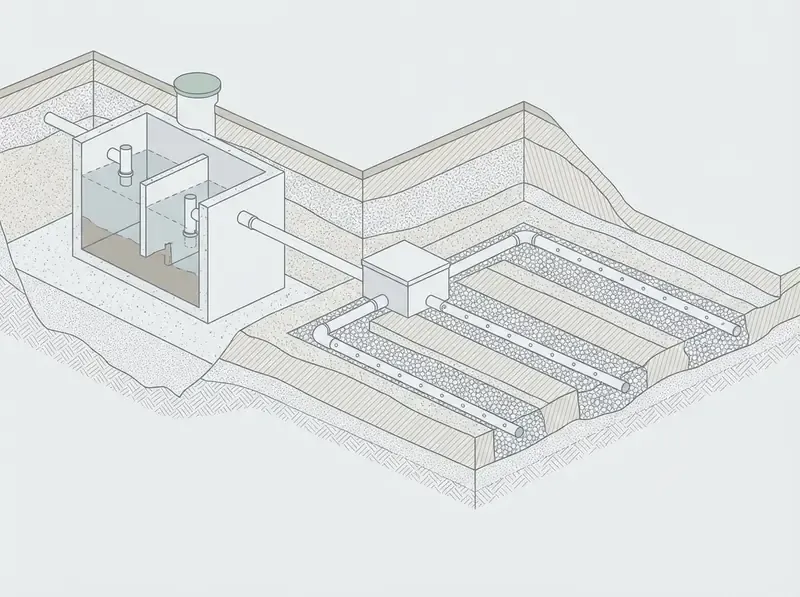
The enzyme and bacteria combination addresses the daily biological load your septic tank handles. According to the EPA, a typical household puts 70 gallons of wastewater per person per day through the system. That’s a continuous stream of fats, proteins, and waste that the tank’s bacterial colony must break down before the effluent flows to the drain field.
Bacteria supplements help maintain the microorganism balance essential for this breakdown process. John Kline Septic confirms this: “introducing bacteria supplements helps maintain the microorganism balance essential for breaking down waste efficiently.” RID-X delivers that supplement in a convenient monthly form.
We found rid x septic system treatment performs best in these situations:
- Systems in normal operation with no existing problems
- After minor chemical disruptions, like a single heavy bleach laundry day
- In systems where homeowners have consistently avoided harsh drain cleaners
- As part of a regular monthly maintenance routine
If you want to understand the science behind how these products work, our guide on enzyme vs chemical septic treatment covers the mechanisms in depth.
When RID-X won’t help (limitations)
RID-X is a maintenance product, not a corrective one. Here’s where it falls short.
System needs pumping. No treatment product removes physical sludge from the tank. The EPA recommends pumping every 3–5 years regardless of which additives you use. When sludge builds up to within 6 inches of the tank outlet, you need a pump-out. RID-X will not substitute for that service. Learn more in our when to pump your septic tank guide.
Drain field problems. If your drain field is clogged or showing signs of failure, RID-X is the wrong product. Roebic K-570 is specifically formulated for clogged leach and drain fields, which is the primary cause of septic system failures. RID-X has no equivalent product for this use case.
Severe chemical disruption. A system damaged by heavy chemical drain cleaner use needs a higher-concentration bacterial treatment. Roebic K-37 handles moderate disruptions; Roebic K-57, with over 50 years of field use, is the option for severe cases.
Aerated or package systems. RID-X is not formulated for aerated systems. These require Roebic’s AIR-O-PAK or manufacturer-specified products.
Active system failure. If sewage is backing up into your home, stop adding any products and call a licensed septic contractor immediately. Products cannot fix an actively failing system.
See the EPA septic maintenance guidelines{:target=“_blank”} for the full pumping schedule and do-not-flush list.
Our septic system pumping guide covers exactly when a pump-out is needed and what to expect from the service visit.
RID-X vs roebic, which is better?
The honest answer: they serve different purposes.
RID-X wins on:
- Availability (every grocery store and hardware chain carries it)
- Ease of use (Septi-Pacs reduce the monthly routine to 10 seconds)
- Price (competitive at $10–$18 per month)
- Monthly maintenance for healthy, functioning systems
Roebic wins on:
- Specialized products for specific problems: K-570 for drain fields, K-57 for severe failures, AIR-O-PAK for aerated systems
- Higher bacterial concentration for corrective and recovery use
- 50-plus years of documented field use with K-57
Our verdict: Use RID-X for regular monthly maintenance. Switch to the appropriate Roebic product when you have a specific problem to solve. See the full Roebic product lineup{:target=“_blank”} for a product-by-product breakdown.
For a structured guide to which product fits which situation, see our best septic tank treatment products guide.
Is RID-X worth the price?
For most homeowners who want a simple monthly maintenance product: yes.
At $10–$18 per month, consistent rid x septic system treatment use is a low-cost habit. The Septi-Pacs make it genuinely easy to maintain. Compared to a $300–$600 pump-out or a $3,000–$10,000-plus drain field repair, monthly maintenance is cheap insurance.
For homeowners with specific problems (drain field clogging, aerated systems, or post-chemical recovery), start with the right Roebic product first, then use RID-X for ongoing maintenance after the immediate issue is resolved.
Overall verdict: RID-X is the easiest, most accessible septic maintenance product on the market. For regular monthly maintenance, it delivers on its promise. It is not a problem-solver, but as a consistent monthly habit, it is money well spent.
FAQ
How often should I use RID-X?
Use RID-X once per month. Monthly dosing provides consistent bacterial replenishment to support your tank’s biological colony. Skipping a month occasionally will not cause problems in a healthy system. Regular use over time matters more than perfect monthly timing.
Do I need RID-X if my septic system is working fine?
Not strictly necessary, but reasonable as preventive maintenance. A healthy septic system with a well-maintained bacterial colony can function without supplements if you avoid harsh chemicals, use phosphate-free detergents, and pump on schedule. Most homeowners find the low monthly cost worth it as a precaution against minor disruptions.
Can I use RID-X with a garbage disposal?
Yes, and the extra bacterial support may be more valuable if you use a garbage disposal regularly. Food waste from the disposal adds more solids and biological load to the tank. RID-X will not compensate for overuse of the disposal, but monthly treatment helps manage the increased sludge accumulation.
Is RID-X safe for all types of septic systems?
RID-X is safe for standard anaerobic septic systems. It is not designed for aerated or package systems, which require Roebic AIR-O-PAK or system-specific products. If you are unsure what type of system you have, ask during your next professional inspection.
What happens if I miss a month of RID-X?
Missing one month has minimal impact. The bacterial colony in a healthy tank does not depend on monthly supplements to survive. Resume your normal schedule without doubling up or adding extra product the following month.