Septic Leach Field Care: Dos, Don’ts, and Failure Signs
Three rules matter more than anything else for leach field longevity: never drive on it, keep trees 30 feet away, and pump your tank on schedule. A leach field that follows these rules lasts 20–30 years. One that doesn’t fails within 10–15 years and costs $5,000–$20,000 to replace.
This guide gives you the full list of dos and don’ts, plus the early warning signs that catch problems before they become emergencies.
Quick answer: the 3 most important rules
-
Never drive or park on the leach field. Vehicle weight compacts the soil and crushes distribution pipes. Mark the field boundaries and keep all traffic (including riding mowers) off the area.
-
Keep trees at least 30 feet away. Water-seeking species like willows, silver maples, and poplars need 50+ feet of clearance. Their roots travel long distances toward moisture and will find your distribution pipes.
-
Pump your tank every 3–5 years. When the tank goes too long without pumping, solids overflow into the field and clog the soil permanently. This is the most common preventable cause of field failure. See our guide on how your septic tank works for details on why solids carryover is so damaging.
Everything else on this page supports these three core rules.
Complete dos list
DO plant native grass over the field. Grass holds the topsoil in place without sending roots deep enough to damage distribution pipes. Mow the field area regularly; keeping grass at 3–4 inches provides good cover without impeding evaporation.
DO redirect downspouts and sump pumps away from the field. Roof drainage and sump pump output should discharge at least 10 feet from the nearest drain line. Extra water saturates the soil and reduces its treatment capacity for septic effluent.
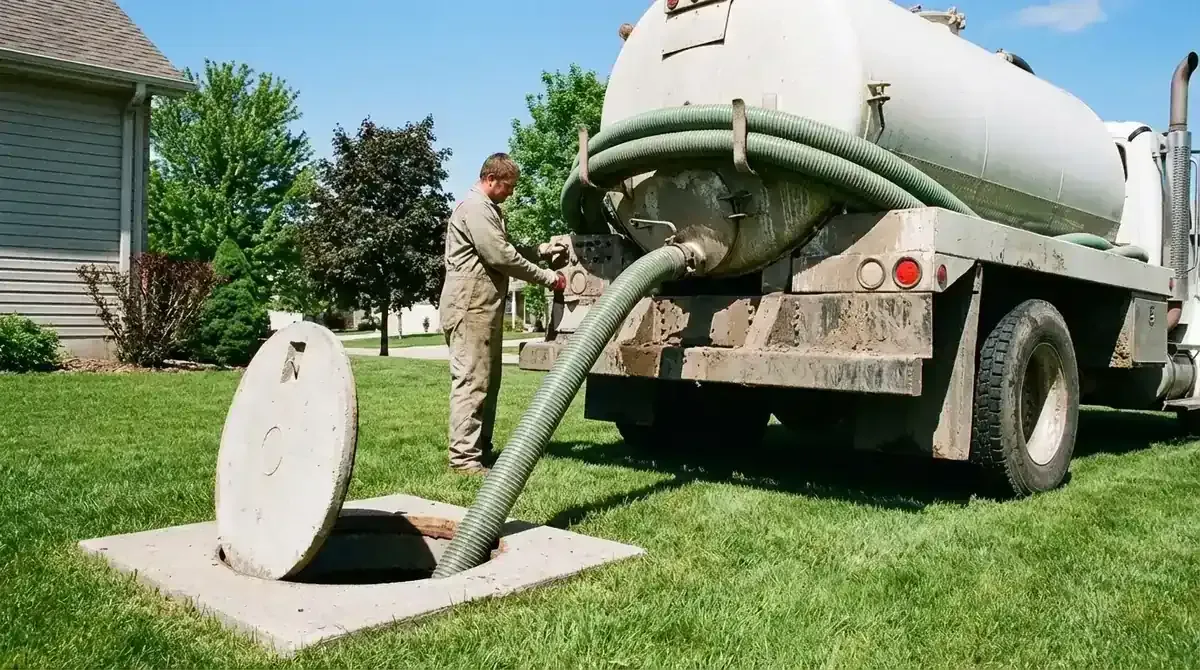
DO pump the septic tank every 3–5 years. Regular pumping prevents solids from flowing past the outlet baffle into the field. The average cost is $300–$425. See our septic system pumping guide for scheduling details.
DO know where your field is located. Mark the boundaries with permanent reference points, stakes, landscape features, or a sketch in your home files. Knowing the exact location prevents accidental damage from vehicles, construction, or landscaping.
DO conserve water to reduce hydraulic load. The average household uses 70 gallons per person per day, according to EPA data{:target=“_blank”}. Reducing that amount through high-efficiency toilets (1.6 gallons vs 3.5–5 gallons per flush), shorter showers, and spacing laundry loads gives the field more rest time between doses.
DO get inspected every 3 years. A professional inspection ($50–$150) measures sludge levels, checks baffles, and evaluates field performance. We find this catches problems early when they’re still cheap to fix: minor baffle issues at $200 versus field replacement at $20,000.
DO clean the effluent filter every 6–12 months. Pull the filter from its housing, rinse with a garden hose, and reinstall. A clogged filter restricts flow and stresses the entire system. This is the easiest and most overlooked maintenance task. We recommend setting a calendar reminder for this, it takes 15 minutes and costs nothing.
Complete don’ts list
DON’T drive vehicles or heavy equipment over the field. This includes cars, trucks, tractors, and riding mowers. The weight compresses soil pores and crushes distribution pipes. Even infrequent driving causes cumulative damage.
DON’T plant trees, shrubs, or deep-rooted plants. Tree roots seek moisture and will infiltrate distribution pipes through joints and small openings. Once inside, roots expand and block the pipe entirely. Removing root intrusion often requires pipe replacement.
DON’T build structures over the field. Sheds, decks, patios, driveways, and swimming pools block oxygen exchange with the soil. Without air, the aerobic bacteria that treat wastewater die, and the field loses its treatment capacity.
DON’T pour grease, chemicals, or antibacterials down drains. Grease solidifies in pipes and clogs baffles. Chemical drain cleaners and antibacterial products kill the bacteria your septic system needs to function. The EPA provides a complete list{:target=“_blank”} of items that should never enter a septic system.
DON’T connect a garbage disposal unless necessary. Disposals increase solid waste entering the tank by roughly 50%, which means more frequent pumping and higher risk of solids reaching the field. If you use one, shorten your pumping interval accordingly.
DON’T do all laundry on one day. Running 5+ loads in a single day sends 100+ gallons of water into the system in a few hours. Spread loads across the week (one per day is ideal) to give the field time to process each batch.
DON’T install a swimming pool or pave over the field area. Both prevent rainfall from reaching the soil surface and block the evapotranspiration that helps the field manage moisture levels.
6 early warning signs of leach field problems
Catching these signs early lets you try restoration techniques ($0–$3,000) instead of replacement ($5,000–$20,000+). Act on any single symptom rather than waiting for multiple; the window for low-cost intervention closes quickly.
-
Soggy or spongy ground over the field. Wet soil during dry weather means the field can’t absorb effluent at the rate it’s arriving.
-
Sewage odor outdoors near the field area. Odors indicate effluent is surfacing or not being treated at proper depth. Most noticeable on warm days.
-
Unusually green or fast-growing grass strips. Effluent fertilizes grass. Bright green strips over the distribution lines mean wastewater is too close to the surface.
-
Slow-draining fixtures after tank pumping. If drains remain slow after the tank has been pumped, the bottleneck is in the field, not the tank.
-
Standing water or surfacing liquid near the field. Clear or slightly cloudy liquid pooling above the distribution trenches is untreated effluent. This requires prompt professional assessment.
-
Septic alarm going off. If your system has a pump, the alarm indicates the pump can’t keep up with the volume, often because the field isn’t absorbing fast enough.
If you’re seeing 2+ symptoms, read our drain field restoration guide for repair options. For more severe symptoms, see our signs of septic failure diagnostic guide.
Video guide
Video: “Restoring A Septic Drain Field: First Steps” by Country Living Experience
What leach field failure costs
| Repair Type | Cost Range | When It Applies |
|---|---|---|
| Rest the field + reduce water | Free | Temporary overload, early-stage issues |
| Effluent filter cleaning | Free (DIY) | Clogged filter mimicking field failure |
| Tank pumping | $300–$425 | Solid carryover reducing field capacity |
| Aeration treatment | $1,000–$3,000 | Biomat buildup, moderate degradation |
| Soil fracturing (Terralift) | $1,500–$3,000 | Soil compaction, localized failure |
| Partial pipe replacement | $2,000–$5,000 | Root intrusion, crushed pipes |
| Full field replacement | $5,000–$20,000+ | Widespread failure, system age 25+ |
Regular pumping at $300–$425 every 3–5 years is the cheapest insurance against the most expensive failure on this list. For full replacement pricing, see our leach field replacement cost guide.
FAQ
How long does a leach field last?
A well-maintained leach field lasts 20–30 years. The three biggest threats to longevity are vehicle traffic (compacts soil), tree roots (blocks pipes), and skipped pumping (clogs soil with solids). Fields with all three risk factors often fail within 10 years.
Can you repair a leach field?
Yes, if the damage is caught early. Aeration ($1,000–$3,000) and soil fracturing ($1,500–$3,000) restore function in about 60% of cases where symptoms are still mild. Full replacement is needed when the entire field is saturated and restoration techniques don’t produce improvement within 4–8 weeks.
What is the difference between a leach field and a drain field?
They’re the same thing. “Leach field,” “drain field,” and “absorption field” all refer to the network of perforated pipes that distribute treated effluent from your septic tank into the soil. The terms are used interchangeably across different regions. Septic system types vary, but the function of the field is the same regardless of what you call it.
Can you plant a garden over a leach field?
No. Vegetable gardens are not safe over leach fields for two reasons. First, root vegetables can grow into the gravel bed and disrupt distribution. Second, edible plants can absorb pathogens from the effluent. The soil treats wastewater, but contaminants can still reach root zones. Grass is the only recommended planting.