Do You Need a Septic Tank Filter? Complete Guide
A septic tank effluent filter catches solids at the outlet before they flow to the drain field. Drain field failure is the most expensive septic repair, costing $3,000–$10,000 or more, and a $50–$200 filter is the most cost-effective way to prevent it. If your system does not have one, adding it at your next pump-out is one of the highest-value maintenance decisions you can make.
This guide is part of our septic tank treatment guide.
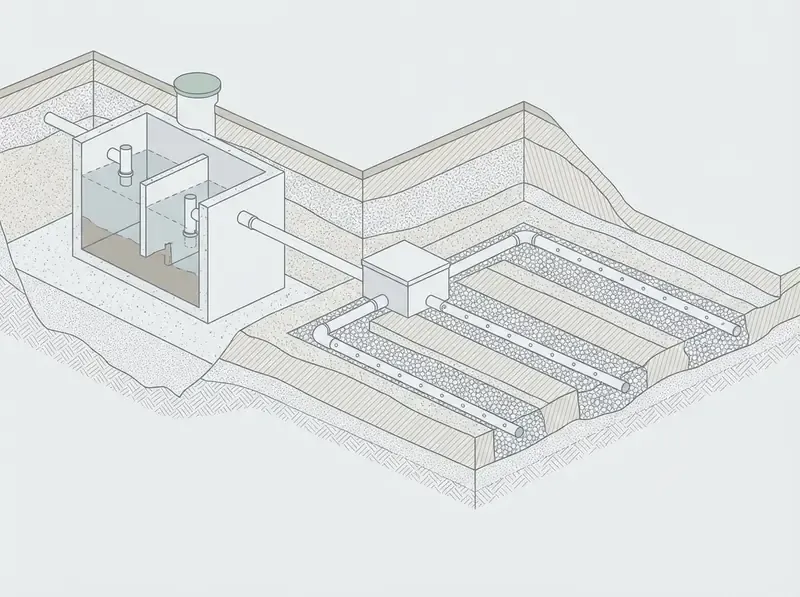
What a septic tank filter does (quick answer)
An effluent filter, also called a septic tank outlet filter, sits inside the outlet baffle, the pipe where treated liquid leaves the tank on its way to the drain field. Its job is to catch small solid particles that have not fully broken down before they reach the drain field soil.
Without a filter, those particles accumulate in the drain field over time. Once drain field soil becomes clogged, it cannot absorb and treat the effluent. At that point, the system fails. According to Roebic, leach field clogging is identified as the primary cause of septic system failures.
The EPA is direct about drain field protection: it describes the drainfield as the critical treatment component of the entire system. A septic tank filter is cheap insurance against the most expensive repair in septic ownership.
Most tanks built after approximately 2000 include an effluent filter as standard. Older systems often do not have one.
Does your system have a filter?
The filter is located inside the outlet baffle, the T-shaped pipe or chamber at the far end of the tank from the inlet. It typically looks like a cylindrical cartridge with a handle or tab at the top.
The most practical way to check is to ask during your next pump-out. Tell the technician you want to see the outlet baffle and confirm whether a filter is installed. Most technicians will point it out and show you the condition without extra charge.
Signs your system likely does not have a filter:
- The system was installed before 1995–2000
- No prior service records mention a filter
- The pump-out company has never mentioned it
Professional inspections every 3 years (as recommended by the EPA) are the right time to ask about filter status. John Kline Septic notes that professional inspections examine tank depth, root intrusion, and overall tank condition. Filter status should be part of that checklist.
If you are unsure, the next pump-out appointment is the right time to find out and, if needed, install one.
Should you install a filter (if you don’t have one)?
We recommend it, especially if you are already scheduling a pump-out.
The cost math is straightforward: A typical effluent filter costs $50–$200 for the filter itself. Professional installation during a pump-out adds labor, but since the technician already has the tank open, the incremental cost is low. Compare that to drain field repair, which runs $3,000–$10,000 or more depending on your soil and system size.
Installation is done during a pump-out. The technician inserts the filter into the outlet baffle before sealing the tank. It does not require a separate service visit if timed with your regular pumping schedule.
Homes with garbage disposals benefit most. A disposal sends significantly more solid food particles into the tank compared to a disposal-free household. Those extra particles increase the risk of fine solids escaping into effluent. See our guide on garbage disposal with septic system for the full compatibility picture.
The EPA drainfield protection guidelines{:target=“_blank”} reinforce this logic: protecting the drainfield is the primary goal of ongoing septic maintenance, and the filter is the most direct mechanical tool for doing that.
How to clean a septic tank filter (maintenance guide)
Effluent filters should be cleaned every 1–3 years, typically during a scheduled pump-out. Most homeowners with accessible risers can rinse the filter themselves with a garden hose. The solids should be rinsed back into the tank, not onto the yard.
Step-by-step cleaning process:
- Locate the outlet baffle riser (a round access lid, usually green or black plastic, near the outlet end of the tank)
- Remove the riser lid using the handle or a pry tool
- Grip the filter handle or tab and pull it straight up out of the baffle housing
- Rinse the filter thoroughly with a garden hose, directing the rinse water back into the open tank
- Inspect the filter for cracks or damage while it’s out
- Slide the filter back into the baffle housing in the correct orientation (usually with the handle pointing up)
- Replace the riser lid securely
Work slowly when removing the filter. If the filter is severely clogged and you pull it out quickly, a surge of backed-up effluent can follow. A slow, controlled pull gives the system time to equalize.
The septic maintenance schedule that works best aligns filter cleaning with your pump-out cycle so both happen at the same service visit.
After cleaning the filter, it is also a good time to verify your garbage disposal is not overloading the system. See garbage disposal with septic system for the guidance on disposal-safe use.
Signs your filter needs cleaning or replacing
Slow drains throughout the house. When a single fixture drains slowly, the problem is usually a pipe clog. When all fixtures drain slowly at the same time, the issue is usually the septic tank or a clogged filter blocking effluent flow. John Kline Septic notes this as a primary warning sign.
Alarm going off. Many modern systems have a filter alarm that triggers when the filter is clogged enough to back up effluent toward the house. If your system has this alarm and it activates, clean the filter before it escalates.
Water pooling near the tank area. Backed-up effluent from a severely clogged filter can surface near the tank as the system finds the path of least resistance.
More frequent pump-out recommendations. If technicians keep recommending earlier-than-scheduled pump-outs, a clogged filter contributing to accelerated sludge backup may be a factor.
For repair options when a clogged filter has already allowed drain field damage, Roebic K-570 drain field treatment{:target=“_blank”} targets the specific bacteria needed to restore biomat breakdown in clogged drain fields.
See our best septic tank treatment products guide for the full range of treatment options that support ongoing filter maintenance.
FAQ
How much does a septic tank filter cost?
A standard effluent filter costs $50–$200 depending on the brand and tank configuration. Zabel and Polylok are common brands. Professional installation during a pump-out adds labor but no separate trip charge since the tank is already open. Total installed cost is typically $150–$350.
How often should I clean my septic filter?
Clean the filter every 1–3 years, aligned with your pump-out schedule. If your household uses a garbage disposal or has above-average water use, lean toward the 1-year end of that range. Some manufacturers recommend annual cleaning regardless of usage.
Can I install a septic tank filter myself?
If your tank has accessible surface risers, a homeowner can clean an existing filter with basic tools (gloves, a garden hose, and a pry tool). Installing a new filter in a tank without a riser requires opening the tank lid, which we recommend doing only with professional assistance the first time. Verify the correct filter model for your outlet baffle housing before purchasing.
What happens if I don’t clean my septic filter?
A clogged filter restricts effluent flow, which causes effluent to back up toward the house. In systems with filter alarms, the alarm activates. In systems without alarms, the first sign is often slow drains across all fixtures. Left unaddressed, it can force solids through into the drain field, accelerating the clogging that leads to system failure. Check our septic-safe cleaning products guide to reduce the solids load that reaches the filter in the first place.
Are all septic systems required to have a filter?
No. Effluent filter requirements vary by state and local code. Many jurisdictions began requiring filters in new construction in the late 1990s to early 2000s, but older systems installed before that window were not retrofitted. Check with your local health department or septic contractor to confirm what your local code requires. Even where not required, we recommend installing one given the cost comparison: $50–$200 filter versus $3,000–$10,000-plus drain field repair. See NSF International{:target=“_blank”} for testing standards on certified filter products.