How Long Does a Septic Tank Last?
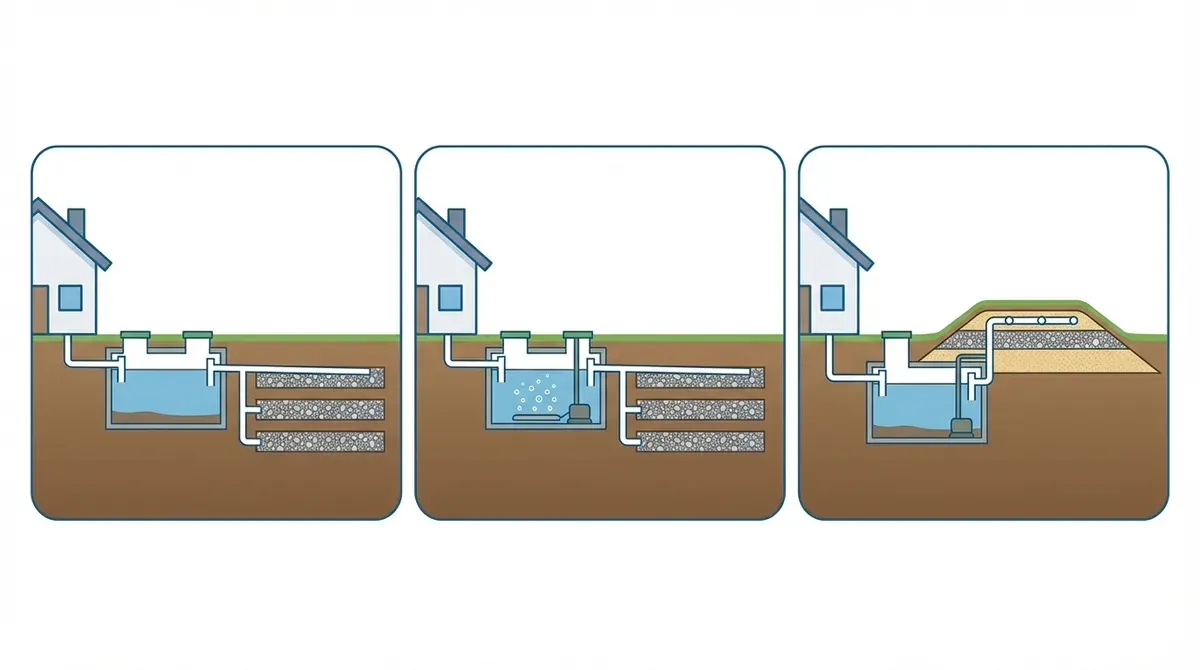
A concrete septic tank lasts 40–50 years with proper maintenance. Plastic and fiberglass tanks run 30–40 years. Steel tanks, now largely discontinued, corrode in 15–20 years. The material matters, but maintenance is the bigger variable: a neglected concrete tank can fail in 20 years, while a well-maintained one can outlast the house.
For a complete picture of which septic system types share these lifespans, and what alternatives exist, start with our overview.
Septic tank lifespan by material
The tank itself is just one part of the system, but it’s the part most homeowners ask about first.
Concrete tanks are the most common and the most durable. Properly installed concrete tanks routinely last 40–50 years, sometimes longer. The main risk is cracking from soil shifting, freeze-thaw cycles, or tree roots, but well-poured concrete resists this for decades.
Plastic and fiberglass tanks are lighter and easier to install, which makes them popular in newer construction. Their typical lifespan is 30–40 years. The trade-off: in high-water-table areas, an empty or partially empty plastic tank can shift or float, which damages the inlet/outlet connections. See our comparison of plastic vs concrete septic tanks for a full breakdown of the trade-offs.
Steel tanks should be treated as end-of-life. Most were installed before the 1980s, and steel corrodes within 15–20 years. If your home has a steel tank, it’s worth getting a professional inspection. The top of the tank can rust through, creating a collapse hazard.
What affects how long a septic tank lasts
The five factors that shorten or extend septic tank lifespan:
1. maintenance schedule
The EPA recommends inspecting your system every 3 years and pumping every 3–5 years for a typical household. Skipping pumping is the single most common cause of premature failure. When sludge builds to within 6 inches of the outlet pipe, it pushes into the drainfield, and the drainfield is far more expensive to repair than the tank itself.
2. household size and water use
The average household uses 70 gallons of water per person per day, according to EPA data. A family of five generates significantly more wastewater than a couple, and more wastewater means the tank fills faster, solids move toward the outlet sooner, and pumping intervals need to be shorter.
High-efficiency toilets (1.6 gallons per flush versus the old 3.5–5 gallon standard) and spreading laundry loads throughout the week rather than all on Saturday can meaningfully reduce the load on the system.
3. what goes down the drain
Household chemicals, cooking grease, and non-biodegradable wipes kill the beneficial bacteria inside the tank. Those bacteria are doing the actual work of breaking down solids. When the bacteria die off, solids accumulate faster, pumping intervals shorten, and the system ages faster. The EPA’s prohibited list is long: never flush cooking grease, wipes, pharmaceuticals, dental floss, cat litter, paper towels, or household solvents.
4. soil and site conditions
High water tables put pressure on plastic tanks and reduce drainfield absorption capacity. Tree roots, especially willows and maples, are drawn to septic tanks because of the moisture and nutrients. Roots can crack concrete, infiltrate joints, and destroy drainfield pipes. We recommend keeping large trees at least 30 feet from any part of the system.
5. tank construction quality
Not all concrete is equal. A tank poured with the right mix, cured properly, and installed without cracking at the inlet/outlet baffles can run 50+ years. Shoddy installation, poor curing, thin walls, improper backfill, cuts that estimate in half. This is one area where a reputable installer matters.
Warning signs a septic tank is failing
Catch these early. Drainfield failure is recoverable; ignoring it until the system backs up into the house is not.
- Sewage odors in the yard or indoors. Escaping gases from a failing tank or saturated drainfield.
- Slow drains throughout the house. Not isolated to one fixture, which would suggest a blockage.
- Unusually green or soggy patches over the drainfield. Effluent surfacing instead of filtering into soil.
- Sewage backing up into toilets or tubs. Late-stage failure; call a professional immediately.
For a full list with causes and next steps, see our guide to common septic tank problems.
How to maximize septic tank lifespan
The EPA’s four-point care framework maps directly to what we find extends tank life the most:
Pump on schedule. Every 3–5 years for a typical 3–4 person household. The actual trigger is measurable: sludge within 6 inches of the outlet pipe, or scum within 12 inches. A licensed inspector can measure this at your next service visit.
Control what enters the system. Grease and non-biodegradable solids are the two biggest killers. Scrape plates before washing, never pour grease down the drain, and use toilet paper rated for septic systems.
Protect the drainfield. Never park or drive on it. Compaction destroys the soil structure. Direct downspouts, sump pump discharge, and irrigation away from the drainfield area to prevent hydraulic overload.
Use water efficiently. High-efficiency fixtures reduce daily load. Spreading laundry over multiple days instead of one marathon session prevents the system from being overwhelmed on a single day.
Our when to pump your septic tank guide has a household-size chart with specific pump intervals.
When to replace instead of repair
Some problems are repair problems. These are replacement problems:
- Structural cracks in the tank with confirmed infiltration of groundwater or root intrusion that cannot be patched
- Drainfield failure (saturated, surfacing effluent, failed perc test) where the absorption area cannot be rehabilitated
- Repeated backups within one or two years of a correct pumping, indicating the tank volume is inadequate for the household
- Steel tank showing corrosion at the top or baffles
Replacement costs vary significantly by system type and site conditions. For concrete tank replacement, we typically see $3,000–$10,000 depending on depth and access. Full system replacement with a new drainfield runs $10,000–$30,000 in most regions. Our septic tank repair cost guide breaks down what different repairs and replacements actually cost.
FAQ
How long does a concrete septic tank last?
A concrete septic tank lasts 40–50 years with regular maintenance, including pumping every 3–5 years and inspection every 3 years. Some well-built tanks installed in the 1960s and 1970s are still in service. The main failure modes are cracking from soil movement, freeze-thaw damage, or tree root intrusion, not age itself.
Can a septic tank last 50 years?
Yes. Concrete tanks regularly last 50 years and occasionally longer. The conditions required: proper installation (correct concrete mix, no cracks at baffles), consistent pumping on the EPA’s 3–5 year schedule, and a well-maintained drainfield. Plastic tanks rarely reach 50 years; their typical ceiling is 30–40.
What causes a septic tank to fail early?
The most common causes of premature septic tank failure are infrequent pumping (sludge overflow into the drainfield), flushing non-biodegradable materials (wipes, grease), and tree root intrusion. Steel tanks fail early by design; corrosion is inevitable within 15–20 years regardless of maintenance.
How often should a septic tank be pumped to maximize lifespan?
The EPA recommends pumping every 3–5 years for a typical household. A 3-person household with a 1,000-gallon tank typically hits the 3–4 year mark. Larger households or smaller tanks need more frequent service. The measurable threshold: pump when sludge reaches within 6 inches of the outlet pipe. A licensed inspector can confirm this during a routine visit.
Does tank material really affect how long it lasts?
Material matters, but less than maintenance. A neglected concrete tank can fail in 20 years. A well-maintained plastic tank can last 35–40 years. The hierarchy for longevity: concrete, then fiberglass/plastic, then steel. If you’re replacing a tank, concrete remains the most proven long-term choice. Learn more at epa.gov/septic.