Septic Tank Pump Maintenance: Keep It Running Efficiently
Not every septic system has a pump. But if yours does (you’ll know because there’s an alarm panel mounted on a wall or post), that pump is the mechanical heart of your system. When it fails, wastewater stops moving to the drain field and backs up into your house.
Septic effluent pumps last 7–10 years with annual maintenance. Skip the maintenance and that drops to 5 years or less. Emergency pump replacement costs $500–$1,200. Annual maintenance runs $150–$300. The math speaks for itself.
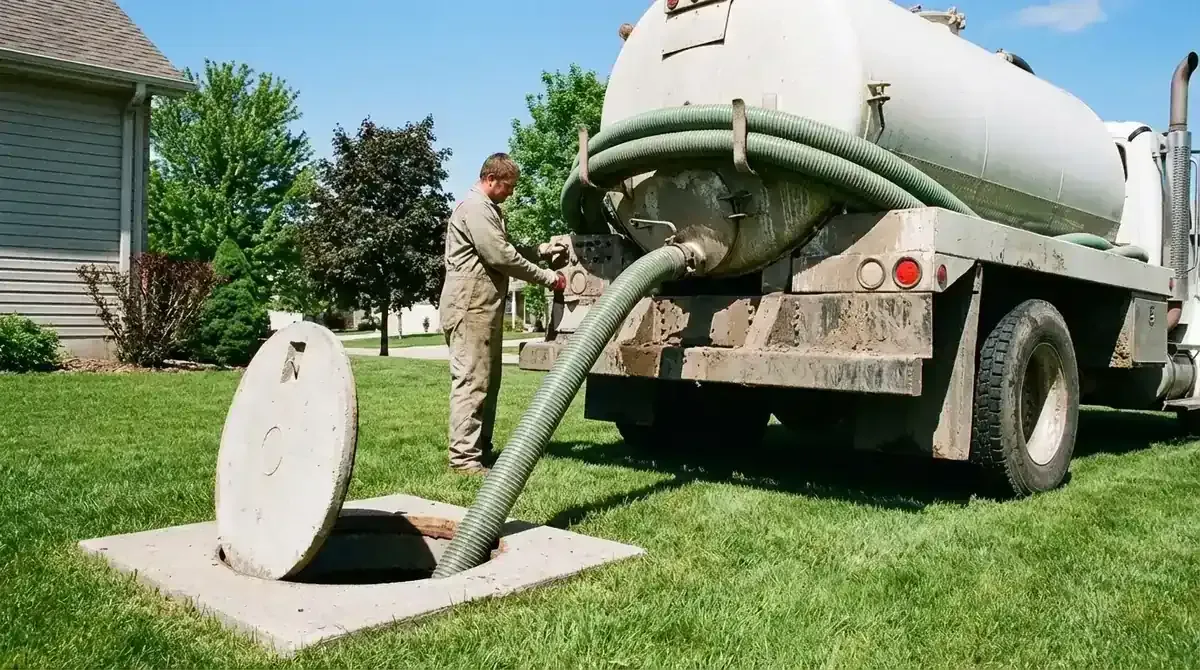
What happens without pump maintenance
A neglected septic pump doesn’t give much warning before it fails. One day the system works fine; the next morning the alarm is screaming and drains aren’t moving.
Here’s the typical failure sequence we see:
- Float switches corrode or get stuck in debris; the pump runs continuously or not at all
- The motor overheats from running against a clogged discharge line
- The pump burns out and stops moving effluent
- The pump chamber fills to capacity and triggers the alarm
- Within hours, wastewater backs up through the lowest drains in the house
Emergency service costs 1.5–2x regular rates: $400–$800 for a service call versus $150–$300 for a planned visit. Emergency pump replacement runs $800–$1,500 installed versus $500–$1,200 during scheduled maintenance.
Which septic systems have pumps?
| System Type | Has Pump? | Why |
|---|---|---|
| Conventional gravity | No | Effluent flows downhill by gravity |
| Aerobic treatment unit (ATU) | Yes | Pumps treated effluent to spray or drip field |
| Mound system | Yes | Pumps effluent uphill to elevated mound |
| Pressure distribution | Yes | Pumps effluent under pressure for even distribution |
| Sand filter | Yes | Pumps effluent to filter bed and back |
| Drip distribution | Yes | Pumps effluent through drip tubing network |
If you’re not sure which type of septic system you have, check for an alarm panel, a pump chamber (separate from the main tank), or electrical conduit running to a box near the tank. Any of these indicate a pump-based system.
The EPA guide to septic system types{:target=“_blank”} explains each system design and its mechanical requirements.
Annual pump maintenance checklist
This checklist covers what a professional technician should check during annual maintenance ($150–$300).
-
Visual inspection of pump chamber. Check for accumulated debris, grease, and floating solids. The chamber should have minimal buildup between the main tank and the pump.
-
Float switch test. Manually raise each float to verify the pump activates and deactivates at the correct levels. Stuck or corroded floats are the most common pump system failure point.
-
Electrical connection check. Inspect wiring, junction boxes, and connections for corrosion, loose contacts, or water intrusion. Corrosion in underground electrical connections causes intermittent failures.
-
Pump run test. Run the pump manually and time how long it takes to lower the chamber level by a set amount. Declining performance indicates impeller wear or a partially blocked discharge line.
-
Discharge pressure and flow rate. Measure the pump’s output pressure and flow rate against manufacturer specifications. Declining numbers mean the pump is wearing out.
-
Effluent filter cleaning. Remove the filter, rinse with a hose, and reinstall. A clogged filter forces the pump to work harder and reduces its lifespan.
-
Alarm system test. Press the test button on the alarm panel to verify both audible and visual alarms function. Replace the backup battery if the panel has one.
-
Check valve inspection. Verify the check valve on the discharge line seals properly. A failed check valve lets effluent flow backward when the pump shuts off, causing the pump to cycle excessively.
Video guide
Video: “Septic Tank Maintenance for Homeowners” by DavidPoz
A well-maintained pump system
With annual maintenance, here’s what you can expect:
- Pump lifespan of 7–10 years for quality brands (Liberty, Zoeller, Little Giant)
- No surprise alarms: problems caught during scheduled inspections
- Annual cost of $150–$300 versus $500–$1,200 for emergency replacement
- Consistent drain field performance: steady effluent delivery keeps the field healthy
- Quiet operation: a well-maintained pump runs smoothly without grinding or vibrating noises
Your septic maintenance schedule should include annual pump service alongside the standard 3-year inspection and 3–5-year pumping schedule.
DIY vs professional maintenance
| Task | DIY? | Pro? | Notes |
|---|---|---|---|
| Visual inspection from ground level | Yes | No | Look for pooling, odors, alarm lights |
| Alarm panel test (press test button) | Yes | No | Monthly check |
| Effluent filter cleaning | Yes | No | Every 6-12 months |
| Float switch testing | No | Yes | Requires reaching into chamber |
| Electrical connection inspection | No | Yes | Risk of shock, code requirements |
| Pump run and flow testing | No | Yes | Requires specialized gauges |
| Check valve inspection | No | Yes | Below-grade access required |
Professional annual service contract: $150–$300/year. This covers all the pro tasks above plus a written report. The EPA recommends service contracts{:target=“_blank”} for all alternative septic systems with mechanical components.
For a full overview of your septic pumping and cleaning needs, see our septic pumping and cleaning guide.
When to replace your septic pump
We recommend choosing mid-range or premium brands when replacing. The cost difference between a $200 budget pump and a $350 Zoeller is small compared to the labor cost of a second replacement call.
Average pump lifespan by quality tier:
- Budget pumps (Flotec, generic brands): 5–7 years
- Mid-range pumps (Little Giant, Hydromatic): 7–10 years
- Premium pumps (Zoeller, Liberty): 10–15 years
Replacement warning signs:
- Frequent alarm triggers (more than once per month)
- Tripped breaker repeatedly after resetting
- Grinding or vibrating noises during operation
- Reduced flow rate measured during annual service
- Pump cycling rapidly (turning on/off in short bursts)
Replacement cost: $500–$1,200 installed, depending on pump size and access difficulty. Scheduled replacement during a planned service visit saves $200–$400 compared to emergency calls.
If your alarm keeps going off, see our septic tank alarm guide for troubleshooting steps before assuming pump failure.
For full septic repair costs across all components, see our price guide.
FAQ
How often should a septic pump be serviced?
Annually. The EPA requires annual inspections and service contracts for all alternative septic systems with mechanical components, including pump-based systems. Annual service costs $150–$300 and catches wear issues before they cause pump failure. Between professional visits, test the alarm panel monthly and clean the effluent filter every 6–12 months.
Can I replace a septic pump myself?
We don’t recommend it. Pump replacement requires working inside or near the pump chamber, which contains toxic hydrogen sulfide gas. The electrical connections must meet local code and often require a permit. A licensed septic contractor handles both the hazardous environment and the code compliance for $500–$1,200 installed.
How long does a septic pump last?
With annual maintenance, quality septic pumps (Liberty, Zoeller) last 10–15 years. Mid-range pumps last 7–10 years. Budget pumps last 5–7 years. Without maintenance, all brands lose 30–50% of their expected lifespan. The float switches and check valve typically fail before the pump motor itself.
What causes a septic pump to fail?
The five most common causes: float switch failure from corrosion or debris; motor burnout from running against a clogged discharge; electrical issues from corroded connections; impeller damage from debris entering the pump; and check valve failure causing excessive cycling. Annual maintenance checks all five of these failure points.