Septic Tank Pumping and Cleaning: What to Expect
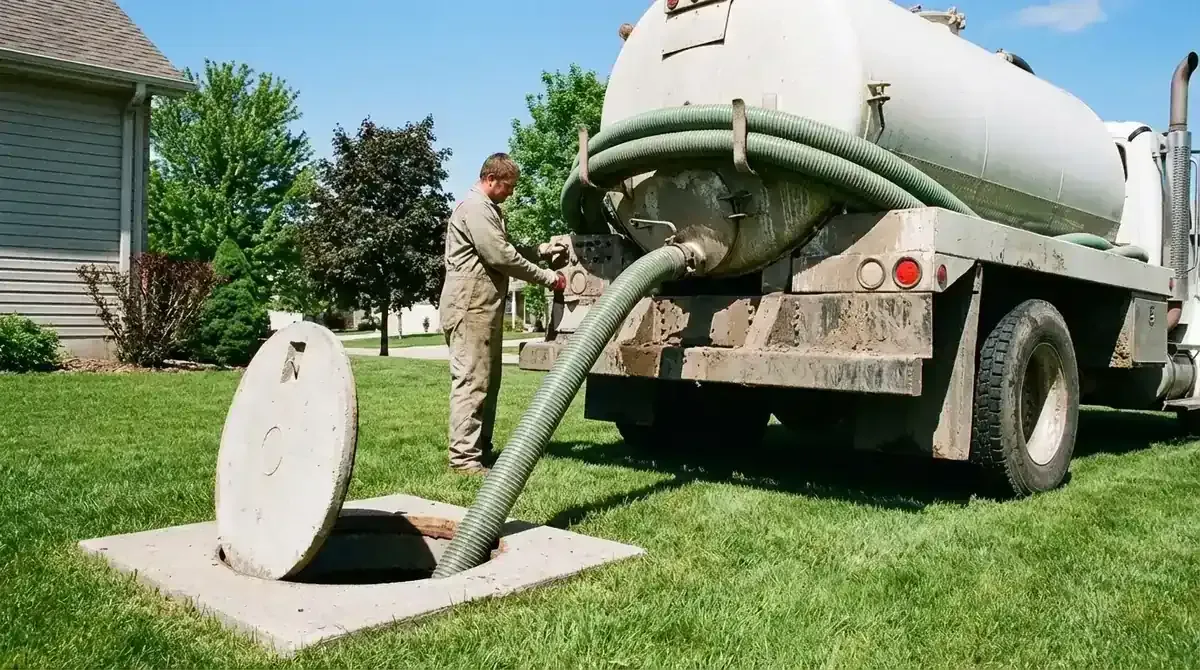
Septic tank pumping costs $300–$425 for most homeowners, with the national average at $423. The service takes 30–60 minutes from start to finish. If you’ve never had your tank pumped, here’s everything that happens during the appointment and what the technician checks.
The distinction between pumping and cleaning matters for your bill: pumping removes liquid and floating material, while cleaning goes further to remove settled sludge. Cleaning adds $200–$300 to the base price but leaves the tank in better condition.
Cost summary
| Service | Cost Range | Average |
|---|---|---|
| Standard pumping | $200–$600 | $300–$425 |
| Pumping + full cleaning | $500–$900 | $600–$700 |
| Inspection add-on | $50–$150 | $100 |
| Tank locating (if buried) | $50–$250 | $100–$150 |
| Emergency/after-hours | $400–$1,200 | $500–$800 |
Emergency and after-hours calls run 1.5–2x regular rates. If you can schedule during business hours on a weekday, you’ll pay the lower end of the range.
For a full septic maintenance schedule that includes pumping intervals by household size, see our scheduling guide.
The full cost range spans $200–$1,237, according to industry pricing data. The wide range depends on tank size, location, accessibility, and whether the provider includes inspection with the pumping.
What’s the difference between pumping and cleaning?
Pumping removes the liquid and floating scum layer from the tank using a vacuum hose connected to a pump truck. This is the standard service that most companies offer. The technician inserts the hose, vacuums out the liquid and most floating material, and leaves the settled sludge at the bottom largely undisturbed.
Cleaning goes deeper. After the initial pumping, the technician breaks up and removes the settled sludge layer at the bottom of the tank. This requires more time, more truck capacity, and sometimes high-pressure water to dislodge compacted material. Cleaning produces a more thorough result but costs $200–$300 more.
Which do you need? Standard pumping is fine for routine maintenance every 3–5 years. Full cleaning is recommended when the sludge layer has built up excessively; your technician will measure and advise. If you can’t remember the last time the tank was cleaned, start with cleaning.
Understanding how septic tanks work helps you appreciate why both layers (scum and sludge) need removal.
The pumping process step by step
Here’s what happens during a typical pumping appointment:
1. Locating and uncovering the access port. The technician finds your tank and uncovers the access cover (also called the manhole or riser). If you know where the tank is, point them to it; this saves 15–30 minutes of probing. If the covers are buried, digging them out may incur an extra $50–$250 charge.
2. Measuring sludge and scum levels. Before pumping, the technician measures the depth of the sludge layer (bottom) and scum layer (top) using a sludge judge or similar tool. These measurements determine whether pumping was truly needed and establish a baseline for future visits.
The EPA rule: pump when sludge reaches within 6 inches of the outlet baffle, or scum reaches within 12 inches. If your levels haven’t reached these thresholds, the technician may advise waiting until the next scheduled date.
3. Inserting the vacuum hose. The technician positions the pump truck’s hose into the tank through the access opening. The hose is typically 3–4 inches in diameter and connects to a powerful vacuum pump on the truck.
4. Pumping the contents. The vacuum pump draws the tank’s contents (liquid, scum, and suspended solids) into the truck’s holding tank. This process takes 20–45 minutes depending on tank size (750–1,500 gallons typical) and how full the tank is.
5. Inspecting the tank interior. With the tank empty, the technician visually inspects the interior for cracks, root intrusion, corrosion, and baffle condition. This is your best opportunity to catch structural problems early.
6. Checking inlet and outlet pipes. The technician inspects both the inlet pipe (from your house) and outlet pipe (to the drain field or pump chamber) for blockages, damage, or misalignment.
7. Replacing the access cover. The technician secures the cover and marks the location if it was previously unmarked. Some companies install risers ($200–$400) to bring the access to ground level for easier future service.
8. Providing a written report. A reputable company provides a written summary of findings: sludge/scum levels before pumping, tank condition, any issues noted, and a recommended next pumping date.
Video guide
Video: “Septic Tank Pump Out & Repair” by Eric Anderson
What the technician checks during service
Beyond the pumping itself, a professional should evaluate:
- Sludge depth and scum thickness: pre-pumping measurements that determine if you’re pumping at the right interval
- Tank structural integrity: concrete cracks, steel corrosion, fiberglass delamination
- Baffle condition: both inlet and outlet baffles must be intact to prevent solids from reaching the drain field
- Root intrusion: tree roots entering through pipe joints, cracks, or access covers
- Effluent filter condition: if present, the filter should be cleaned during the visit
- Tank cover and riser condition: cracked covers or corroded risers pose safety hazards
If the technician flags common septic problems during the inspection, get a written estimate before approving additional work. Some issues (cracked baffle, minor root intrusion) can wait; others (structural cracks, active leaking) need prompt attention.
The cost of a pumping visit with these checks runs $300–$425, and understanding septic tank sizes helps you confirm you’re paying the right rate for your tank capacity.
How to prepare for a pumping appointment
Preparation saves time and money during the service visit:
Know where your tank is located. If you have a property diagram showing the tank location, share it with the company when scheduling. Mark the access covers with stakes or flags if they’re in grass. This step alone can save $50–$250 in locating fees.
Clear the access area. Move vehicles, lawn furniture, planters, or anything else sitting over the tank covers. The technician needs room to work and the pump truck hose reaches a limited distance.
Note recent problems. Write down any issues: slow drains, odors, alarm events, or unusual sounds. The technician can investigate these during the visit when the tank is open and accessible.
Have your pumping history ready. If you have records from previous service visits, share them. The technician can compare sludge levels over time to determine if your pumping interval needs adjusting.
Make sure the truck can reach the tank. The pump truck needs to park within 100–150 feet of the tank (typical hose length). Verify there’s a path for a large truck; narrow driveways, low-hanging branches, or locked gates cause delays.
For information on when to pump your septic tank based on household size, see our pumping frequency guide.
How to choose a septic pumping company
Verify state license. Most states require specific licensing for septic system service. Ask for the license number and verify with your state’s licensing board. Unlicensed operators may charge less but provide no legal recourse if something goes wrong. We recommend asking specifically whether the technician will provide a written report with pre- and post-pumping sludge measurements; companies that skip this step are harder to hold accountable if problems develop later.
Get 3 quotes. Pricing varies 30–50% between companies. Make sure each quote covers the same scope: pumping, inspection, written report, and cover reinstallation.
Ask what’s included. Some companies bundle inspection with pumping at no extra charge. Others charge $50–$150 separately. Clarify before booking.
Check reviews and references. Online reviews help, but ask neighbors and friends for recommendations. Septic companies serve local areas, and word-of-mouth is often the best quality signal.
Avoid companies pushing unnecessary additives. If a pumping company aggressively sells bacteria treatments, enzyme products, or “tank rejuvenators” during the service call, be cautious. Some products help; many are unnecessary.
See the EPA septic care guidelines{:target=“_blank”} for federal recommendations on maintenance frequency and what to expect from a professional service visit.
For the complete maintenance framework, visit our septic system pumping guide. The EPA septic system types{:target=“_blank”} guide explains how different system designs affect pumping requirements.
FAQ
How long does septic pumping take?
The pumping itself takes 20–45 minutes depending on tank size and fullness. Including setup, inspection, and cleanup, a typical appointment lasts 30–60 minutes from arrival to departure. Locating a buried tank can add 15–30 minutes if the access covers aren’t already exposed.
How often should I pump my septic tank?
Every 3–5 years for a typical household. A 4-person home with a 1,000-gallon tank should pump every 3 years. Smaller households with larger tanks can stretch to 5 years. The frequency depends on water use; each person produces roughly 70 gallons of wastewater per day.
Can I be home during septic pumping?
Yes, and we recommend it. Being home lets you point the technician to the tank location, ask questions about the inspection findings, and discuss any recommended repairs. The process doesn’t require access to the inside of your house; all work happens outside at the tank.
Does the whole yard have to be dug up?
No. Only the tank access covers need to be exposed, typically two circular covers 18–24 inches in diameter. If your system has risers installed (bringing covers to ground level), nothing needs to be dug at all. If covers are buried 6–18 inches below grade, the technician or you will need to dig them out before the visit.