Slow Draining Tub: Causes and How to Fix It
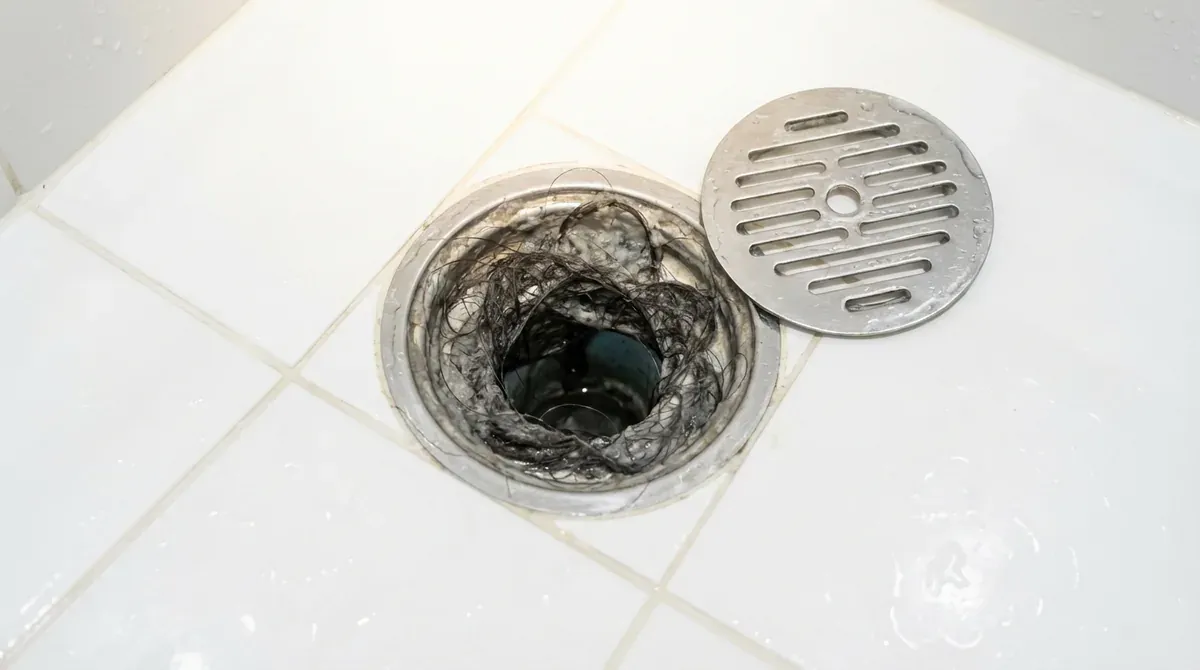
A slow-draining tub is almost always caused by a partial hair and soap scum mat within 6 inches of the drain opening. Monthly maintenance with baking soda and boiling water can prevent a full blockage from forming. The good news: a slow drain means you caught it early. The fix is easier now than if you wait until the tub won’t drain at all.
Video: “How to Unclog your Bathtub Drain in 5 minutes” by JRESHOW
What “slow draining” means vs. fully clogged
Slow drain: Water drains within 3–5 minutes after you shut the faucet off. You notice it but the tub empties on its own.
Partial clog: Water pools and takes 10–20 minutes to clear. The drain is clearly impaired.
Full clog: Water does not drain at all, or nearly all. You’re standing in it. This is a different problem.
This guide is for the first two situations. If your tub won’t drain at all, our clogged bathtub drain guide covers the methods needed for a full blockage, including plunger technique and drain snake use.
If the slow drain is in a shower stall rather than a bathtub, see our shower and tub drain problems hub for the right starting point.
The four most common causes of a slow tub drain
Matching the fix to the cause saves time. Here’s what we’ve found causes the majority of slow tub drains:
1. Hair and soap scum mat (most common) Hair accumulates at the drain cover and P-trap entry. Soap scum binds the hair together. The mat starts thin and allows some flow, then thickens over weeks until it restricts drainage noticeably. This is the case for most slow drains in households with multiple users or long hair.
2. Soap scum buildup alone (no hair) In hard water areas or homes that use bar soap heavily, soap scum coats the inside of the drain pipe and reduces its effective diameter. Flow slows gradually rather than suddenly. There’s no distinct mat, just a narrowed pipe.
3. Mineral deposits from hard water White or gray crust on the drain cover is a sign. The same mineral buildup (calcium and magnesium) accumulates inside the pipe over months. Vinegar dissolves it effectively. This cause is more common in areas where tap water tests above 120 mg/L of dissolved minerals.
4. Partially closed or fouled drain stopper A trip-lever or pop-up stopper that doesn’t fully open restricts flow even if the pipe is perfectly clear. Hair and soap accumulate on the stopper mechanism itself, adding drag. This is often overlooked: people clean the visible drain surface and ignore the stopper body entirely.
Fix 1: baking soda and hot water flush
Start here if: The drain has been slowing gradually over weeks (soap scum cause likely)
This is the easiest entry point and effective for soap scum and early-stage hair buildup. Pour 1 cup of baking soda into the drain (push it in past the cover if possible, not spread across the grate). Follow with a mixture of 1 cup white vinegar and 1 cup of hot water. The combination produces carbon dioxide that breaks soap scum particles apart and loosens them from the pipe walls.
Cover the drain with a stopper or wet cloth immediately after pouring the vinegar. Keeping the CO2 pressure inside the pipe rather than releasing it upward gives the reaction more contact time with the clog material. Wait 10–15 minutes.
Flush with boiling water. The heat adds pressure through gravity and thermal expansion; it’s more effective than a warm or room-temperature flush. The LiquidPlumr method specifies boiling water for exactly this reason: pressure plus heat moves the loosened debris through rather than just suspending it.
We recommend repeating this process monthly even when the drain seems fine. It’s maintenance, not just a repair.
Fix 2: baking soda and salt overnight treatment
Use this if: Fix 1 didn’t help, or the drain smells and feels like soap/grease buildup
The baking soda and salt overnight treatment uses coarse salt to scour pipe walls combined with baking soda’s grease-absorbing properties. Both should sit for several hours before a hot water flush. This is more aggressive than the vinegar version and better for established soap scum layers.
Mix 1 cup baking soda with half a cup of table salt (coarser salt works better if you have it). Pour the dry mixture into the drain. Don’t add water yet. Leave it overnight, or at minimum for several hours. The salt’s abrasiveness scours buildup off the pipe walls while the baking soda absorbs grease.
In the morning, flush with boiling water for 60 seconds. The debris you see coming out indicates the treatment worked. Repeat if the drain is still slow.
This is the method ATCO Energy recommends for ongoing drain maintenance. The sit time matters more than people expect.
Fix 3: manual hair removal
Use this if: The slow drain came on suddenly, or you can see hair near the drain opening
If hair is the confirmed cause, no amount of baking soda will speed the drain. The hair mat needs to come out physically. Remove the drain stopper (pop-up stoppers twist counterclockwise and lift; trip-lever stoppers come out through the overflow plate). With the stopper removed, reach into the drain with a zip-it tool ($4–$7) or a bent wire hanger.
Push the tool 4–6 inches into the drain opening. Twist slightly and pull slowly. Even a partial mat, not fully blocking the pipe, creates enough restriction to noticeably slow drainage. Removing it resolves the slow drain immediately.
For a full walkthrough of hair removal technique including how to handle different stopper types, our remove hair from the drain guide covers each step in detail.
After removing the hair, follow with a baking soda flush (Fix 1) to clear any residual soap scum the hair was trapping.
Fix 4: check and clean the drain stopper
Use this if: The drain was fine until recently and you haven’t changed your habits
A stopper problem masquerades as a clog because the symptom, slow drainage, is identical. But the cause is mechanical, not a buildup in the pipe.
Pop-up stoppers: Twist the stopper counterclockwise and lift it out. Inspect the pivot rod (the horizontal rod that connects the stopper to the linkage). Hair and soap accumulate on it and prevent the stopper from lifting fully into the open position. Clean the pivot rod and the stopper body with an old toothbrush.
Trip-lever stoppers: Unscrew the overflow plate cover (two screws, usually Phillips head). Pull the entire mechanism out by the linkage chain. The stopper, a cylindrical piece at the bottom of the linkage, collects significant hair and soap debris. Clean everything, then reinsert. Check that the trip lever clicks clearly between “open” and “closed” positions.
A clean stopper that fully opens can improve flow immediately without touching the drain pipe at all.
When the problem is bigger than it looks
Most slow tub drains have a straightforward cause and fix. But some symptoms point to something the four fixes above can’t solve:
Multiple drains slow simultaneously: If the bathroom sink, tub, and other fixtures are all draining poorly at the same time, this isn’t a local tub clog. It’s a main sewer line issue. A plumber with a sewer camera is the right tool here, not a drain snake. See our slow bathroom sink drain guide to check if the problem extends there.
Gurgling toilet when tub drains: The gurgling means air is being pulled through the toilet’s water seal because the drain venting is compromised. This is a plumbing system issue, not a clog. A licensed plumber needs to assess the vent stack.
Sewer smell near the tub: A P-trap that rarely gets used can dry out, allowing sewer gas into the bathroom. Run the tub for a minute to refill the trap. If the smell persists after the trap is full, the P-trap itself may need cleaning. Access is often through a removable panel in an adjacent closet. Place a bucket underneath, loosen the slip nuts, remove the curved trap section, clean it, and reinstall.
Using a correct plunger technique can also help dislodge debris in the drain branch line if none of the above fixes worked. Sometimes the clog is just past where the snake and tools can reach from above.
FAQ
Why is my bathtub draining slowly all of a sudden?
A sudden slow drain usually means a hair mat reached a tipping point. It was building gradually and the drain was compensating until it couldn’t. Alternatively, a drain stopper has shifted out of its fully-open position. Check the stopper mechanism first (quick fix), then attempt manual hair removal if the stopper is fine. Slow drains that build over weeks typically indicate soap scum accumulation rather than an event.
Can I use Drano for a slow draining tub with a septic system?
We don’t recommend it. Commercial drain cleaners kill septic bacteria, and the EPA specifically cautions against chemical cleaners in septic-connected homes. The baking soda and vinegar or baking soda and salt methods work well for slow drains and are completely safe for septic systems. If those methods don’t help, a drain snake addresses the mechanical blockage without any chemical contact with the septic system.
How do I clean my bathtub drain stopper?
The process depends on stopper type. Pop-up stoppers lift out after twisting counterclockwise; clean the stopper body and pivot rod with an old toothbrush and warm water. Trip-lever stoppers come out through the overflow plate: remove the two screws on the plate cover, pull the linkage assembly out, and clean the cylindrical stopper at the bottom of the linkage. Reinstall and test that the lever clicks clearly into the open position. Most stopper cleaning takes under 10 minutes.
How often should I clean my bathtub drain?
We recommend manual inspection and cleaning monthly: remove the drain cover, pull any accumulated hair, and run a baking soda flush. For households with multiple users or long hair, every two to three weeks is more realistic. A simple drain hair catcher ($5–$15) installed over the drain opening can extend the interval significantly by catching hair before it enters the pipe. Our how to clear a clogged drain guide covers drain maintenance across multiple fixture types if you want to set up a whole-home routine.