Submersible vs Jet Pump: Which Is Right for Your Well?
If your well is deeper than 25 feet, install a submersible pump. That covers roughly 90% of drilled residential wells in the United States, and the recommendation doesn’t change based on budget, brand preference, or what the previous owner had.
Jet pumps remain a legitimate option for dug or bored wells under 25 feet deep, older properties where above-ground access is a priority, and seasonal installations where draining and priming are routine. Outside those situations, a submersible wins on every metric that matters over time.
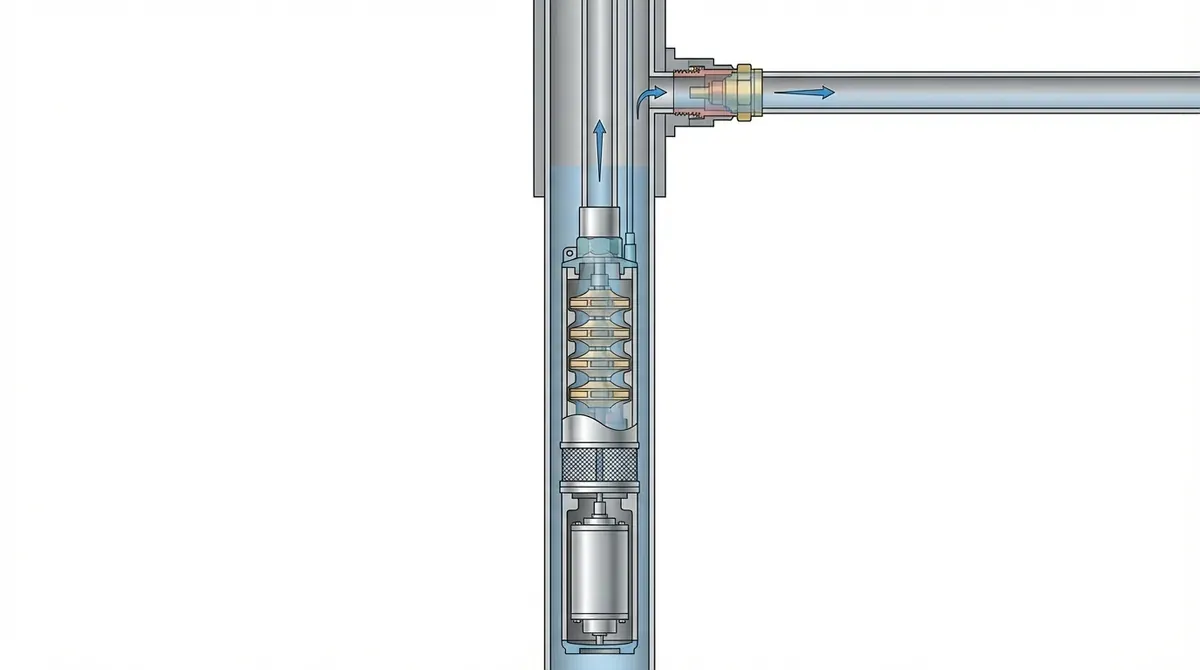
We’ve laid out the full comparison below (depth limits, costs, lifespan, service access, and brand options) so you can verify the recommendation for your specific setup. We also cover the types of well pumps in a separate guide if you want a full overview before deciding.
Is this comparison for you?
This comparison is for you if:
- You’re choosing between pump types for a new or replacement installation
- You know your well depth and want to confirm the right pump type
- You’re evaluating whether to upgrade from a jet pump to a submersible
This comparison is not for you if:
- You already have a submersible and it’s having trouble: go to our well pump repair guide instead
- You want to understand all pump types before deciding: see our types of well pumps guide
- You need to know what installation will cost: our well pump installation cost guide breaks that down by pump type and well depth
Submersible vs jet pump: head-to-head
| Feature | Submersible pump | Jet pump (single-pipe) | Jet pump (two-pipe) |
|---|---|---|---|
| Max depth | 400 feet | 25 feet | 80-100 feet |
| Installation location | Inside well, below waterline | Above ground | Above ground |
| Pump unit cost | $150-$800 | $100-$400 | $150-$500 |
| Installed cost | $500-$2,000 | $200-$600 | $300-$900 |
| Average lifespan | 15-25 years | 10-15 years | 10-15 years |
| Noise | Silent (underground) | Audible (motor in house/pump house) | Audible |
| Priming required | No | Yes, after power loss | Yes, after power loss |
| Service access | Must pull from well | Above-ground, easy access | Above-ground motor; in-well jet requires pulling |
| Energy efficiency | High | Moderate | Moderate-low |
| Best for | Drilled wells over 25 ft | Dug/bored wells under 25 ft | Mid-depth wells 25-80 ft |
How submersible pumps work
A submersible pump is a sealed unit (motor and impeller together) dropped down into the well casing on a drop pipe and safety cable. It sits below the waterline, usually within 10-20 feet of the bottom of the well but not so close it pulls sediment.
Because the motor is submerged, it’s cooled by the surrounding water. That makes submersibles run quieter, run cooler, and last longer than above-ground pumps. The motor pushes water up through the drop pipe rather than pulling it. Pushing is inherently more efficient than suction, which is why submersibles use less electricity per gallon delivered.
The trade-off: when a submersible needs service, you have to pull it from the well. That requires a well-pulling device, pipe wrenches, and safety cables. Most homeowners hire this out for wells over 100 feet.
How jet pumps work
A jet pump sits above ground, usually in a basement, crawl space, or pump house. An electric motor spins an impeller that creates a high-velocity water stream through a jet or ejector. That jet creates a vacuum that draws water up from the well.
Single-pipe jet pumps draw water through one pipe using suction lift. Atmospheric pressure limits suction to about 25 feet. Below that, a single-pipe jet pump cannot physically pull water up. This is a physics constraint, not a product quality issue. It’s one reason jet pumps have nearly disappeared from new drilled well installations.
Two-pipe deep well jet pumps send pressurized water down one pipe to an ejector assembly in the well. The ejector uses that pressure to pull water up through a second pipe. This gets around the 25-foot suction limit, reaching 80-100 feet, but efficiency drops as depth increases. At 80 feet, a two-pipe jet pump uses significantly more electricity than a submersible moving the same GPM.
One reliable indicator of jet pump age: they require priming after a power outage or after running dry. If you’ve had to prime your well pump more than once, that’s a jet pump. Submersibles don’t require priming; they’re always submerged.
Video: “Troubleshooting a Jet Pump: Low Pressure or Flow” by R.C. Worst & Co.
When to choose a submersible pump
Any drilled well over 25 feet deep. That’s the baseline. We recommend submersibles for most replacement jobs, even when the original was a jet pump, because the depth and performance advantages are clear. Beyond that, submersibles are the right call when:
- High household demand. A 1/2 HP submersible typically delivers 10-20 GPM, enough for 3 bathrooms running simultaneously. Equivalent jet pumps use 20-30% more electricity to move the same volume of water.
- New installation or full replacement. No reason to install an older technology on a modern drilled well.
- Long-term cost efficiency matters. The higher upfront installation cost pays back over time through lower energy bills and a longer service life.
- The well is too deep for any jet pump. At 100 feet or more, submersible is the only practical option.
When to choose a jet pump
Jet pumps still make sense in specific situations. We found the strongest argument for jet pumps on older rural properties with shallow dug wells. The above-ground service access is a real advantage when you’re doing your own maintenance:
- Dug or bored wells under 25 feet deep. Common on older rural properties, especially in the Northeast and Midwest where hand-dug wells from the 1800s-1950s are still in use.
- Frequent servicing is expected. Above-ground means you can pull the motor without any special well-pulling equipment. Farmers and property managers who work on their own equipment often prefer this.
- Seasonal or camp use. Jet pumps drain completely when you shut the system down for winter. Submersibles stay submerged and require blowing out water lines separately.
- Budget installation on a shallow well. If the well is 20 feet deep and budget is tight, a $150 single-pipe jet pump installed in an afternoon makes sense.
Cost comparison
The cost gap between submersible and jet pump narrows when you account for service life.
Upfront pump cost: Jet pumps cost $100-$400 for the unit; submersibles run $150-$800 for a standard residential 1/2 HP unit. Brands like Franklin Electric and Grundfos sit in the $250-$600 range.
Installation: Jet pump installation runs $200-$600 because the pump is above-ground and doesn’t require well-pulling equipment. Submersible installation costs $500-$2,000 depending on well depth, since deeper wells mean more drop pipe, more cable, and more time.
Long-term: A quality submersible lasts 15-25 years. A jet pump averages 10-15 years under equivalent use. Over a 20-year period, the jet pump likely requires one full replacement; the submersible may need only maintenance. Submersibles also run at lower wattage per GPM, so the total cost over 20 years often favors the submersible even when the drilled well installation is more expensive.
For a line-item cost breakdown by well depth and pump size, see our well pump installation cost guide. If you’re already dealing with a pump that’s struggling, our well pump repair guide can help you figure out if the issue is the pump itself or the pressure system.
Brand recommendations by pump type
Submersible pumps
We recommend these four brands in order of preference for a primary residence:
- Franklin Electric: the most widely installed residential submersible in the US. Parts are available everywhere, service contractors know the motors, and reliability is strong across HP ranges.
- Grundfos: premium build quality and the best warranty in the industry (up to 10 years on some lines). Worth the price premium for a well that’s hard to access or on a property where reliability is non-negotiable.
- Goulds Water Technology: contractor-grade. Goulds motors run cool and handle high-cycling applications well. A good choice for irrigation-heavy properties.
- CountyLine: budget option. Adequate for light residential use on wells with consistent water quality. Not our first recommendation for a primary home.
Jet pumps
Flotec, Pentair, and Goulds all make quality jet pumps. Flotec is commonly available at home improvement stores. Pentair sits a step above in quality. Goulds makes both submersible and jet pump lines, so parts compatibility is consistent if you’re already a Goulds customer.
FAQ
Can I switch from a jet pump to a submersible pump?
Yes. Converting from a jet pump to a submersible is a standard job for any well contractor. The well already has a casing; you’re dropping a new pump in and running new drop pipe and electrical cable. The pressure tank and pressure switch may need to be re-adjusted or replaced depending on the specifications of the new pump. Plan for $500-$1,500 for the conversion including labor, parts, and pump.
How deep does a well need to be for a submersible pump?
There’s no minimum depth. Submersibles work in wells as shallow as 20 feet, though a jet pump might be more practical at that depth. The practical threshold is 25 feet: at that point, a single-pipe jet pump hits its limit, and a submersible becomes the more reliable option.
Do submersible pumps need to be primed?
No. Because a submersible sits below the waterline, it’s always surrounded by water and never needs priming. This is a meaningful advantage over jet pumps, which must be primed after power outages or after running dry. Repeated priming failures in a jet pump are a sign the pump or foot valve needs service.
Which lasts longer: submersible or jet pump?
Submersible pumps from reputable brands typically last 15-25 years. Jet pumps average 10-15 years. The lifespan difference comes from the submersible’s cooling advantage (water keeps the motor temperature stable) and the absence of a priming mechanism that wears over time. According to the National Ground Water Association, proper installation and annual inspection are the biggest factors in pump longevity regardless of type.
Can I install a submersible pump myself?
The mechanical side (dropping the pump, connecting the drop pipe and safety cable) is doable for a capable DIYer on a shallow well. The electrical connection at the pump head must be completely watertight (submersion-rated wire nuts and splice kits are required). In most jurisdictions, connecting pump wiring to the pressure switch and electrical panel requires a licensed electrician. Check your state’s well regulations before starting. The EPA’s private well resources include links to state-specific requirements.