How to Flush AC Drain Line with Vinegar
Yes, flushing your AC drain line with distilled white vinegar works. Pour 1/4 cup directly into the drain access port, wait 30 minutes for the acetic acid to dissolve algae and mineral buildup, then flush with warm water. For stubborn clogs, add baking soda first: 1 cup of baking soda followed by 1 cup of vinegar. The bubbling reaction breaks up more stubborn debris. Wait 15 minutes before flushing with warm water. This is the safest, septic-friendly method, and the one we use for quarterly maintenance.
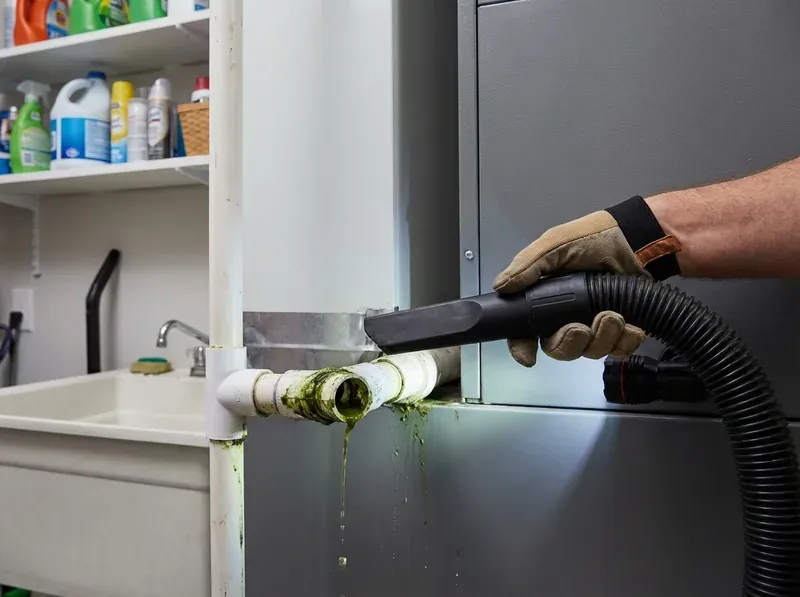
For a broader look at all clogged AC drain line symptoms and fixes, the overview page will route you to the right solution. If the vinegar method is not clearing the clog, the full AC condensate drain cleaning guide adds the wet-dry vacuum technique.
Video guide
Video: “How to Unclog Your AC Drain Line (and Prevent It From Happening Again)” by World of HVAC
Why vinegar works on AC drain lines
AC condensate drains clog primarily from algae and mold growth. Warm, moist, dark drain lines are ideal growing conditions for algae colonies, which build up on pipe walls over weeks and eventually block flow entirely.
Distilled white vinegar contains 5% acetic acid, which kills algae on contact and dissolves the mineral deposits (calcium, lime scale) that contribute to clogs. It is safe for the standard 3/4 inch PVC drain line, which carries 5-20 gallons of condensate per day out of the home during peak cooling season. Vinegar will not corrode or etch the pipe. Unlike bleach, vinegar does not harm septic systems. For homes on septic systems, vinegar is the only recommended option for AC drain cleaning. A professional AC drain cleaning service call costs $75-$200, making the DIY vinegar flush an attractive free alternative for most homeowners.
The baking soda and vinegar drain method adds a physical component: when baking soda meets acetic acid, it releases carbon dioxide gas. That bubbling reaction creates mechanical pressure that dislodges debris from pipe walls, on top of the chemical action. ATCO Energy confirms this reaction is working exactly as intended when you see it bubble.
Vinegar is most effective against algae-based clogs, which account for the majority of AC condensate drain blockages in humid climates. It is less effective against solid debris, compacted sediment, or hard mineral scale that has built up over several years without any maintenance. For those, the wet-dry vacuum method in our full AC condensate drain cleaning guide is the right call.
When vinegar is (and isn’t) the right fix
Vinegar works best for:
- Routine monthly or quarterly maintenance before any clog forms
- Early-stage clogs (drain running slow, slight musty smell)
- Preventive treatment at the start of AC season
- First-time DIY: if you’ve never cleaned the drain and want to start with the easiest method
Vinegar is less effective for:
- Severe clogs with standing water already in the drain pan
- Hard debris or compacted sediment blockages
- Drain lines that have not been maintained in 2 or more years
- Situations where the drain pan is actively overflowing right now
If the drain pan is actively overflowing, vinegar alone will not fix it fast enough. See AC drain pan overflow first to stop the overflow before attempting any drain cleaning.
How to flush your AC drain line with vinegar, step by step
-
Turn off the AC at the thermostat. Full cooling shutoff, not just fan mode. Wait a few minutes before touching anything.
-
Locate the drain access port. This is a capped PVC pipe (usually white or gray, 3/4” diameter) on your air handler, typically in a closet, attic, or garage. The cap unscrews by hand.
-
Remove the cap. Hand-unscrew or gently pry it off. Use a rag for grip if it is stuck.
-
Pour in vinegar. Use 1/4 cup of distilled white vinegar for routine maintenance. Use 1/2 cup if you have an active slow drain.
-
Optional: add baking soda first for stubborn clogs. Pour 1 cup of baking soda into the drain port, wait 5 minutes for it to settle, then pour in 1 cup of distilled white vinegar. The solution will bubble. That is good. Let the reaction run for 15 minutes before flushing. This combination is our go-to for any clog that has been sitting more than a week.
-
Wait 30 minutes. This step is what most competitors skip or rush. Thirty minutes is the minimum effective wait time for vinegar alone to dissolve algae. If you used the baking soda combination, 15 minutes is sufficient.
-
Flush with warm water. Pour 1 cup of warm (not boiling) water through the port to push dissolved material out toward the drain outlet. Hot water on its own also works as a mild clog treatment for very early-stage buildup.
-
Replace the cap and restore power. Hand-tighten only. Turn the AC back on.
-
Verify: check the drain outlet. Find where the drain line exits the building (usually a small PVC pipe exiting through an exterior wall or draining into a floor drain). Within 15-20 minutes of the AC running, water should drip from this outlet. No drip means the clog may be deeper than the vinegar reached.
How often should you do a vinegar flush?
We pour 1/4 cup of distilled white vinegar into the drain port every month during cooling season, and this 2-minute step has prevented every algae-related AC drain problem we’ve encountered over years of use.
Our recommended schedule:
- Monthly during cooling season (May through September in most of the US; year-round in warm climates like Florida, Gulf Coast, and the Southeast)
- Quarterly minimum for all other climates
- Before AC season starts each year, regardless of location
Annual professional HVAC inspection is still recommended regardless of how good your vinegar maintenance is. The EPA Energy Star AC maintenance guidelines{:target=“_blank”} recommend yearly professional service to catch refrigerant, coil, and electrical issues that vinegar maintenance cannot address.
For additional drain maintenance strategies around the house, our guide on home remedies for clogged drains covers how these same household methods apply to kitchen and bathroom drains.
When to worry, signs the vinegar method isn’t enough
AC still shutting off after vinegar flush: The float switch may be tripped and stuck in the closed position even after the drain is clear. See AC drain pan overflow for float switch testing and reset.
Drain outlet not dripping after 30 minutes of AC running: The clog is deeper or more severe than vinegar can reach. Move to the wet-dry vacuum method in our full AC condensate drain cleaning guide.
Musty smell persists after two flushes: Possible mold has colonized the air handler interior itself, not just the drain line. Call an HVAC technician. This is beyond DIY scope.
Visible black or green slime at the drain port keeps returning: A significant algae colony exists in the line. Try three consecutive vinegar flushes on three consecutive days before escalating. If it returns a fourth time, call an HVAC technician for a biocide treatment.
Water stains near the air handler: The drain has been overflowing for a while. Assess any structural damage before continuing with DIY. For cost estimates on professional repairs, see the Family Handyman AC drain guide{:target=“_blank”} and HVAC.com condensate drain overview{:target=“_blank”}.
FAQ
How much vinegar do I put in my AC drain line?
Use 1/4 cup for routine monthly maintenance, 1/2 cup for an active slow drain, and 1 cup when combining with baking soda for a stubborn clog. Distilled white vinegar at these amounts will not damage PVC pipe even if you accidentally pour a bit more.
How long do I leave vinegar in my AC drain line?
30 minutes is the minimum effective wait time for vinegar alone to dissolve algae. When using the baking soda and vinegar combination, 15 minutes is sufficient because the physical bubbling reaction adds mechanical action to the chemical dissolving. Leaving vinegar in overnight is fine and will not damage the pipe.
Can I use apple cider vinegar instead of distilled white vinegar?
Yes, apple cider vinegar will work, but distilled white vinegar has a higher acetic acid concentration (typically 5% vs 4-5% in apple cider varieties) and leaves no residue or color in the pipe. Stick with distilled white vinegar when you have a choice.
Will vinegar damage my AC drain line?
No. Distilled white vinegar at 5% acetic acid is safe for PVC, copper, and ABS pipes. It will not corrode, etch, or weaken the pipe material. This is the same reason vinegar is widely recommended for dishwasher and washing machine maintenance.
Vinegar vs bleach for AC drain, which is better?
For all homes, we recommend distilled white vinegar. Bleach is slightly more effective against heavy algae colonies and works faster, but it is not safe for homes with septic systems and creates fumes when mixed with certain residues in the drain line. Vinegar is equally effective against algae when given adequate wait time (30 minutes), safe for all plumbing configurations, and the right choice for any home on a septic system. Distilled white vinegar is the safest AC drain cleaner for homes on septic systems.