Washing machine drain maintenance to prevent clogs
A monthly baking soda flush plus an annual P-trap clearing keeps most washing machine drains clog-free indefinitely. The monthly routine takes 10 minutes of active time. Without it, standpipes typically develop overflow-level blockages within 12 to 18 months for a household running 8 or more loads per week. For context on the causes of washing machine drain clogs, see our hub guide before setting up this routine.
Quick answer
A washing machine drain maintenance routine has two components: a monthly flush (1 cup baking soda plus 1/2 cup salt, soak 2 to 3 hours, flush with hot water) and a 6-month standpipe inspection where you pull the hose and check the opening with a flashlight and wire hanger. Add an annual P-trap cleanout and most homeowners avoid professional drain service entirely.
Why washing machine drains clog over time
Every wash cycle releases lint fibers and fabric threads that travel from the drum through the drain hose into the standpipe. Without regular flushing, this buildup progresses in predictable stages.
Modern high-efficiency detergent pods can accelerate the process. Overdosing HE pods leaves a sticky soap residue that bonds with lint on pipe walls and narrows the effective drain diameter with each cycle. The standpipe and the P-trap below it are designed to capture debris before it reaches the main drain line, but that means they need periodic clearing.
ATCO Energy Home Services recommends practicing preventive care by avoiding pouring bacon grease, coffee grounds, or oils down drains and using the vinegar and baking soda method regularly for routine maintenance. The same principle applies to the washing machine standpipe: the debris that causes overflow-level clogs builds up gradually, and a brief monthly routine catches it before it becomes a problem.
If you already have an active clog, start with how to clear a clogged washer drain pipe before setting up the maintenance routine.
Before: what happens without maintenance
The buildup timeline for a household running 8 or more wash cycles per week:
Month 1 to 6: No visible symptoms. Lint is accumulating on standpipe walls as a thin film. Drain flow is normal.
Month 6 to 12: The drain slows slightly during the spin cycle. You may notice a faint musty smell from the P-trap as debris begins trapping moisture. The drain still completes between cycles.
Month 12 to 18: Standpipe overflows during the spin cycle. Water pools on the laundry room floor. The clog has reached the P-trap or has built up to a point where the drain rate cannot keep up with the washer’s output.
Cost if neglected: A plumber charging $100 to $250 to snake the standpipe, or $300 or more if the main line is also affected. The monthly routine described below costs nothing beyond a box of baking soda and a box of salt.
The monthly maintenance routine
This routine takes 10 minutes of active time. We recommend running it on the same calendar day each month so it becomes automatic.
Monthly (10 minutes active, 2 to 3 hours passive soak):
- Mix 1 cup of baking soda with 1/2 cup of table salt.
- Pour the mixture directly into the standpipe opening.
- Let it sit for 2 to 3 hours. Doing this before bed works well; the long soak gives the abrasive combination time to work on pipe wall buildup.
- Flush with 1 gallon of hot water from the tap. Do not use boiling water on PVC standpipes; tap-hot is sufficient and safe.
- Run a short spin-only cycle to push the loosened debris fully through the P-trap and into the main drain.
An alternative monthly method: 1 cup of baking soda followed by 1 cup of white vinegar. The foaming reaction loosens buildup through physical pressure rather than abrasion. Wait 15 minutes, then flush with hot water.
Every 6 months (15 minutes):
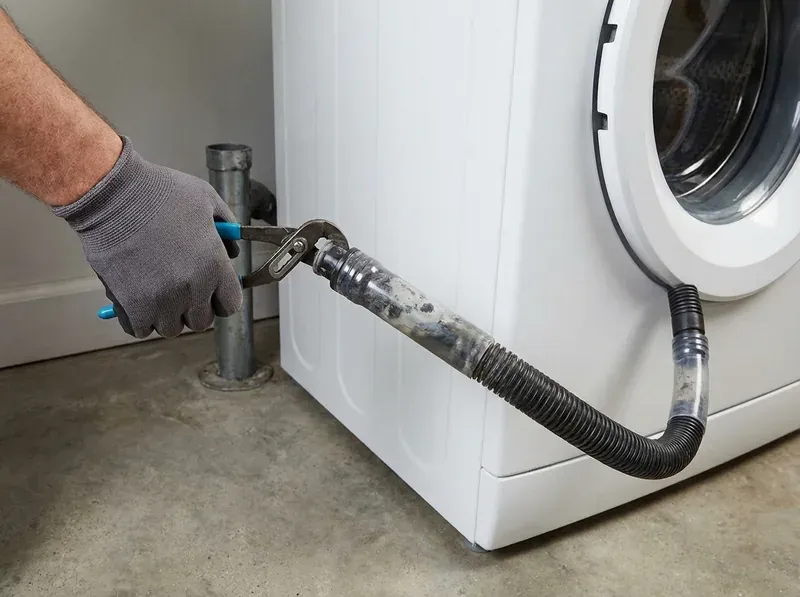
- Pull the drain hose out of the standpipe.
- Shine a flashlight into the standpipe opening and inspect the top 12 inches.
- Insert a straightened wire hanger to fish out any visible lint from the top section.
- Check that the hose insertion depth is 4 to 6 inches when reseating it. Mark the hose with a zip tie at the correct depth so it stays in position.
- Run the full monthly flush above.
Annual (20 to 30 minutes):
- Place a bucket under the P-trap (the bent drainpipe below the standpipe connection).
- Remove the P-trap cleanout plug or loosen the slip-joint nuts to detach the trap arm.
- Clear any accumulated debris by hand or with a small brush.
- Reinstall and tighten connections hand-tight.
- Run a drain cycle to confirm the trap is sealed and water flows freely.
For homes on municipal sewer, the EPA WaterSense program{:target=“_blank”} encourages efficient water use practices that align with this approach: regular maintenance that reduces emergency call-outs and water wasted during drain failures.
After: what to expect
Following the monthly routine produces measurable results on a clear timeline.
After the first flush: Most homeowners notice faster draining within 1 to 2 wash cycles. The partial buildup that caused slow draining dissolves during the 2 to 3-hour soak.
After 3 months consistent routine: No slow drain. No standpipe overflow. The spin cycle completes at normal speed. The faint musty smell from a partially blocked P-trap clears as the trap stays cleaner between flushes.
After 12 months: The 6-month standpipe inspection finds minimal lint near the opening. The annual P-trap cleanout removes only a small amount of debris rather than a compacted plug.
Long-term: Most homeowners who follow this routine avoid professional snaking entirely. We find that households doing the monthly flush consistently do not need professional service more than once every 5 to 7 years, if at all. The $100 to $250 call-out cost becomes unnecessary when buildup never reaches overflow level.
If it still backs up despite regular maintenance
Recurring overflows despite following the monthly routine usually point to a structural issue rather than a simple buildup problem.
Standpipe diameter: Standard residential standpipe minimum is 2 inches. Some older homes have 1.5-inch standpipes, which cannot keep pace with the drain rate of modern front-load washers. A plumber can replace the standpipe section in an afternoon.
Hose insertion depth: A drain hose inserted more than 6 inches into the standpipe creates a siphoning effect that empties water back into the drum between cycles, triggering repeated overflow symptoms that look like a clog but are not.
Shared main line: If multiple drains in the home slow simultaneously, the problem is downstream of the P-trap. No amount of standpipe maintenance will fix a main line obstruction. See how to clear a clogged washer drain pipe for the full diagnostic sequence, or see diagnose a drain pipe clog to work through the inspection steps before calling a plumber.
FAQ
How often should you clean a washing machine drain?
Run a baking soda and salt flush monthly. Every 6 months, pull the drain hose and inspect the standpipe opening with a flashlight. Once per year, remove the P-trap and clear any accumulated debris by hand. This three-tier schedule covers all the zones where lint and soap scum accumulate and prevents buildup from reaching overflow level.
What can I pour down my washing machine drain to keep it clean?
The best option is 1 cup of baking soda mixed with 1/2 cup of salt, left to soak for 2 to 3 hours before flushing with hot water. For a faster reaction, use 1 cup of baking soda followed by 1 cup of white vinegar (15-minute soak). Both methods are safe for PVC and galvanized standpipes. If your home has a septic system, use the baking soda and vinegar method rather than commercial enzyme cleaners that may contain bleach.
Does white vinegar clean washing machine drains?
Yes. Baking soda combined with white vinegar creates a foam reaction that loosens lint and soap scum through physical pressure on the pipe walls. It is effective for routine maintenance and partial blockages, though not for severe compacted clogs that require a mechanical snake. Use 1 cup of baking soda followed by 1 cup of vinegar, wait 15 minutes, then flush with hot water. The Family Handyman drain guide{:target=“_blank”} confirms this method as a standard first step before mechanical intervention.
Why does my washing machine smell like sewer?
A sewer smell from the laundry area almost always means the P-trap has dried out or is partially clogged. The P-trap holds a small amount of standing water that acts as a barrier against sewer gases. If the laundry room sees infrequent use, the water evaporates and the barrier disappears. Run the monthly maintenance flush to clear the trap and restore the water seal. If the smell returns within a week despite regular use, the trap may need to be inspected for cracks. For broader drain clog prevention advice across all household drains, see our full prevention guide.
For more general laundry room tips including appliance care and lint management, This Old House laundry tips{:target=“_blank”} is a useful companion reference alongside this maintenance routine.