Well Pump GPM: How to Size the Right Flow Rate for Your Home
Most residential homes need a well pump delivering 6-12 GPM (gallons per minute) at the pressure tank. If you’re a 1-2 person household with no irrigation, a 6-7 GPM pump is enough. A family of four typically needs 8-10 GPM. Add a sprinkler system and you’re looking at 12 GPM or more. These numbers come from calculating your peak demand (the total flow rate when multiple fixtures run simultaneously), and we’ll walk you through exactly how to do that.
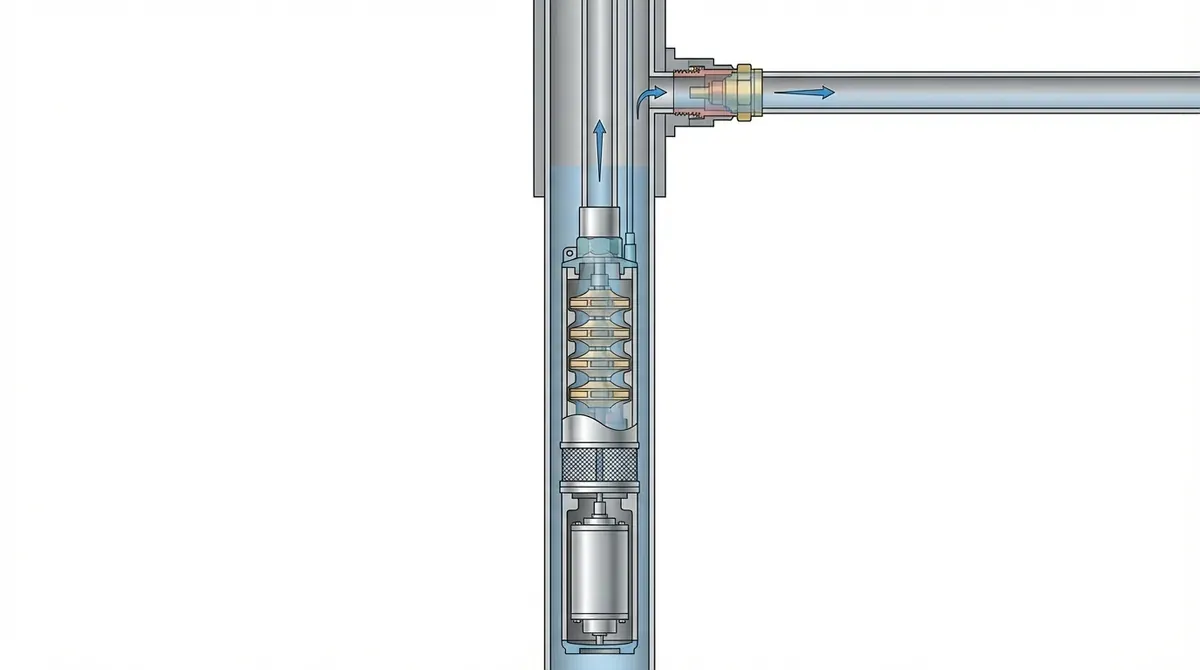
Understanding your GPM requirement before buying prevents two costly mistakes: buying an undersized pump that short cycles and burns out early, or overspending on horsepower you don’t need. For a broader overview of the full system, see our submersible well pump guide.
Quick answer: what GPM do most homes need?
Here’s the short version, based on standard fixture flow rates and typical household use patterns:
| Household Size | Without Irrigation | With Irrigation |
|---|---|---|
| 1-2 people | 6-7 GPM | 9-10 GPM |
| 3-4 people | 8-10 GPM | 12-13 GPM |
| 5+ people or farm use | 12-15 GPM | 18-20 GPM |
One important distinction: the GPM rating on a pump is measured at a specific pressure (usually 40 PSI). Your delivered flow rate at the faucet is always lower because of friction losses in the pipe run between the pump and the fixture. Size for what the pump delivers at the pressure tank, not at the tap.
If you’re still deciding between pump types, our guide to types of well pumps covers how GPM requirements differ between submersible and jet pump configurations.
According to EPA private well guidance{:target=“_blank”}, residential wells serving a single household should deliver adequate flow for all household uses. The EPA recommends confirming your well’s natural yield before sizing any pump.
How GPM actually works in a well system
GPM measures the pump’s flow rate at a given pressure. The number on the spec sheet doesn’t mean water is constantly flowing at that rate; it means the pump can sustain that output when running.
The pressure tank handles the gap between pump cycles. A pump cycling on a 20-gallon tank can supply 40-60 gallons before the pump needs to run again. This is why pressure tank size and pump GPM have to be matched. A pump that outpaces a small tank causes rapid cycling even when the GPM rating looks adequate on paper.
Well yield is the ceiling that no pump can exceed. If your well naturally produces 3 GPM (common in areas with low-permeability rock), a 10 GPM pump will eventually run the well dry during heavy use. Pull your well completion report before finalizing your pump selection. Drillers are required to log the certified yield.
Step-by-step: calculate your peak demand
Peak demand is the total GPM required when multiple fixtures run at the same time. Here’s how to calculate it for your home:
Step 1: List all water fixtures.
Walk through the house and note every fixture: showers, toilets, dishwasher, washing machine, hose bibs, and irrigation zones. Include outdoor spigots even if you rarely run them simultaneously. Someone watering the garden during dinner is a real scenario.
Step 2: Assign flow rates per fixture.
Use these standard values:
- Shower (low-flow): 2.0 GPM
- Shower (standard): 2.5 GPM
- Toilet (single flush): 1.28-1.6 GPM (brief surge)
- Dishwasher: 1-2 GPM
- Washing machine: 3-5 GPM
- Garden hose / hose bib: 3-5 GPM
- Irrigation zone: 1-3 GPM per active zone
Step 3: Identify your peak demand scenario.
Think about the highest-use moment in your household. For most families, that’s the morning rush. Two people showering, the dishwasher running from last night, and someone flushing a toilet = roughly 2.5 + 2.5 + 1.5 + 1.5 = 8 GPM peak.
Step 4: Add a 10-20% safety margin.
Take your peak demand calculation and multiply by 1.15-1.20. Round up to the next standard pump rating (5, 7, 10, 12, 15, or 20 GPM are common).
Step 5: Verify against your well yield.
Compare your calculated GPM requirement against the certified yield from your driller’s completion report. If your well produces less than your target GPM, the pump is limited by the well, not the other way around.
Video: “What Size Well Pump Do You Need? How to install a Pump Correctly” by H2O Mechanic
GPM by household size (reference table)
Horsepower correlates closely to GPM output, which makes HP a useful cross-check after you’ve done the fixture calculation:
| Household Size | Peak Demand Estimate | Minimum Pump GPM | Recommended GPM | Pump HP |
|---|---|---|---|---|
| 1-2 people, no irrigation | 4-5 GPM | 5 GPM | 7 GPM | 1/2 HP |
| 3-4 people, no irrigation | 6-8 GPM | 7 GPM | 10 GPM | 3/4 HP |
| 3-4 people + irrigation | 9-12 GPM | 10 GPM | 12 GPM | 3/4-1 HP |
| 5+ people or farm use | 12-20 GPM | 15 GPM | 20+ GPM | 1-1.5 HP |
Standard HP-to-GPM correlations at 40 PSI:
- 1/2 HP: 7-10 GPM
- 3/4 HP: 10-14 GPM
- 1 HP: 14-20 GPM
A residential well pump should deliver at least 6 GPM for a 1-2 person household and 10 GPM for a 3-4 person household at peak demand. These figures assume no irrigation; add 3-5 GPM for each active irrigation zone.
World Water Reserve’s evaluation of submersible pumps ranks GPM output as the primary selection criterion, ahead of depth rating and durability. An undersized GPM rating creates problems that no amount of tank capacity or motor quality can fully compensate.
How well depth affects GPM output
This is the factor that most sizing guides skip, and it’s the one most likely to get you in trouble. Submersible pumps push water up against gravity. The deeper the well, the more energy is consumed per gallon delivered, which means the same pump produces less GPM as depth increases.
At 100 feet of depth, a 1/2 HP pump typically delivers 10 GPM. At 300 feet, that same pump may deliver only 6-7 GPM. The difference matters: a pump that looks adequate on paper can be undersized once you account for your actual well depth.
The technical term is Total Dynamic Head (TDH), which combines the vertical lift (well depth) with friction losses from the pipe run. Manufacturers like Franklin Electric{:target=“_blank”} and Grundfos{:target=“_blank”} publish TDH performance curves for their pump lines. Ask your contractor to show you the curve plotted at your specific well depth before finalizing the pump selection.
For wells 200+ feet deep, size up one HP class from what your peak demand calculation suggests. A 4-person household needing 8 GPM at 250 feet should specify a 3/4-1 HP pump, not 1/2 HP. The 1/2 HP pump will be running at the top of its performance envelope at that depth and will fall short during peak demand. We recommend asking your contractor to show you the manufacturer’s TDH performance curve plotted at your specific well depth before finalizing the pump selection, since spec-sheet GPM ratings are measured at standard conditions, not your actual installation depth.
For more on how well depth shapes pump selection, our guide on deep well pump sizing covers TDH curves, check valve requirements, and wire sizing considerations for deeper installations.
What happens if your pump is undersized?
When the pump can’t meet peak demand, a recognizable cascade of symptoms follows. Knowing these helps you diagnose an existing problem or avoid it with a new purchase.
Short cycling: the pump turns on and off rapidly, sometimes every 30-60 seconds, because it can’t build enough pressure to hit the cut-out setting. According to troubleshooting data from well drilling contractors, short cycling is typically caused by a waterlogged pressure tank, a defective pressure switch, or a pump that cannot meet peak demand. All three need to be checked.
Extended short cycling burns out the pump motor in months, not years. The motor isn’t designed for hundreds of start cycles per day.
Pressure drops during peak use: pressure falls below 30 PSI when demand exceeds what the pump delivers. Showers lose force, toilets fill slowly, and the dishwasher may pause mid-cycle.
Running the well dry: an undersized pump that runs continuously can draw more water than the well replenishes, pulling the water table below the pump intake. When the pump draws air, impellers spin against nothing. This damage is expensive and sometimes irreversible without a full pump replacement.
Pressure tank degradation: when a pump can’t reach cut-out pressure consistently, the pressure tank loses its air pre-charge. A waterlogged tank (one that’s lost its air cushion) stops buffering between pump cycles, making the short cycling worse over time.
When to upgrade your GPM rating
A pump replacement is the right time to resize. These are the triggers that tell you the current GPM rating isn’t enough:
- Consistent pressure loss when two or more fixtures run simultaneously
- Added an irrigation system, a bathroom, or more people since the last pump install
- The pump runs more than 15 minutes to bring the pressure tank from 30 to 50 PSI after heavy use
- The pump is nearing 8-15 years old and worth sizing up at replacement, not just replaced like-for-like
- A contractor quotes a higher HP at replacement time (ask them to explain the TDH math)
If you’re also reconsidering whether a submersible is the right pump type for your situation, our submersible vs. jet pump comparison covers the scenarios where each type performs better.
For questions about the installation process after you’ve selected a pump, our guide to how to install a well pump covers wiring, drop pipe sizing, and check valve placement.
FAQ
What is a good GPM for a well pump?
A good GPM for a residential well pump is 6-10 GPM for most households. Specifically: 6-7 GPM for 1-2 people with no irrigation, 8-10 GPM for 3-4 people with no irrigation, and 12+ GPM for households with an active irrigation system or 5+ occupants. These figures assume standard fixture use and no simultaneous heavy outdoor water demand.
How do I find my well’s natural yield in GPM?
Your well’s certified yield is recorded in the driller’s completion report filed when the well was originally drilled. Contact your county health department or state water resources agency; most states maintain these records. You can also have a well contractor conduct a well yield test, which involves pumping the well at a known rate for several hours while monitoring water level recovery.
Can I use a higher GPM pump than I need?
Yes, with one caveat. Oversizing GPM is rarely a problem; the pump simply cycles less often and the pressure tank handles the difference. The issue is oversizing horsepower past what your well naturally yields. A 20 GPM pump in a well that produces 5 GPM will run the well dry during any sustained demand period. Match your pump GPM to what the well can replenish, not just what your fixtures demand.
Does a larger pressure tank increase effective GPM?
No. A larger pressure tank stores more water per cycle, which reduces how often the pump runs. It does not increase the pump’s flow rate. If your fixtures demand 10 GPM but your pump delivers 7 GPM, no tank size fixes that shortfall during sustained simultaneous use. The tank only buffers short-duration demand spikes, not continuous demand above the pump’s output.
What GPM do I need for a sprinkler system?
Each irrigation zone typically requires 1-3 GPM, depending on the number of heads and nozzle type. A standard residential zone with 5-6 rotor heads runs about 2-3 GPM. Add that to your household peak demand: a 4-person household needing 9 GPM plus three irrigation zones at 2 GPM each requires a pump capable of at least 15 GPM. Assuming zones don’t run simultaneously with morning peak household use is the safer assumption for sizing.