Well Pump Pressure Switch Replacement Guide
Replacing a well pump pressure switch is a 30-minute DIY job that costs $15–$45 for the part, compared to $150–$300 for professional installation. If you’ve already confirmed the switch is bad (burned contacts, a pump that won’t start, or rapid clicking), this guide walks through every step of the swap.
The biggest thing homeowners get wrong: disconnecting wires without photographing them first. Well pump switches have four terminals and incorrect wiring can damage the motor or create a fire hazard. We recommend labeling each wire with masking tape before removing a single terminal screw. We’ll cover that in detail below.
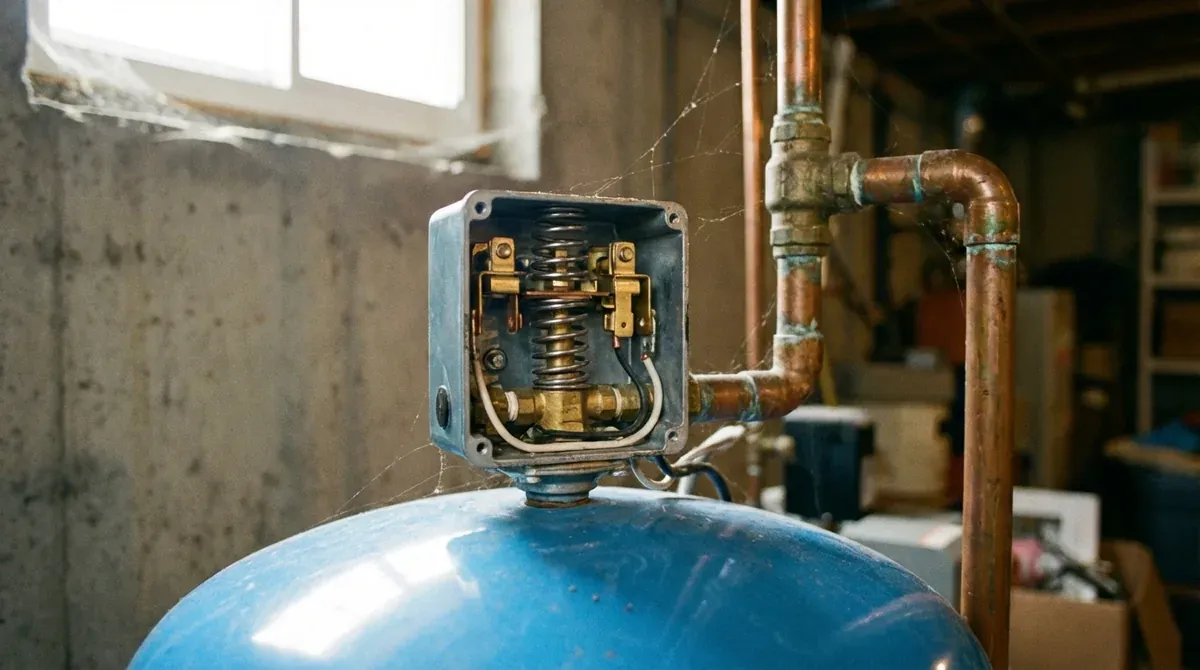
For an overview of the pressure switch guide and what it controls, start there if you’re still diagnosing the problem.
Tools and parts you need
Gather everything before touching the switch. You don’t want to be hunting for Teflon tape with the power off:
- Replacement pressure switch ($15–$45). Match your existing PSI rating: 30/50 or 40/60. Most residential switches use 1/4” FPT (female pipe thread) connections.
- Adjustable wrench or pliers for removing and seating the switch
- Wire strippers in case you need to re-strip a wire end
- Non-contact voltage tester (mandatory; well pumps run on 240V, which is lethal)
- Teflon tape or pipe thread sealant for 3–4 wraps on the pipe nipple threads
- Phone or camera to photograph the wiring before you touch a single wire
- Masking tape and marker to label each wire as you disconnect it (L1, L2, and the two motor leads)
- Towels, since water will drain from the pipe nipple when the switch comes off
If you’re unsure whether the switch needs replacement or just adjustment, use a pressure gauge to check with a pressure gauge before committing to a full swap.
Safety first
- Turn off power at the double-pole circuit breaker in your main electrical panel. The breaker should be labeled “Well Pump” or “Water Pump”.
- Walk back to the pressure tank and test the switch terminals with a non-contact voltage tester before touching any wire
- If the tester beeps or lights up, the power is not off. Go back to the panel.
- Keep the non-contact tester within arm’s reach during the entire job
See the EPA well maintenance guidelines{:target=“_blank”} for additional safety information on working near private well components.
Video guide
Video: “NEVER Replace A Water Well Pump Pressure Switch Until Watching This!” by proclaimliberty2000
Step-by-step replacement
Step 1: cut the power and confirm it’s off
Flip the double-pole well pump breaker to OFF. Return to the pressure tank and test every terminal inside the switch cover with the non-contact voltage tester. No beep, no light: you’re safe to proceed.
Step 2: remove the switch cover
One Phillips-head screw holds the plastic cover in place. Set it somewhere clean and dry. You’ll need it later.
Step 3: photograph the wiring before touching anything
This is the step most homeowners skip and regret. Take a clear photo of every wire connection inside the switch. You should see four terminals: two for line power (L1 and L2, connecting to the 240V feed) and two for the load (the pump motor leads).
Step 4: label each wire
Cut small pieces of masking tape and write directly on them: L1, L2, and Motor 1, Motor 2 (or whatever labeling makes sense). Wrap each wire at the point where it connects to the terminal. Even with the photo, physical labels prevent mistakes when your hands are full.
Step 5: disconnect the wires
Loosen each terminal screw and pull the wire free. Set the wires aside so they don’t fall into the pipe cavity when the switch comes off.
Step 6: unscrew the old switch
The switch threads onto a 1/4” pipe nipple, turn counter-clockwise. It will be on tightly. Use an adjustable wrench on the switch body; pliers on the pipe nipple can damage threads. Some water will drain out when the switch breaks free. That’s normal, so have towels ready.
Step 7: inspect the pipe threads
Once the old switch is off, look at the pipe nipple threads. If they’re clean and undamaged, you’re set. If you see corrosion, mineral scale, or any cracks, clean the threads with a wire brush. A damaged nipple will leak regardless of how much tape you apply. Replace the nipple if needed.
Step 8: prepare the new switch
Wrap the new switch’s male threads with Teflon tape: 3–4 wraps, applied clockwise when looking at the threads. Clockwise application means the tape tightens as you screw it in rather than bunching up.
Step 9: thread on the new switch
Hand-tighten the new switch onto the nipple, then snug it with a wrench. Quarter-turn past hand-tight is correct. Match the original orientation so the wiring terminals face the same direction. Do not overtighten; the threads on these switches are brass and strip easily.
Step 10: reconnect the wires
Use your labels and photo to reconnect each wire to its original terminal. Tighten each terminal screw until the wire doesn’t pull free under light tension. A loose connection here will arc and fail, the same failure that likely killed the original switch.
Step 11: replace the cover
Snap the cover back on and tighten the Phillips screw.
Step 12: restore power and watch the first cycle
Flip the breaker back on. Open a faucet and watch the pressure gauge. The pump should kick on when pressure drops to the cut-in setting and stop when it reaches cut-out. On a 30/50 switch, expect the pump to start at approximately 30 PSI and stop near 50 PSI.
Buying the right replacement switch
The most common residential pressure switch is the Square D Pumptrol 9013 series. See the Square D Pumptrol specifications{:target=“_blank”} for the full model breakdown. It’s available in both 30/50 and 40/60 PSI configurations for about $25 at any hardware store.
What matters when buying:
PSI rating: match the numbers printed on your existing switch (30/50 or 40/60). Going from 30/50 to 40/60 will change your water pressure noticeably.
Thread size: standard residential switches use 1/4” FPT. Confirm before ordering if your setup is non-standard.
Brand: doesn’t need to match your old switch. Pumptrol is the industry standard; Furnas and Condor are acceptable alternatives.
After installation: testing and adjustment
Watch three full pump cycles before calling the job done:
- Open a faucet to drop pressure and trigger the pump. Note the PSI reading when the pump starts.
- Close the faucet and let the pump build pressure. Note the PSI when it stops.
- Repeat twice more. Inconsistent cut-in or cut-out points suggest a loose connection or a switch that needs adjustment.
If the settings aren’t right (pump starts too early or too late), you can adjust the new switch settings without replacing it again. Two nuts inside the switch control the cut-in and differential range.
Check for leaks at the pipe connection after the first cycle. A slow drip will worsen over time and can corrode the new switch contacts from below. One more wrap of Teflon tape on a dripping connection usually fixes it.
When replacement won’t fix it
A new switch is not a cure-all. If these problems appear after the swap, the switch wasn’t the root cause:
- New switch also clicks rapidly: the pressure tank is waterlogged. A waterlogged tank cannot hold air, so the pump short-cycles on every minor pressure drop. The tank needs replacement (starting at $200). See our pressure tank for well pump guide for sizing and replacement steps.
- Pump never reaches cut-out pressure: the pump may be losing output due to age or a partially blocked impeller, or the well’s yield is too low to meet demand.
- Breaker still trips after the new switch: the problem is in the motor or wiring, not the switch. See our full troubleshooting guide and review well pump repair costs before deciding how to proceed.
FAQ
How much does a pressure switch cost?
A replacement pressure switch costs $15–$45 for the part at a hardware store. The Square D Pumptrol 9013, the most common residential model, typically runs about $25. Professional installation adds $150–$300 in labor, making DIY replacement straightforward for homeowners comfortable working near 240V wiring.
Can I replace the pressure switch myself?
Yes. Pressure switch replacement is a 30-minute job that requires basic hand tools and a non-contact voltage tester. The voltage tester is non-negotiable. Well pumps run on 240V. If you’re not comfortable confirming the power is off before touching wires, hire a plumber or electrician.
How do I know which pressure switch to buy?
Look at the label on your existing switch. It will show the PSI rating: 30/50 or 40/60. These numbers represent the cut-in pressure (when the pump starts) and cut-out pressure (when it stops). Buy the same rating. The thread size on almost all residential switches is 1/4” FPT.
How long does a pressure switch last?
Pressure switches typically last 3–5 years under normal use. In hard water areas with high mineral content, expect the lower end of that range. The contacts corrode and pit over time; once they can’t close cleanly, the pump either won’t start or draws enough excess current to trip the breaker.