Well Water Odor: What’s Causing the Smell and How to Fix It
If your well water smells like rotten eggs, the most likely cause is hydrogen sulfide gas or sulfur-reducing bacteria. There’s a quick test you can do before spending any money: run only the hot water for a few minutes, then run only the cold water. If the smell is coming from the hot tap only, your water heater is the source, not the well. That single diagnostic step eliminates the most common homeowner mistake: treating the well for a problem that lives in the water heater.
For a broader overview of well water quality topics, start with our well water quality guide.
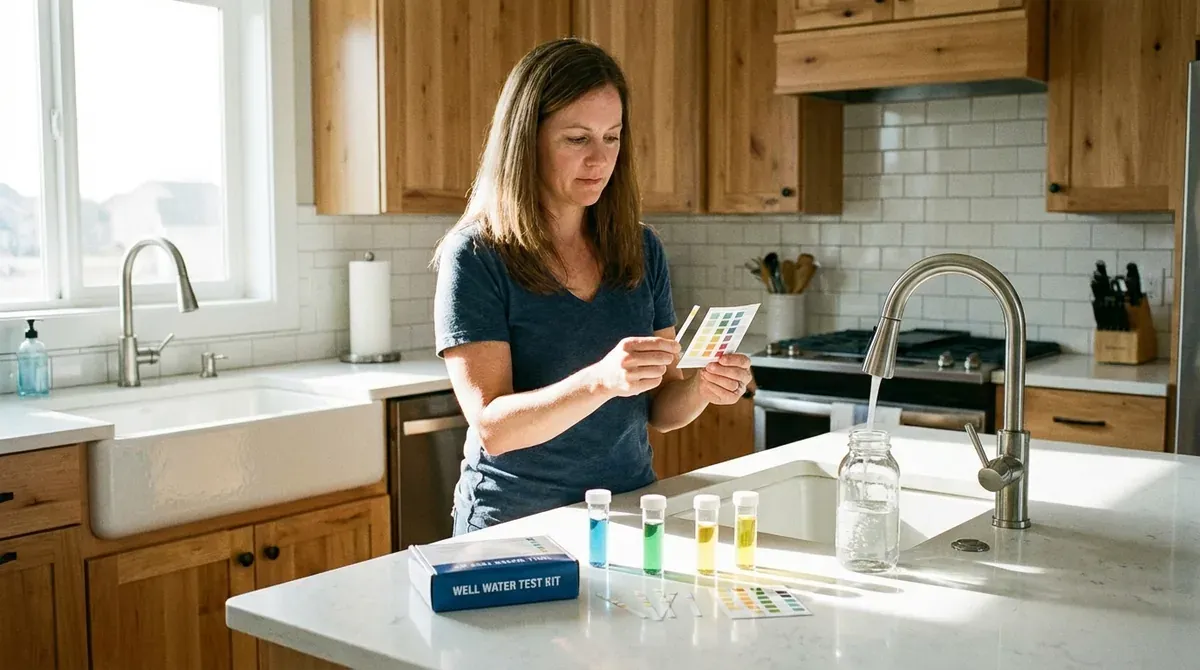
Quick answer: hot-only vs. all-water smell
Hot water only smells: The magnesium anode rod in your water heater is reacting with sulfur-reducing bacteria. The bacteria feed on the rod and produce hydrogen sulfide gas. This is common and does not indicate a well problem. Fix: replace the magnesium anode rod with an aluminum or zinc anode rod.
Both hot and cold water smell: The hydrogen sulfide or sulfur bacteria is in the well water itself, the well casing, or the plumbing between the well and the house. This needs a different approach.
Smell only when water sits (not when fresh): This often indicates sulfur bacteria growing in a low-use pipe or fixture. Flush the line thoroughly and see if the smell clears.
Match your odor to the cause
Different odors point to different contaminants. Here’s what we’ve found in working through these diagnostics:
Rotten egg / sulfur smell:
- Hydrogen sulfide gas dissolved in groundwater (naturally occurring in some regions)
- Sulfur-reducing bacteria in the well, water heater, or pipes
- Magnesium anode rod reacting with bacteria in the water heater (hot water only)
Musty or earthy smell:
- Iron bacteria growing in the well or pipes (often accompanied by brown or orange slime in the toilet tank)
- Organic matter entering through a compromised well cap or casing
Chemical smell (petroleum, solvent, cleaning fluid):
- Volatile organic compounds (VOCs) from nearby industrial sites, gas stations, or dry cleaners
- Pesticide or herbicide infiltration from agricultural land
- This odor type requires immediate testing. Do not wait.
Bleach or chlorine smell:
- Remnants from a previous shock chlorination treatment
- Temporary and not a health concern at low levels; dissipates within a few days
Metallic taste or smell:
- Dissolved iron or manganese from groundwater (common in many US regions)
- Copper or lead leaching from corroding pipes, particularly worth investigating if the water is acidic
- Low pH water corrodes plumbing and allows lead to dissolve into drinking water, which the CDC has specifically identified as a serious health risk for children
Fishy or oily smell:
- Industrial contamination, petrochemicals, or algae
- Rare in well water but warrants immediate certified lab testing
The CDC recommends testing any time you notice a change in water taste, color, or smell, even a subtle one. A change in odor is your signal, not your diagnosis.
Is the smell a health risk?
This is the right question to ask, and the answer varies by odor type.
Usually not immediately dangerous:
- Hydrogen sulfide at low concentrations (the rotten egg smell most homeowners experience) is unpleasant but not acutely harmful at typical well water levels
- Iron and manganese produce taste and odor but are regulated under EPA secondary standards, aesthetic guidelines rather than health-based limits
- Hard water minerals (calcium, magnesium) scale fixtures but aren’t a health concern
Requires immediate attention:
- Any chemical odor (pesticides, solvents, petroleum products) indicates contamination that may include compounds with no safe exposure level
- Musty smell combined with visible slime or brown staining can indicate iron bacteria, which can harbor and protect harmful bacteria from disinfection
- Metallic smell in a home with children or pregnant women warrants lead testing immediately
- The CDC is unambiguous: improper pH causes heavy metals like lead to leach from pipes, and no amount of lead is considered safe for children
High coliform bacteria combined with any odor change: If your water smells off and you test positive for total coliform bacteria, the CDC says it is likely that harmful viruses, bacteria, and parasites are also present. The safe level for bacteria in drinking water is zero. Any positive test requires follow-up testing for E. coli and immediate remediation.
How to fix well water odor
The fix depends on where the odor is coming from and what’s causing it.
Hot water odor only: replace the water heater anode rod. Drain the water heater, locate the anode rod (typically a hex bolt on top of the tank), unscrew it, and install an aluminum or zinc anode rod as a direct replacement. Magnesium rods react with sulfur bacteria; aluminum and zinc rods don’t. This is a DIY repair that costs $20–$50 for the rod and takes about an hour. It eliminates the smell in most hot-water-only cases.
Hydrogen sulfide in all water: activated carbon filtration. A whole-house activated carbon filter (granular activated carbon) removes hydrogen sulfide and most odor-causing compounds. Installed costs run $400–$1,200 depending on system size. For high concentrations, an air injection oxidizing filter is more effective ($800–$2,500 installed). Shock chlorination of the well is a temporary fix for bacterial hydrogen sulfide; a filter provides ongoing treatment.
Iron bacteria and musty smell: Shock chlorination can kill iron bacteria, but it needs to be done properly. A well contractor can perform this treatment and flush the system. Follow up with an iron filter to prevent regrowth. Iron filtration systems run $500–$2,500 installed, depending on iron concentration and system type.
Chemical odors (VOCs, pesticides): Get a certified lab test before spending any money on treatment. A state-certified lab can identify the specific compound, which determines the right filtration approach. Activated carbon handles many common VOCs effectively. Reverse osmosis removes a broader range of chemical contaminants. Do not attempt to treat chemical contamination without knowing what you’re dealing with. If you’re unsure whether the odor is contamination-related, our guide to well water contamination causes and solutions covers how to distinguish aesthetic problems from genuine health risks.
Metallic odors: Test your water pH first. If it’s below 7, the acidity is likely causing pipe corrosion and metal leaching. pH adjustment systems can neutralize acidic water ($500–$1,500 installed). If lead is confirmed, a point-of-use reverse osmosis filter certified for lead removal is required for drinking water. The EPA recommends running cold water for 30 seconds to 2 minutes before using it for cooking or drinking while the system is being installed.
For the right long-term solution, our guide to well water filtration and treatment systems covers every filter type, what each removes, and current cost ranges.
When to call a professional:
- Confirmed bacteria in the well (shock chlorination requires proper technique)
- Chemical or unknown odors (source identification requires testing expertise)
- Whole-well structural issue (casing crack, missing or damaged well cap)
- Odor returned within weeks after DIY treatment
Testing to confirm the cause
Before committing to any treatment system, get a test that confirms the source. Here’s the right sequence:
- Run the hot-water diagnostic (described above) to determine if the water heater is involved
- Run water for 2–3 minutes before smelling or sampling. Standing water picks up odors from pipes and fixtures that may not represent the well water itself.
- DIY screening test ($10–$30): Can flag bacteria, high iron, pH problems, and basic minerals. Use as a first indicator, not a final answer.
- Certified lab test ($20–$300+): The only way to identify the specific compound causing the odor. Ask for a panel that includes bacteria, iron, manganese, pH, and hydrogen sulfide if your state lab offers it.
- Test after treatment: Confirm the fix worked before discontinuing interim measures like bottled water.
The EPA and CDC both require that testing be done by state-certified laboratories. Your state health department can provide a list of certified labs; many counties offer free or subsidized well water testing.
For the full testing protocol, including what to test for and how often, see our guide on testing your well water for the source of the smell.
Preventing well water odor problems
Most odor issues we see are preventable or detectable at early stages with routine maintenance.
Annual testing: The CDC requires annual testing for bacteria, nitrates, dissolved solids, and pH. Testing every spring, as the CDC recommends, catches problems before they become noticeable or before your household has been drinking affected water for months.
Maintain the well cap: A cracked or improperly seated well cap is a direct pathway for surface water, insects, and debris to enter the casing. Inspect the cap annually. The EPA recommends installing a well cap that prevents unauthorized access and seals out contaminants.
Manage land use around the well: Keep pesticides, fertilizers, motor oil, and other chemicals well away from the wellhead. The EPA recommends sloping the area around the well so surface runoff drains away from the casing, not toward it. Never dispose of chemicals, solvents, or petroleum products anywhere near the well.
Water heater maintenance: Replace the anode rod every 3–5 years. If you have sulfur-reducing bacteria in your water, go with an aluminum or zinc rod from the start rather than magnesium.
Well pump and system health: A well that’s drawing water from the right depth and maintaining consistent pressure is less likely to develop the stagnant-water conditions that favor sulfur bacteria. For issues with pump performance that might be related to your water quality, see our resources on well pump repair and maintenance and troubleshooting a failed well pump.
For the authoritative prevention checklist, review the EPA guidelines for private well protection and the EPA secondary drinking water standards for iron, manganese, and other aesthetic contaminants. The CDC well water testing guidelines explain when and how often to test for each contaminant type.
FAQ
Why does my well water smell like rotten eggs?
The rotten egg smell is hydrogen sulfide gas. The most common sources are sulfur-reducing bacteria in the well or water heater, naturally occurring hydrogen sulfide dissolved in your groundwater, or a magnesium water heater anode rod reacting with bacteria. Test hot and cold water separately to isolate the source. Hot only points to the water heater; both hot and cold points to the well.
Is sulfur smell in well water dangerous?
At low concentrations typical of residential well water, hydrogen sulfide is unpleasant but not acutely harmful to healthy adults. At higher concentrations, it can cause headaches, nausea, and eye irritation. Any sulfur smell combined with a positive bacteria test is a more serious situation. Get certified lab testing immediately. The safe level for total coliform bacteria in drinking water is zero.
Why does the smell only come from the hot water tap?
The most common reason is the magnesium anode rod in your water heater. This rod is designed to corrode instead of the tank, but when sulfur-reducing bacteria are present in the water, the reaction produces hydrogen sulfide gas. The solution is to replace the magnesium rod with an aluminum or zinc rod, a DIY repair that costs $20–$50 for the part.
How much does it cost to fix smelly well water?
It depends on the source. Water heater anode rod replacement: $20–$50 for parts, DIY. Activated carbon whole-house filter: $400–$1,200 installed. Iron filter: $500–$2,500 installed. Shock chlorination by a contractor: $200–$500. Certified lab testing: $20–$300+. We always recommend testing first ($20–$300) before buying any treatment system. It prevents spending money on the wrong solution.
Can I use a water filter to remove well water odor?
Yes, with the right filter for the right problem. Activated granular carbon filters are effective for hydrogen sulfide, most VOCs, chlorine, and many chemical odors. Iron filters handle iron bacteria and metallic odors. For unknown chemical odors, get a certified lab test first to identify the compound, then match the filter to what the test found. Not all filters handle all contaminants.